
A Decision That Feels Small but Isn't
After a hailstorm or high wind event rolls through the Denver Metro or Northern Colorado, it's tempting to assume the roof is fine if nothing is obviously leaking yet. Filing a claim feels like extra work for a problem you're not even sure exists. Waiting a few weeks or months to see if anything develops seems like the lower-effort path.
But storm damage and the decision to wait aren't neutral choices sitting side by side. One preserves your options, the other quietly closes some of them. Understanding what actually changes the longer you wait helps you make an informed choice instead of just defaulting to inaction because nothing looks urgent yet.
Why Timing Actually Matters Here
Storm damage isn't always dramatic. A lot of hail and wind damage is subtle at first, cracked granule coating, bruised shingle mat, lifted edges that aren't leaking yet. None of that necessarily looks urgent from the ground, which is exactly why the decision to wait feels so low-stakes in the moment.
What Fades Over Time
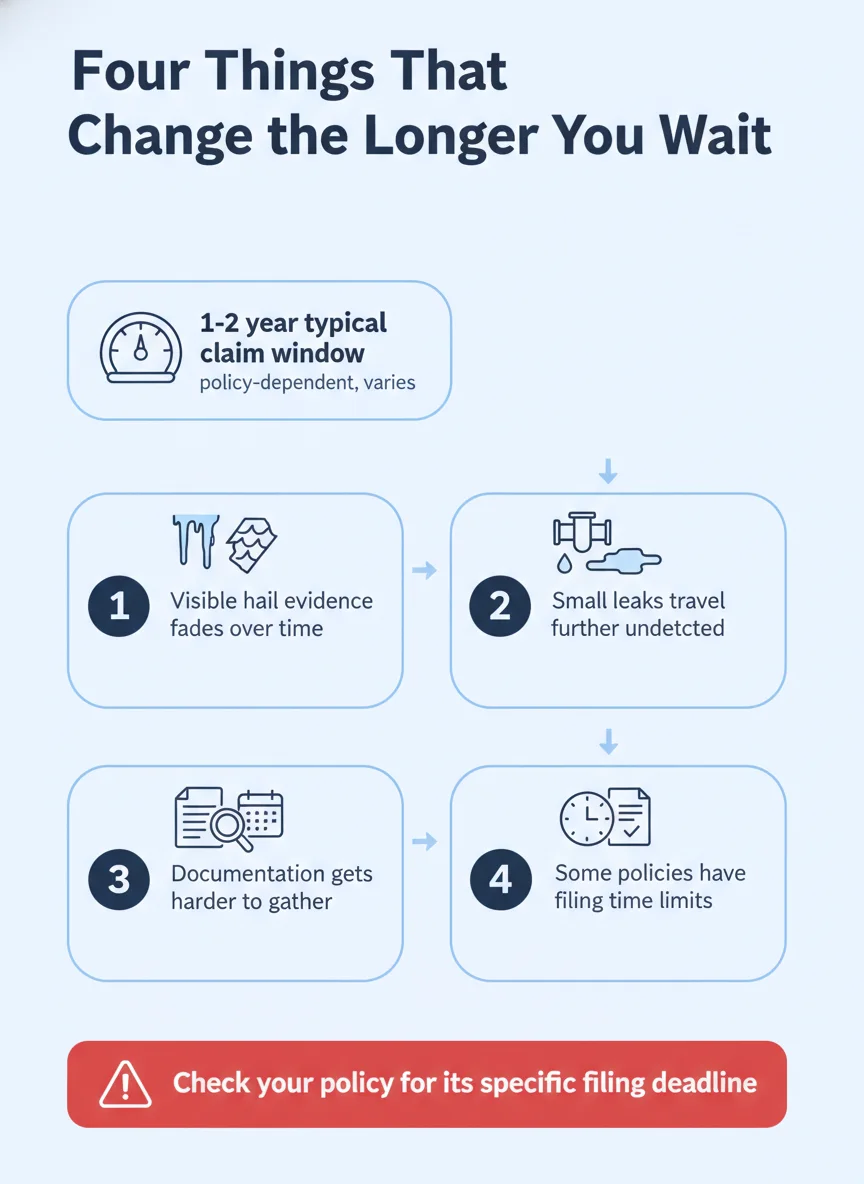
Hail damage in particular can be subtle even right after the storm and gets harder to identify the longer it sits. Weather exposure, UV, and simple aging blur the line between what was caused by the storm and what's just general wear. An inspection done soon after an event has a much clearer picture to work from than one done months later.
This matters directly for insurance purposes. Adjusters are trained to distinguish storm-caused damage from age-related wear, and the clearer that distinction is, the smoother the claims process tends to go. Waiting doesn't erase the damage, but it does make it harder to attribute clearly to a specific event.
What Spreads the Longer It's Left
Small storm damage doesn't necessarily stay small. A cracked shingle exposed to sun and wind for months can degrade further than it would have if repaired shortly after the storm. A minor point of water entry that isn't addressed can travel further into decking and insulation, turning a surface repair into a more involved one.
This is the practical cost of waiting beyond just the insurance timeline. Even setting the claim aside entirely, the physical condition of the roof tends to get worse rather than better while damage sits unaddressed, particularly through additional storms and seasonal temperature swings.
| Factor | Filing Soon After the Storm | Waiting Months to Decide |
|---|---|---|
| Evidence clarity | Damage clearly tied to recent event | Harder to distinguish from general wear |
| Physical condition | Damage contained, easier repair | Damage may spread, larger repair scope |
| Policy deadlines | Well within most filing windows | Risk of missing policy-specific deadlines |
| Documentation | Fresh photos and adjuster visit | Reconstructing timeline after the fact |
What the Claims Process Actually Involves
A storm damage claim starts with a documented inspection, ideally soon after the event, that records the specific damage found with photos and notes on location and severity. This documentation is what supports the claim when it goes to your insurance company for review.
From there, most insurers send their own adjuster to independently assess the damage before approving coverage for repair or replacement. Having your own contractor's documentation alongside the adjuster's visit helps make sure the full scope of damage gets accounted for, rather than relying solely on a single walkthrough.
Step-by-Step: What to Do After a Storm
If you suspect your roof took damage from hail or wind, there's a general sequence that protects your position whether or not you end up filing a claim.
- Check for obvious signs: Look for damaged gutters, downspouts, or debris in the yard, which can hint at what happened to the roof itself.
- Get a professional inspection: Have the roof inspected soon after the storm while evidence is clearest and easiest to document accurately.
- Document everything: Photos and a written report create a record you can reference regardless of when you decide to file.
- Review your policy: Check your specific filing window and deductible terms so you know your actual timeline and obligations.
- File if damage is confirmed: Submit the claim with your documentation and be present or represented when the adjuster visits.
What Homeowners Often Find When They Do Get It Checked
Damage Confirmed and a Claim Moves Forward
Many post-storm inspections do turn up real, documentable damage, cracked shingles, dented flashing, or granule loss consistent with hail impact. In these cases, filing promptly gives you the strongest position, with clear photos and a report that ties the damage directly to the recent weather event.
This is generally the smoothest version of the process. The inspection, the documentation, and the adjuster visit all happen close together, and the timeline is easy for everyone involved to follow.
No Significant Damage Found
Sometimes an inspection confirms the roof came through fine, with no meaningful damage worth filing over. That's a good outcome too, and it still gives you a documented baseline showing the roof's condition at that point in time, which is useful if anything changes later.
Either outcome is better than not knowing. An inspection after a significant storm removes the guesswork, whether the answer turns out to be file a claim or don't worry about it.
What You Can Do Yourself and What Needs a Professional
A homeowner can safely check for downed branches, dented gutters, or dinged siding and vents from the ground after a storm, all of which are reasonable clues that the roof took a hit as well. Noting the date of the storm and any visible ground-level damage is useful information to have ready.
Assessing the roof surface itself for hail bruising or wind lift requires getting up close, and doing that safely after a storm often means waiting for conditions to clear and having the right equipment. This isn't a place to improvise, since roof surfaces can be more slippery or unstable than usual right after severe weather.
A professional inspection focused on storm damage and insurance documentation gives you accurate, insurer-ready evidence rather than a guess from the ground. That documentation is often the difference between a claim that moves smoothly and one that gets questioned.
Deciding Not to Wait
The trade-off between filing after a storm and waiting isn't really about effort, it's about what you're willing to risk losing: clearer evidence, a stronger claim, and a roof that hasn't had extra time to deteriorate further. None of that is recovered once it's gone.
If a recent storm has you wondering whether your roof needs a look, it's worth reading hail or wind damage after a storm to know what to check for anywhere from Arvada to Wellington. Virtuous Roofing and Exteriors documents storm damage and works directly with insurance adjusters across the Denver Metro and Northern Colorado.
Frequently asked questions
How soon after a storm should I file a roof damage claim?
It's generally best to get the roof inspected and documented as soon as safely possible after a storm, since visible evidence like hail bruising can fade over time. Many policies also have a filing window, so checking your specific policy terms matters.
What happens if I wait too long to file a storm damage claim?
Waiting can make it harder to prove the damage was storm-related rather than gradual wear, and some policies have deadlines after which a claim won't be accepted at all. Damage left unaddressed can also spread further, turning a smaller issue into a larger repair.
Does hail damage get worse if I don't fix it right away?
It can, since cracked or bruised shingles are more vulnerable to further wear from UV exposure, wind, and additional weather events. What starts as cosmetic surface damage can develop into an active leak if left unaddressed long enough.
Will my insurance company inspect the roof themselves?
Most insurers send their own adjuster to evaluate storm damage claims before approving repair or replacement coverage. Having your own documentation from an independent inspection helps make sure nothing gets missed or underestimated in that process.
Can I still file a claim if I don't see obvious damage yet?
Yes, some storm damage isn't visible from the ground and only shows up during a close inspection, which is why a post-storm assessment is worth getting even if nothing looks wrong. Catching it early is generally easier than dealing with it after it's progressed.