Why Roof Replacement Cost Is Hard to Pin Down From a Google Search
Search "how much does a roof cost" and you'll get a wall of numbers that don't mean much without context. A roof in Denver Metro and Northern Colorado isn't priced the same as one in a different climate, and two homes on the same block can land in very different places depending on pitch, size, and what's underneath the current layer of material. That's frustrating if you're trying to budget, but it's also the reason a real on-site estimate matters more than any number you'll find online.
The honest way to think about it isn't a single dollar figure, it's a list of variables that push the project up or down. Once you understand what those variables are, a written estimate stops looking like a mystery and starts looking like a checklist you can actually evaluate. That's what this guide walks through, piece by piece, so you know what you're looking at before you sign anything.
What Actually Drives the Number Up or Down?
A roofing estimate isn't one price, it's a stack of smaller decisions that add up. Size and pitch set the baseline, but material choice, the condition of the decking underneath, and how many layers need to come off before new material goes down all shift the total from there. Access matters too. A roof surrounded by landscaping, a second story, or tight property lines takes longer to stage and protect than a simple ranch with a driveway right next to it.
Size, Pitch, and Material
Square footage is the obvious one, more roof means more material and more labor hours, full stop. Pitch matters almost as much though. A steep roof slows a crew down because of safety harnessing and reduced footing, so two homes with identical square footage can take very different amounts of time to finish.
Material choice is the other half of this. Asphalt shingles, metal, and other roofing systems all have different material costs, different install labor, and different lifespans, which is why comparing asphalt shingles against metal roofing is worth doing before you pick a direction, not after.
What's Underneath the Old Layer
You can't always tell what's going on under the current shingles until the tear-off starts. Soft or rotted decking, old underlayment that's failed, or flashing that was never installed correctly all add scope once a crew opens things up. A good contractor flags this as a possibility in the estimate rather than letting it surprise you mid-project.
This is also where a roof inspection before you ever get a replacement quote pays off. Knowing the condition of the decking and flashing ahead of time means fewer surprises once the tear-off actually starts.
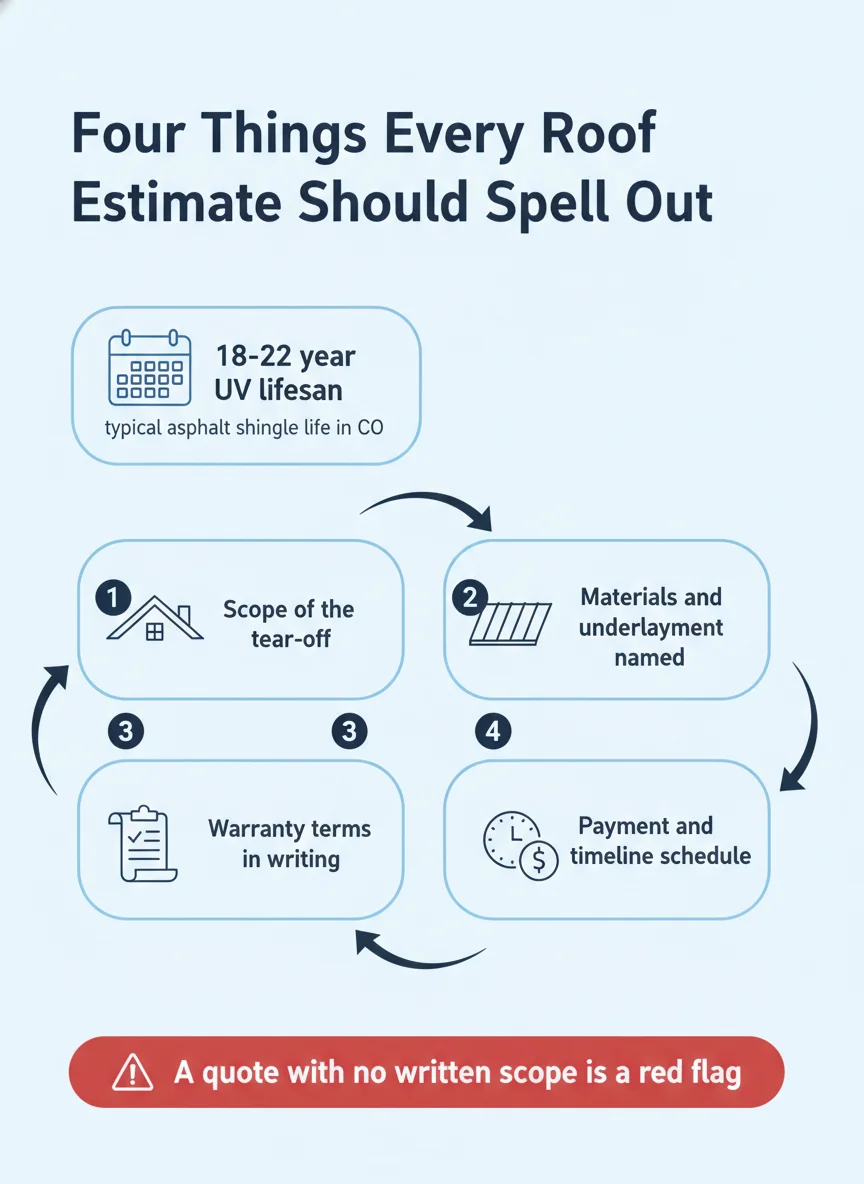
| Estimate Line Item | What It Covers | Why It Matters |
|---|---|---|
| Tear-off scope | Number of layers removed, disposal | Multiple layers mean more labor and dump fees |
| Material line | Shingle, metal, or other roofing system named by product line | Lets you compare apples to apples across bids |
| Decking and flashing allowance | Replacement of soft decking or failed flashing if found | Protects you from a mid-job surprise charge |
| Warranty terms | Workmanship coverage length and what it includes | A long material warranty means little without workmanship backing it |
What's Actually Included in a Roof Replacement
A full replacement is more than stripping off old shingles and nailing down new ones. It typically includes tear-off and disposal of the old roofing system, inspection and repair of the decking underneath, new underlayment, new flashing around chimneys, vents, and valleys, the new roofing material itself, and ridge ventilation where it applies. Each of those is a real cost driver, and a thin estimate that skips over several of them usually means the work is getting skipped too, not that the price is simply lower.
Permitting is part of the process as well in most jurisdictions across Colorado. A contractor who pulls permits and handles inspections as part of the job is accounting for that time and paperwork, which is one more reason two estimates with the same bottom-line number aren't always equal in scope.
Step-by-Step: How a Replacement Estimate Gets Built
Most reputable roofers follow a similar process to arrive at a number, even if the final presentation looks different from one company to the next. Here's generally what that looks like from first call to final proposal.
- Initial site visit: A roofer measures the roof, checks pitch and access, and does a visual check of the current material's condition.
- Material selection: You walk through shingle, metal, or other material options and land on what fits your budget and style preference.
- Decking and flashing check: The estimator notes any visible decking or flashing concerns and explains how those would be handled if found during tear-off.
- Written proposal: You receive a document listing scope, materials, warranty terms, and payment schedule, not just a single total.
- Questions and comparison: This is your window to ask what's included, what happens with unexpected decking damage, and how the warranty works before you commit.
- Scheduling: Once you sign, the contractor orders material and schedules the crew, giving you a timeline window before work starts.
How Do You Know If a Quote Is Actually a Good Deal?
A good deal isn't the lowest number on the page, it's the estimate that includes everything the job actually needs at a price that reflects real labor and material costs. The fastest way to tell the difference is to line up two or three written estimates side by side and compare scope, not just totals.
Red Flags in a Low Bid
Watch for quotes that don't name a specific material line, skip mentioning underlayment or flashing work entirely, or ask for a large deposit with no clear payment schedule after that. These are the places corners tend to get cut, and they're also the places that cost you more down the road if something fails early.
A quote that reads like a single sentence instead of an itemized scope is harder to compare and harder to hold anyone accountable to later. Ask for specifics in writing before you sign, even if it means a slightly longer conversation up front.
What a Strong Warranty Tells You
Material warranties come from the manufacturer and usually hold up regardless of who installs the product. A workmanship warranty is different, it's the contractor standing behind their own labor, and it's a better signal of how a company expects their installs to perform over time.
If you want to go deeper on this distinction, how material and workmanship warranties compare breaks down what each one actually protects you against.
What Parts of This Process Can a Homeowner Handle Themselves?
You can absolutely do your own homework before any crew touches your roof. Walking your attic for daylight or stains, checking your current material's age, and gathering two or three written estimates are all things a homeowner can and should do on their own time.
What you shouldn't do is the actual tear-off, decking repair, or material install yourself. Roofing work involves fall risk, code-compliant flashing and ventilation details, and permit requirements that a licensed, insured crew handles correctly the first time. Trying to save on labor here is one of the more common ways a project ends up costing more later.
Financing is also worth asking about directly rather than assuming it's not available. A contractor who offers a financing option through a lending partner can spread a replacement into monthly payments instead of requiring the full project cost up front, which changes how you budget for the work even if it doesn't change the underlying scope.
Getting an Estimate You Can Actually Compare
The goal isn't finding the cheapest possible number, it's finding a written scope that covers tear-off, decking, flashing, material, and warranty in plain language so you know exactly what you're paying for. Homeowners in Denver, Boulder, and the surrounding towns across the region all run into the same handful of cost drivers, so the comparison process looks the same no matter which town you're in.
If you want a starting point, a roof replacement estimate from Virtuous Roofing and Exteriors lays out the scope, materials, and workmanship warranty in writing before any work begins.
Frequently asked questions
What makes a roof replacement more expensive in Colorado?
The biggest swings come from roof size, pitch, material choice, and how much of the old roof has to come off before new material goes down. A steep multi-layer tear-off with rotted decking costs more to do right than a simple single-layer swap on a low-pitch home.
Should I get more than one estimate before replacing my roof?
Yes, two or three written estimates give you a real basis for comparison. Look past the bottom-line number and compare what materials, warranty terms, and scope of work each contractor actually included.
Does insurance cover the full cost of a roof replacement?
It depends entirely on your policy and the cause of damage, so the honest answer is to check with your insurer and your adjuster. A documented inspection from a roofer who works insurance claims regularly can help make sure nothing gets missed in that conversation.
Is a cheaper roofing quote ever a warning sign?
It can be, especially if the low bid is vague about materials or skips line items other quotes include, like new underlayment or flashing. A quote that's dramatically lower usually means something is being left out, not that you found a deal.
Can I finance a roof replacement instead of paying all at once?
Many roofing companies offer financing partnerships that spread the cost into monthly payments instead of one lump sum. Ask upfront what financing options a contractor offers so you can compare the real monthly impact, not just the project total.