
Why Roof Lifespan Looks Different in Colorado
A roof rated for 20 years in a coastal climate doesn't necessarily get 20 years on a home in Denver, Fort Collins, or Colorado Springs. The Front Range and the mountain towns put a roof through intense UV at elevation, sudden hail, heavy snow load, and freeze-thaw cycles that repeat dozens of times a season. Every one of those stressors works on a roof differently depending on what it's made of.
That's why a straight answer to 'how long does a roof last' only goes so far. The honest answer depends on the material, the installation quality, the attic ventilation underneath it, and how much weather that specific roof has absorbed. This chart breaks down the typical service-life ranges by material type, what shortens each one in this climate, and the signs that tell you where your roof actually stands.
What Shortens a Roof's Life at 5,280 Feet
Every roofing material has a published lifespan range from the manufacturer, but those numbers assume average conditions. Colorado's combination of intense sun, hail, and wide temperature swings between day and night pushes most materials toward the shorter end of their range unless the install and upkeep are solid.
UV and Altitude
Higher elevation means less atmosphere filtering ultraviolet light, and that UV load is one of the biggest factors in how fast asphalt shingles dry out and lose their granules. The oils in asphalt shingles break down faster under constant UV exposure, which is part of why architectural shingles, with their thicker mat, tend to hold up longer than older three-tab styles.
Metal and tile handle UV better since they don't rely on oil-based binders the way asphalt does, but painted metal finishes can still fade or chalk over time. Slate and clay tile are essentially unaffected by sun exposure, which is a big part of why they land at the top of any lifespan chart.
Hail and Freeze-Thaw Cycles
Colorado sees frequent hail events, and even hail too small to crack a shingle can bruise the mat and knock granules loose, aging a roof years in a single storm. Repeated hail exposure over a roof's life is one of the main reasons asphalt roofs in this region often need replacement sooner than their rated lifespan suggests.
Freeze-thaw cycling adds a second kind of wear: moisture that gets under flashing or into small cracks expands when it freezes, widening the gap each time it thaws. Over many winters that process loosens flashing, opens seams on flat membranes, and stresses tile and slate fasteners, which is why routine maintenance matters more here than in milder climates.
| Material | Typical Lifespan Range | Colorado Considerations |
|---|---|---|
| Asphalt shingles (three-tab and architectural) | 15-30 years | UV and hail exposure push most installs toward the lower half of this range |
| Metal roofing | 40-70 years | Resists UV and hail well, but fasteners and seams need periodic checks after freeze-thaw winters |
| Tile and slate | 50-100+ years | Extremely durable against sun and moisture, but individual pieces can crack under large hail and need replacement |
| Flat and low-slope membranes (TPO, EPDM) | 15-25 years | Common on commercial and some residential additions; seams are the most common point of wear |
What's Actually Inside a Roof System
The shingles, panels, or tiles you see from the street are only the top layer of the roof system. Underneath sits the underlayment, a water-resistant barrier that backs up the surface material, and below that is the decking, usually plywood or OSB, that everything is fastened to. Flashing seals the transitions around chimneys, vents, and valleys where water is most likely to find a way in.
Attic ventilation is the part of the system most homeowners never see but that affects lifespan the most. A roof that can't vent heat and moisture properly will cook the underside of the decking in summer and trap condensation in winter, and that shortens the life of whatever material sits above it, regardless of how good that material is.
Step-by-Step: How to Tell Where Your Roof Stands in Its Lifespan
You don't need to climb on the roof to get a reasonable read on its condition. A few checks from the ground and the attic will tell you whether you're looking at years of life left or a roof that's due for a closer look.
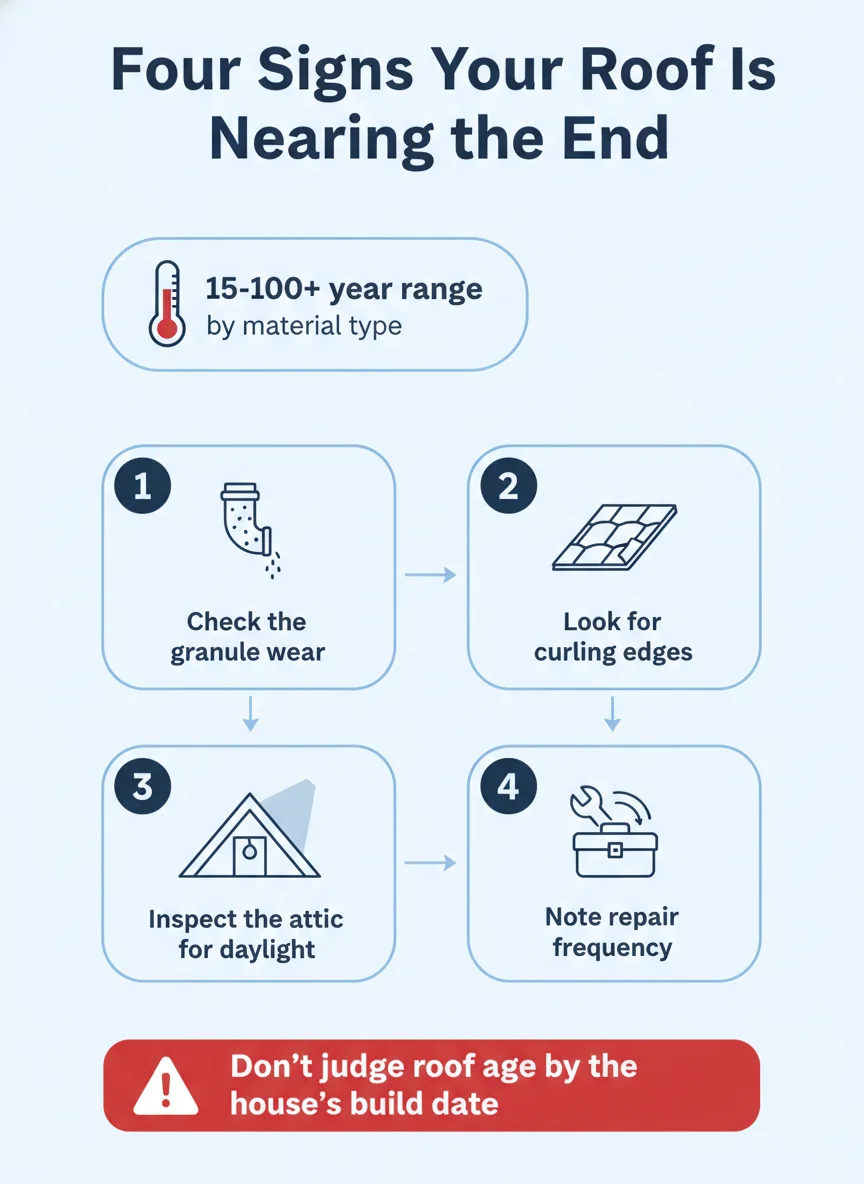
- Find the install date: Check permit records, prior inspection reports, or ask the seller or previous owner when the roof was last replaced, not just when the house was built.
- Walk the perimeter: Look up from the ground for curling edges, bald patches where granules have worn away, or shingles that look visibly different in color from a patch repair.
- Check the gutters: A buildup of granules in the gutters or downspouts is one of the clearest signs that asphalt shingles are breaking down faster than normal.
- Look at valleys and flashing: These transition points wear out before the field of the roof does, so rust streaks or lifted metal here are an early warning sign.
- Check the attic for daylight or stains: Pinpoints of light, damp insulation, or dark stains on the decking mean water is already getting through somewhere.
- Track your repair history: If you've called for the same leak or the same missing shingles more than once in a few years, the material is likely past its useful service life.
- Schedule a professional look: A roof inspection gives you a documented read on remaining life rather than a guess from the driveway.
Diagnosing an Aging Roof: What You'll Find
Once a roof passes the midpoint of its expected lifespan, the signs tend to show up in two places: on the surface, and inside the attic. Knowing what each one means helps you decide whether you're looking at a maintenance item or a bigger decision.
Visible Signs on the Surface
Curling or cupping shingle edges mean the asphalt has dried out and lost flexibility, which usually isn't a repair you can spot-fix one shingle at a time. Bald spots where the granules have worn off expose the asphalt mat directly to UV, which accelerates the aging of everything around that spot too.
On metal roofs, look for fastener heads that have backed out or rust bleeding from screw points, both signs the panels are moving more than they should. On tile or slate, cracked or slipped pieces are usually isolated and repairable, but a pattern of them across the roof suggests the fastening system underneath is aging out.
Signs Inside the Attic or Ceiling
A musty smell, visible daylight through the decking, or insulation that's damp or compressed are all signs that moisture is getting past the roof system somewhere. These problems often show up well before a visible leak reaches the ceiling, which is why an attic check catches issues earlier than waiting for a stain to appear.
Ceiling stains, when they do show up, often mean the problem has been developing for a while, since water typically has to saturate the insulation and decking before it reaches drywall. Catching the attic-level signs first gives you more time to plan a replacement rather than deal with an emergency.
DIY vs. Calling a Pro
Homeowners can reasonably handle the early steps: a visual walk around the perimeter, a look in the gutters, and a quick attic check with a flashlight on a dry day. These checks don't require climbing on the roof and can tell you whether something warrants a closer look.
Getting on the roof itself, diagnosing flashing or decking issues, or estimating remaining service life accurately is where a licensed roofer earns their keep. Hail bruising especially is easy to miss from the ground or even up close without experience, since it often doesn't look like obvious damage until it's been pointed out.
If your roof is anywhere near the upper half of its material's expected range, or you've had repeat repairs, that's the point to bring in a professional rather than keep patching. A documented inspection also gives you something concrete to plan a budget around instead of guessing.
Planning Ahead Instead of Reacting
Knowing where your roof sits in its expected lifespan turns a roof replacement from a surprise into a plan. It also helps you decide between materials if you're due for a change, since a metal roof or asphalt shingles can mean a very different number of years before you're back in this position.
Whatever material is currently on your home, a seasonal check makes it easier to catch problems while they're still small, which you can build into a routine using a roof calendar for what to check each season. When you're ready for an honest read on where your roof stands, Virtuous Roofing and Exteriors can walk the roof with you and lay out what's left in it.
Frequently asked questions
How do I know how old my roof actually is?
The house's build date doesn't tell you the roof's age, since most homes get re-roofed at least once over their lifetime. Check past permit records, ask the previous owner, or have a roofer estimate age from wear patterns and material type during an inspection.
Does altitude really shorten a roof's life?
Yes, UV exposure increases with elevation, and Colorado's thinner atmosphere lets more ultraviolet radiation reach the roof surface year-round. That accelerates the breakdown of asphalt oils and the fading of painted metal finishes compared to lower-elevation climates.
Which roofing material lasts longest in Colorado?
Slate and tile roofs typically outlast every other option, often reaching 50 to 100 years or more when properly maintained. Metal roofing comes in second, commonly lasting 40 to 70 years, while asphalt shingles fall in the 15 to 30 year range depending on grade.
Can a roof fail before it reaches its expected lifespan?
Yes, poor attic ventilation, storm damage, or a bad original install can shorten any material's life well below its typical range. Regular maintenance and catching small issues early are what let a roof reach its full expected lifespan.
Should I replace my roof before it fully fails?
In most cases, yes, since waiting for active leaks often means dealing with decking damage, insulation loss, or interior repairs on top of the roof itself. A roof nearing the end of its range is a good time to schedule an inspection and plan ahead rather than react.