
Why Colorado Roofs Need a Seasonal Checklist
A roof in Denver Metro or Northern Colorado deals with more swings in a single year than most climates see over several. Spring brings hail and high wind, summer brings intense sun at altitude, fall drops leaves and debris into gutters and valleys, and winter piles on snow and freeze-thaw cycles. Each season puts a different kind of stress on the same materials, which is why a single annual look isn't always enough to catch everything.
A seasonal calendar doesn't need to be complicated. It just means knowing what to look for at each point in the year so small issues like a lifted shingle edge or a clogged downspout get handled while they're still small. For homeowners from Fort Collins down through the metro, that habit tends to be the difference between routine upkeep and a surprise leak.
Why the Front Range Wears Roofs Differently Through the Year
Colorado's weather pattern is part mountain climate and part high plains, and a roof sits right at the edge of both. That mix of intense storms, high elevation sun, and sharp temperature drops means roofing materials are working harder here than they would in a milder climate.
Hail and Wind Season
Spring through early fall is when Colorado sees its most active hail and wind activity, with the heaviest stretch typically landing in late spring and early summer. Hail can bruise or crack shingles without an obvious hole, and strong wind gusts can lift shingle tabs or loosen flashing without pulling anything off completely.
Because this kind of damage is often subtle from the ground, a roof check after any notable storm is worth doing even if nothing looks wrong from the yard. Our storm damage and insurance team documents exactly this kind of damage for homeowners filing a claim.
UV and Temperature Swings
Colorado's elevation means more direct UV exposure than most of the country gets, and that accelerates the drying and aging process in asphalt and other roofing materials. Add in the state's wide day-to-night temperature swings, and roofing materials are constantly expanding and contracting.
Over time, that cycle is part of why asphalt shingles in Colorado tend to show wear across the industry in the range of 18 to 22 years, sooner on roofs with poor attic ventilation. Watching for curling edges or granule loss in summer gives you an early read on where a roof stands in that lifespan.
| Season | Main Concern | What It Often Reveals |
|---|---|---|
| Spring | Hail and wind from storm season | Bruised shingles, lifted tabs, loose flashing |
| Summer | UV exposure and heat cycling | Curling, blistering, granule loss |
| Fall | Leaves and debris in gutters and valleys | Clogged drainage, trapped moisture |
| Winter | Snow load and freeze-thaw at the eaves | Ice dams, ice-damaged flashing |
What a Seasonal Check Actually Covers
A seasonal roof check isn't about climbing up and staring at shingles for an hour. It's a quick, consistent look at the handful of spots that cause most roof problems: the shingle or roofing surface itself, the flashing around chimneys and vents, the gutters and downspouts, and the attic underneath where ventilation and insulation live.
Each of those pieces behaves differently depending on the season. Flashing that holds up fine in summer heat can be the first thing to fail once ice forms at the eaves in January, and a gutter that's clear in August can be packed with leaves by October. Checking the same spots at different times of year is what catches the problems a once-a-year look misses.
Step-by-step: Setting Up Your Seasonal Roof Calendar
You don't need to inspect a roof every month to stay ahead of Colorado weather. Spacing checks around the state's actual weather pattern covers most of what matters.
- Early spring: Do a visual check for winter damage before hail season ramps up, especially around flashing and vent boots.
- After any hailstorm: Look for bruised or missing shingles and call for a roof inspection if anything looks off.
- Midsummer: Check for curling, blistering, or granule buildup in gutters, signs that UV and heat are aging the surface.
- Early fall: Clear leaves and debris from gutters, downspouts, and valleys before the first snow arrives.
- Late fall: Confirm attic ventilation and insulation are in order, since poor airflow is a major driver of ice dams.
- Midwinter: Watch for ice buildup at the eaves after snow events, and avoid walking the roof when it's icy or snow-covered.
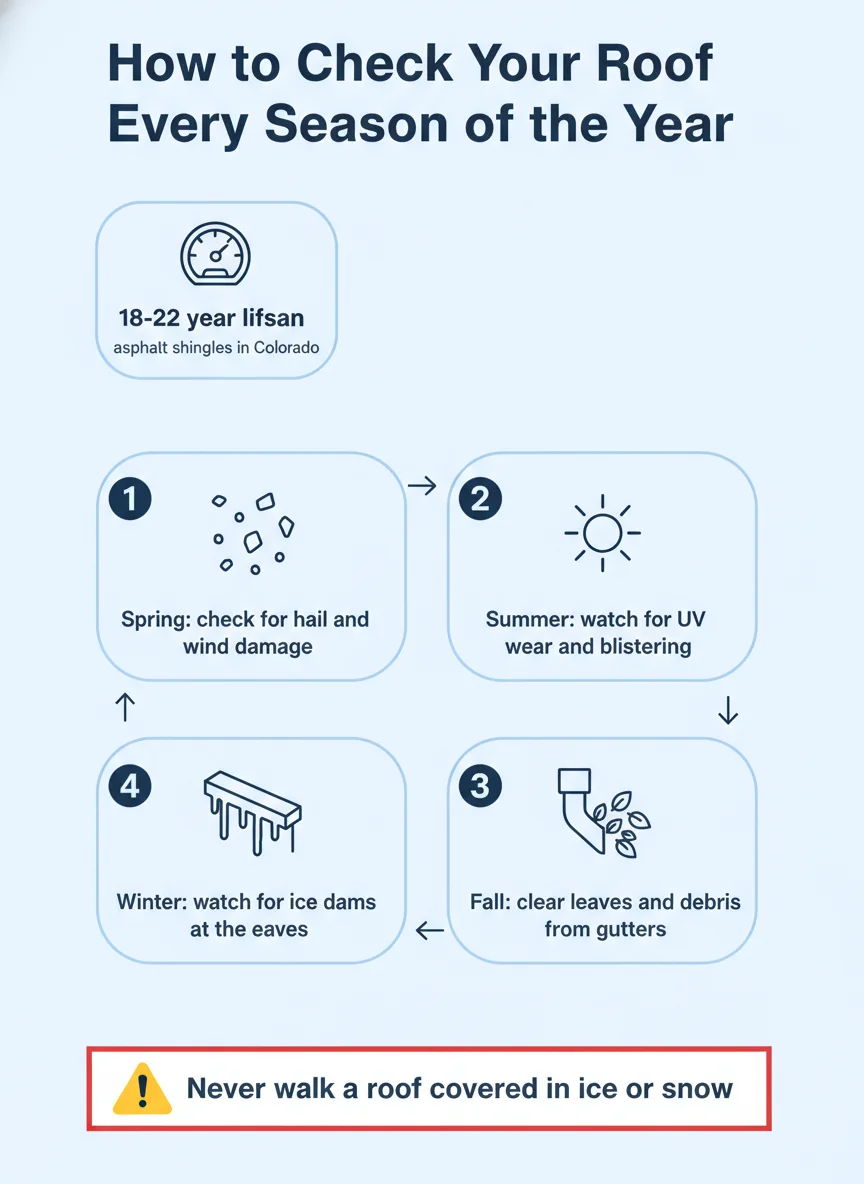
What Each Season Tends to Reveal
Patterns show up if you check a roof at the same points every year. Spring and summer tend to surface storm damage and sun-related wear, while fall and winter tend to surface drainage and insulation issues.
Spring and Summer Findings
Spring checks after a hailstorm often turn up bruised shingles, dented vent caps, or flashing nails that have backed out slightly. None of these are always visible from the ground, which is why a lot of storm damage goes unnoticed until a leak shows up months later.
Summer checks tend to show the slower kind of wear: shingle edges starting to curl, color fading, or granules collecting in gutters and downspouts. These are signs a roof is aging, not necessarily that something is actively wrong, but they're worth tracking year over year.
Fall and Winter Findings
Fall checks almost always turn up some amount of leaf and debris buildup, especially in valleys and anywhere two roof planes meet. Left alone through winter, that debris holds moisture against the roofing surface and can contribute to rot in the decking underneath.
Winter checks, done from the ground or from a window rather than on the roof itself, often reveal ice buildup at the eaves or icicles forming in a pattern that points to uneven attic heat loss. That's usually a ventilation or insulation issue more than a roofing material issue.
DIY vs Calling a Pro
Plenty of this seasonal calendar is within reach for a homeowner. Clearing debris from gutters with the right ladder safety, doing a visual scan from the ground after a storm, and keeping an eye on attic ventilation are all reasonable DIY tasks for most people.
Getting onto the roof itself to check flashing, shingle condition, or hail bruising up close is a different matter. Roof pitch, loose granules, and wet or icy surfaces make this one of the more dangerous DIY jobs around a house, and it's easy to miss subtle damage without training in what to look for.
A licensed roofer brings the right footing, tools, and eye for damage that doesn't show from the ground. If a storm has come through, or if it's just been a while since the last look, a professional check is worth the call rather than the fall risk.
Building the Habit Into Your Year
A seasonal roof calendar works best when it's tied to something you already do, like switching out furnace filters or putting away patio furniture. Pairing a roof check with those seasonal chores makes it easier to remember and keeps small issues from turning into bigger ones.
If you want help keeping that calendar on track, our storm prep checklist is a good companion to this one, and Virtuous Roofing and Exteriors offers free roof health assessments for homeowners who want a professional set of eyes on the schedule.
Frequently asked questions
How often should I have my roof inspected in Colorado?
Most roofing pros recommend two inspections a year in Colorado, one in spring after storm season starts and one in fall before winter sets in. That schedule catches hail and wind damage early and makes sure gutters and flashing are ready for snow load.
What time of year does hail damage show up most in Colorado?
Hail season along the Front Range runs mainly from spring into early fall, with the heaviest activity typically in late spring and early summer. A roof check right after any strong storm is the best way to catch bruised or cracked shingles before a leak develops.
Are ice dams a problem for Colorado roofs?
Ice dams can form on Colorado roofs when heat escapes from the attic and melts snow that then refreezes at the colder eaves. They're more common on homes with poor attic insulation or ventilation, and they're worth watching for anywhere snow sits on a roof for more than a day or two.
What does summer heat do to a roof in Colorado?
High-altitude UV exposure and repeated heat cycles dry out and age roofing materials faster than cooler climates, which is part of why asphalt shingles here tend to show wear over time. Summer is a good season to look for curling, blistering, or granule loss on shingles.
What should I check on my roof in the fall?
Fall is the time to clear leaves and debris from gutters and valleys so water has somewhere to go once snow starts melting. It's also a good window to catch any storm damage from summer before winter weather makes repairs harder to schedule.