
Why the Morning After Matters in Colorado
Colorado's Front Range and the plains east of it see some of the most frequent hail and wind events in the country, and the Denver Metro and Northern Colorado region is no exception. A fast-moving summer cell can drop hail and gust past 60 mph in the span of twenty minutes, then clear out and leave a blue sky behind it, which is exactly why so many homeowners underestimate what just happened to their property.
The next morning is the best window you'll get to document what happened before rain washes away debris, wind scatters it further, or yard cleanup erases the evidence. A slow, deliberate walk around the house, done before you touch a rake or a hose, gives you a clearer picture and a stronger record if you end up filing a claim.
What Actually Happens to a Roof and Gutters During Hail or Wind
Hail damage and wind damage show up differently, and knowing the difference helps you look in the right places. Hail bruises and knocks granules loose from shingles, dents soft metals, and can crack brittle materials. Wind lifts and creases shingles, tears at the edges and ridges where the wind catches an edge, and can rip flashing or siding loose entirely.
Hail: Soft Metal First
Hail damage on a shingle roof is genuinely hard to spot from the ground or even from a ladder at the eave, which is why roofers look at soft metals as a proxy. Gutters, downspouts, vent caps, and AC condenser fins are made of thinner, softer material than shingles, so they dent and show impact marks more readily. If those are dinged up, the roof surface above them took the same hit.
Hail size and wind speed both factor into how much damage a given storm does, and a storm with golf ball sized hail or larger is far more likely to leave visible marks than a quick round of pea sized hail. Either way, the soft metal check is the fastest gut check you can do yourself before deciding whether a closer look is warranted.
Wind: Edges and Loose Pieces
Wind damage tends to concentrate at the vulnerable points of a roof system, the ridge line, hips, and the edges where shingles meet the gutter or a wall. A gust that gets under a shingle's edge can crease, lift, or tear it loose entirely, and once one shingle is compromised the ones around it are more exposed on the next storm.
Unlike hail, wind damage is often visible from the ground. Look for shingles in the yard or flower beds, shingles that look askew or curled compared to their neighbors, and any flashing or trim that's bent or missing. A single displaced shingle is a repair. A cluster of them in one area usually means the wind found a weak spot and worked it.
| Sign | Hail damage | Wind damage |
|---|---|---|
| Where you'll see it | Soft metals: gutters, vents, AC fins, dented and pocked | Edges, ridges, and hips where shingles can catch wind and lift |
| Ground-level evidence | Hailstones or ice in the yard, dented downspouts | Shingles, debris, or granules scattered downwind of the house |
| How obvious from the ground | Often subtle, needs a closer look to confirm | Often visible as missing or crooked shingles |
| Typical next step | Document soft metal dents and request an inspection | Note the location and extent, then request an inspection |
What to Walk Around and Look At
Start at the ground and work your way up and around the house in a consistent loop so you don't miss a side. Give yourself ten to fifteen minutes and bring your phone for photos as you go rather than trying to remember details afterward.
The goal on this first pass isn't to diagnose anything, it's to notice and record. Anything that looks off gets a photo and a note on which side of the house it's on. You can sort out what it means once you've covered the whole property.
Step-by-Step: The Morning-After Walk-Around
Work through these in order so you cover the whole property without backtracking or missing a side of the house.
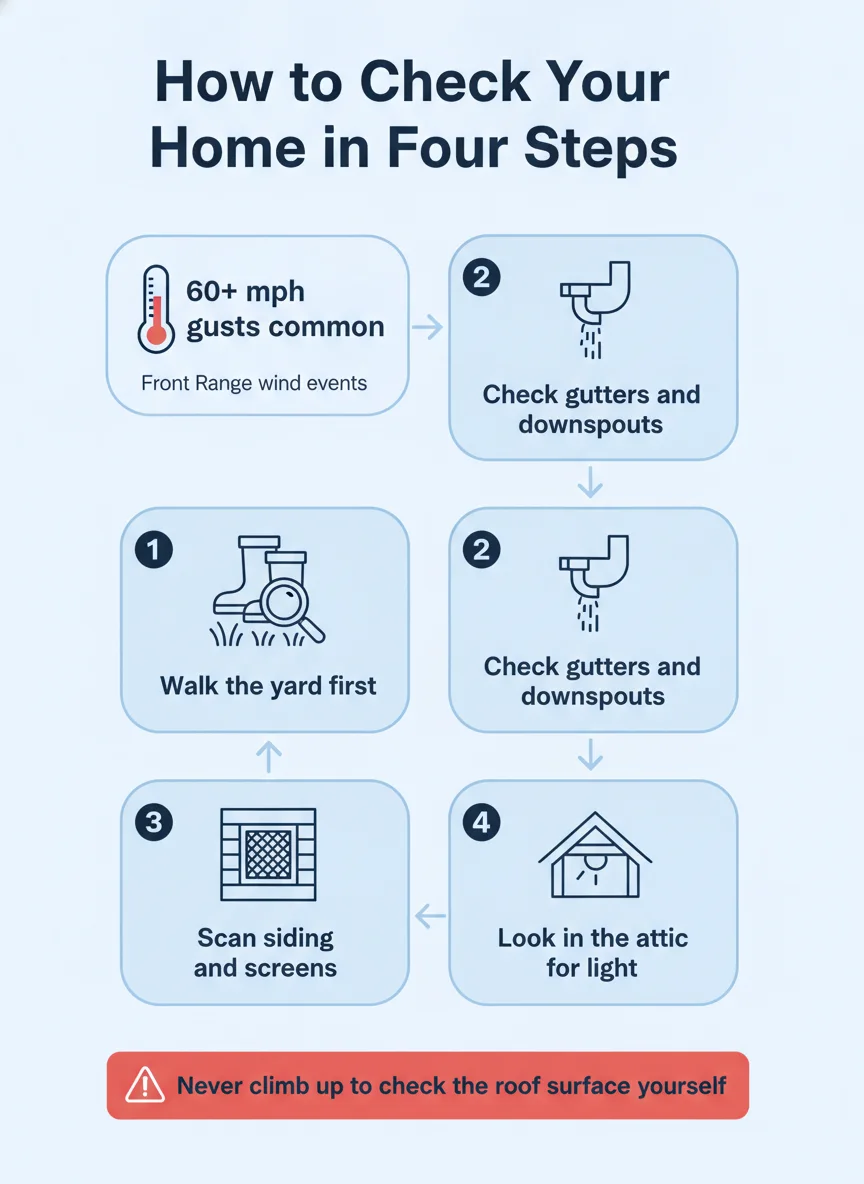
- Walk the yard: Look for shingle pieces, granules, or hailstones still melting in shaded spots. Note anything that doesn't belong in the grass or flower beds.
- Check gutters and downspouts: From the ground or a ladder at the eave, look for dents, dings, or sections pulled loose from the fascia. Soft metal damage here often means roof damage above it.
- Scan the siding and window screens: Hail dents vinyl and aluminum siding and can tear or dent window screens. Check all sides of the house since wind-driven hail usually hits one direction harder.
- Look at vent caps and the AC unit: These soft metal pieces are some of the most reliable indicators of hail impact. Dents or dings here are worth photographing closely.
- Check the attic for daylight or damp: If it's safe to go up, a flashlight check in the attic can reveal pinholes of daylight or fresh damp spots that point to a compromised spot on the roof deck.
- Photograph everything, dated: Take wide shots of each side of the house plus close-ups of any damage you find. Time-stamped photos from the first morning are the strongest record you can have.
- Call for an inspection: Once you've documented what you can see, Roof Inspection is the next step to get an honest read on what, if anything, needs repair.
What You're Likely to Find
Most storm walk-arounds turn up one of two outcomes: nothing conclusive, or a handful of clear signs worth a closer look. Neither outcome means you're done, since the roof surface itself still needs trained eyes either way.
Minor or No Visible Signs
If the yard is clean, the gutters are straight, and the siding looks untouched, that's a reasonably good sign, but it doesn't rule out hail damage on the shingles themselves, which is the hardest thing to spot without getting up there. A quick professional look after any hailstorm with hail the size of a quarter or larger is still worth scheduling, even if the ground-level signs are quiet.
This is also a good moment to check your attic with a flashlight if you haven't already, since a small compromised spot on the roof deck can exist without any obvious exterior clue yet. Catching it before the next rain keeps a minor issue minor.
Clear Signs of Damage
Dented gutters, shingles in the yard, or a visible hole or crease on a slope you can see from the ground are all signs the storm did real damage. At this point, stop cleaning up the debris until it's photographed, since that evidence is useful for storm damage and insurance documentation if you end up filing a claim.
If you see water staining on a ceiling or damp insulation in the attic, that's an active leak and a different urgency level than cosmetic storm damage. That calls for roof repair and emergency tarping rather than waiting for a scheduled inspection.
What You Can Check Yourself vs. What Needs a Pro
The ground-level walk-around, the gutter check from a ladder at the eave, and the attic flashlight check are all reasonable for a homeowner to handle. None of them require getting on the roof surface itself, and all of them give you useful information to decide what happens next.
Getting up on the roof after a storm is where it's worth calling in a professional instead. Wet shingles, loose granules, and storm debris make for a slippery surface, and the kind of damage you're looking for, bruised mat or cracked seals, is subtle enough that an untrained eye can walk right past it or, worse, cause more damage by walking on compromised shingles.
A trained inspector also knows how to document damage in the format an insurance adjuster expects to see, which matters more than most homeowners realize until they're deep into a claim. If you're unsure whether what you found warrants a repair or just a closer look, that's exactly the kind of call worth making rather than guessing.
Making the Call
A storm that's bad enough to dent your gutters or scatter shingles in the yard is bad enough to warrant a professional look, even if everything seems fine from where you're standing. The cost of a wasted inspection call is a lot smaller than the cost of a small issue going unnoticed through another storm season, especially in a region that sees as much hail and wind as Westminster and the rest of the Front Range.
If your walk-around turns up dents, debris, or anything that looks out of place, get it looked at before the next system rolls through. For a deeper look at prepping before weather hits rather than after, see our storm prep checklist. Virtuous Roofing and Exteriors handles the inspection and documentation end to end if you need it.
Frequently asked questions
How do I know if my roof has hail damage?
You usually can't tell from the ground with certainty, since hail bruises and granule loss show up on the roofing surface itself rather than in the yard. Soft metals like vent caps, gutters, and AC fins bruise and dent more visibly and are a good early clue that the roof above them probably took a hit too.
What should I photograph after a storm?
Photograph anything unusual at ground level before you touch or clean it up: dented gutters and downspouts, debris or granules in the yard, damaged screens, and any dings on siding, fencing, or your car. Date-stamped photos from the first morning carry more weight than photos taken a week later after rain and yard work have changed things.
Is it normal to find shingle granules in my gutters after hail?
A handful of granules in the gutter after a storm isn't automatically alarming, since some granule loss happens over normal weathering too. A heavier buildup right after a hail event, especially paired with dented soft metals nearby, is worth having looked at.
Do I need to call my insurance company the same day?
You don't have to call the same day, but it's smart to document damage while it's fresh and reach out within a reasonable window, since most policies have a timeframe for reporting. Getting an inspection scheduled early also helps if more storms are forecast before anyone gets a look at the roof.
Can I check my own roof for damage?
Walking the yard, checking gutters from a ladder at the eave line, and looking in the attic are all reasonable for a homeowner to do. Getting up on the roof surface itself after a storm isn't worth the risk, since wet or granule-loose shingles are slippery and the damage you're looking for is often subtle enough that it's easy to miss or, worse, make worse by walking on it.