What's the Real Difference Between a Manufacturer Warranty and a Workmanship Warranty?
A manufacturer warranty and a workmanship warranty cover two completely different failure points on the same roof, and most homeowners don't learn the difference until something goes wrong. The manufacturer warranty comes from the company that made the shingles, underlayment, or metal panels, and it protects against defects in the product itself, things like premature granule loss or a seal strip that never bonds. The workmanship warranty comes from the installing contractor, and it covers how the roof was actually put together, which is a separate liability entirely.
In a region like the Denver Metro and Northern Colorado, where temperature swings, wind, and hail stress a roof system harder than in milder climates, the line between a material defect and an installation error matters more than it does elsewhere. A nail pattern that's slightly off or flashing that wasn't sealed correctly can look identical to a product failure from the ground, but it falls under a completely different warranty and a completely different company. Knowing which warranty applies before you file a claim saves weeks of back and forth.
How the Two Warranties Actually Work
Both warranties exist on paper the moment the roof is finished, but they only protect you if the paperwork behind them was handled correctly. That means registration deadlines, proof of a proper installation, and keeping documentation on hand in case a claim ever needs to be filed.
What a Manufacturer Warranty Covers
A manufacturer warranty is tied to the physical product, the shingles, underlayment, starter strip, and ridge cap that came out of the factory. If one of those materials fails to perform as designed within the warranty period, the manufacturer typically covers the cost of replacement material, though coverage for the labor to remove and reinstall often phases down over time unless you've purchased an enhanced or lifetime system warranty.
These warranties are also system-specific, meaning the manufacturer usually requires that several of their own components be used together, the shingle, underlayment, and ventilation accessories all from the same product line. Mixing in a competitor's underlayment to save money can disqualify the entire system warranty even if the shingles themselves are fine, which is a detail a lot of homeowners never find out until it's too late.
What a Workmanship Warranty Covers
A workmanship warranty covers the labor and technique behind the installation, separate from whether the materials themselves were defective. If a leak develops because flashing wasn't sealed properly, nails were driven at the wrong angle, or ventilation wasn't installed to spec, that falls on the installing contractor's workmanship coverage, not the manufacturer.
The length and terms of a workmanship warranty vary from one roofing company to the next because, unlike the manufacturer warranty, there's no industry-wide standard length. This is the warranty worth asking the most questions about before you sign a contract, since it reflects how confident a contractor is in their own crew's work rather than in a factory-made product.
| Warranty Type | What It Covers | What Can Void It |
|---|---|---|
| Manufacturer Warranty | Defects in shingles, underlayment, and accessory products | Mixing brands, skipping registration, poor attic ventilation |
| Workmanship Warranty | Installation errors like flashing, nailing, and sealing | Unlicensed repairs by another contractor, altering the roof later |
| Enhanced/System Warranty | Extends material coverage to include install labor | Not using a certified installer for the full system |
The Roof System These Warranties Are Actually Protecting
A roof isn't one product, it's a stack of components working together: the deck, the underlayment, the shingles or metal panels, flashing at every penetration, and a ventilation system that keeps the attic at the right temperature year-round. Warranties are written around that whole system because a failure in any one layer can shorten the life of the layers around it.
This is why a Roof Replacement done correctly addresses ventilation and flashing details at the same time as the shingles themselves, not as an afterthought. A roof with great shingles but blocked attic vents can still cook the underlayment from below and create a claim that gets denied because the root cause was airflow, not the material.
Step-by-step: Protecting Both Warranties From Day One
Most warranty disputes trace back to a handful of avoidable mistakes made in the first few weeks after installation. Walking through these steps keeps both warranties intact for the life of the roof.
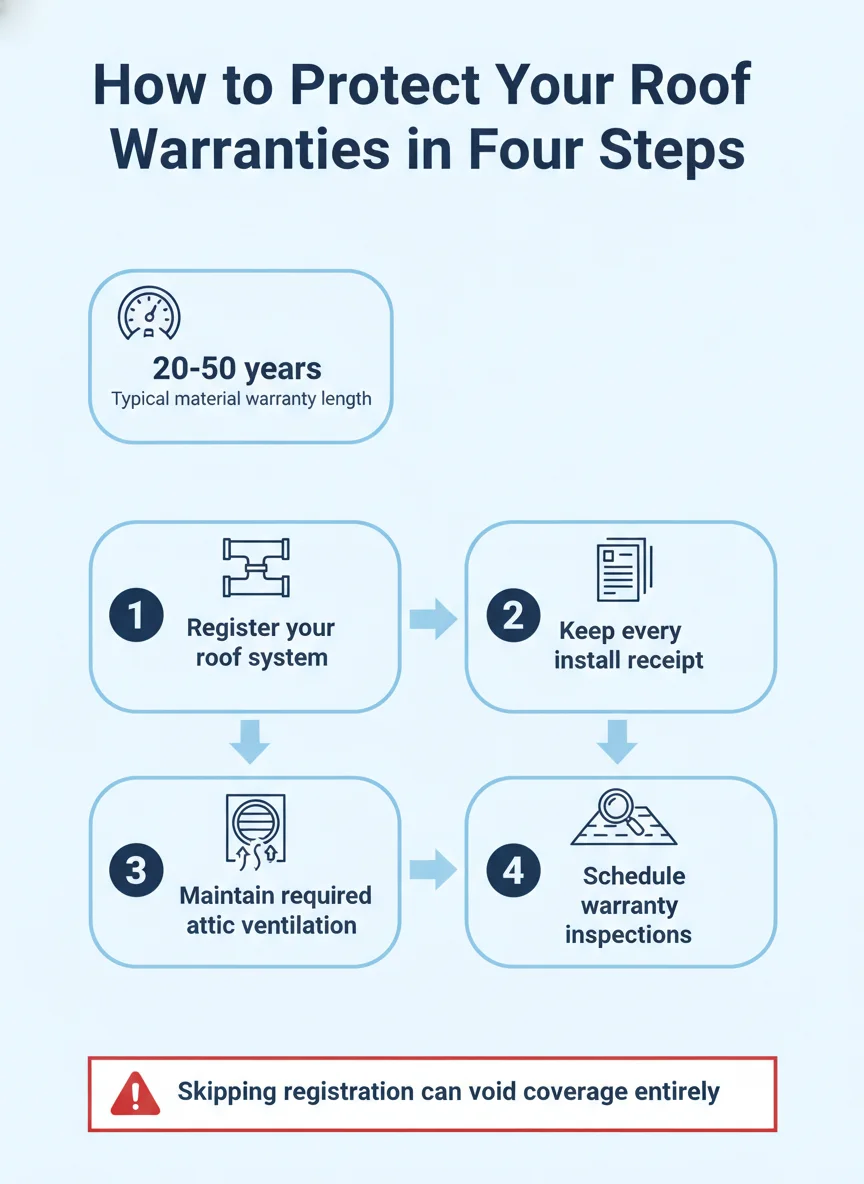
- Confirm registration: Ask your contractor for written confirmation that the manufacturer warranty was registered in your name, not left unfiled.
- Request full documentation: Keep copies of the invoice, product labels, and any permit paperwork in a single folder for future reference.
- Verify ventilation specs: Make sure the install includes the attic ventilation the manufacturer requires for full system coverage, not the minimum.
- Avoid layering repairs: Never let a different, unlicensed contractor patch the roof later, since unauthorized work can void both warranties.
- Schedule periodic checks: A simple visual check every year or two catches small issues before they become the kind of damage that triggers a warranty dispute.
- Save every receipt: File away receipts for any future repair or maintenance work, since manufacturers can ask for proof of upkeep.
What Voided Coverage Actually Looks Like
Warranty denials rarely come from dramatic failures. They almost always trace back to a handful of specific, preventable mistakes that happened during or shortly after installation.
Ventilation Problems
Inadequate attic ventilation is one of the most common reasons a manufacturer denies a claim, because trapped heat and moisture degrade shingles and underlayment from underneath, well before their expected lifespan. The shingle might look fine from the street, but a manufacturer's inspector can often tell from the underside that the attic never had proper airflow.
This is frustrating for homeowners because ventilation isn't visible once the roof is finished, so a shortcut taken during installation doesn't show up until the warranty claim is already denied. It's worth asking any contractor directly how they calculate ventilation needs for your specific attic before work begins.
Layovers and Unregistered Systems
Installing a new layer of shingles over an old one instead of a full tear-off is another frequent cause of denied claims, since manufacturers generally require a clean deck to issue full system coverage. A layover can look like a reasonable shortcut on quote day, but it quietly cancels out most of the protection you're paying for.
The other common issue is simpler: registration that never happened. If the manufacturer has no record of your roof in their system, they have no obligation to honor a claim, regardless of how clear the defect looks on inspection.
Should You Handle Roof Warranty Paperwork Yourself or Call a Pro?
You can absolutely keep your own copies of the invoice, warranty documents, and product labels, and you should, regardless of who installs the roof. That part takes five minutes and gives you leverage if a dispute ever comes up down the road.
What you can't do yourself is file a manufacturer system registration that requires a certified installer's credentials, or diagnose whether a leak falls under the material warranty versus the workmanship warranty. That distinction usually requires someone who can get on the roof, look at the failure point, and trace it back to its actual cause.
If you're ever unsure which warranty applies to a problem you're seeing, a licensed roofer can usually tell within one visit, often as part of a Roof Inspection. That's a far better starting point than guessing and filing a claim with the wrong party.
Getting the Paperwork Right the First Time
The best time to sort out warranty coverage is before the first shingle goes down, not after a leak shows up. Ask your contractor in writing what manufacturer warranty tier you're getting, what their own workmanship warranty covers and for how long, and whether registration will be handled for you or left in your hands. For homeowners in Westminster and across the region planning a new roof, those three questions, along with a look at what actually happens during the install itself in What Happens on Roof Replacement Day, are worth more than any sales pitch.
A roof is one of the largest investments most homeowners make in their property, and the warranty paperwork behind it is what protects that investment for decades. Virtuous Roofing and Exteriors walks homeowners through both warranties in plain language before any contract gets signed, so there are no surprises when it's time to use them.
Frequently asked questions
What's the difference between a manufacturer warranty and a workmanship warranty?
A manufacturer warranty covers defects in the roofing material itself, like a shingle that cracks or curls before its time. A workmanship warranty covers the installer's labor, so if a leak shows up because of how the roof was put together, the installer is on the hook, not the shingle maker.
Does a roof warranty transfer to a new homeowner if I sell my house?
Many manufacturer and workmanship warranties do transfer, but usually only once and often within a set window after closing, and only if the paperwork is filed correctly. Ask your roofer for the transfer terms in writing before you sell, since an unregistered or lapsed warranty generally can't be revived later.
What can void a roof warranty?
The most common culprits are inadequate attic ventilation, installing a new layer over old shingles instead of a full tear-off, using unapproved accessory products, and skipping manufacturer registration within the required timeframe. Any of these can give a manufacturer grounds to deny a claim even if the shingle itself failed.
Do I need to register my roof warranty myself?
Usually the installing contractor registers the system warranty on your behalf, but you should confirm it happened and get a copy of the confirmation. Relying on a verbal promise that it was handled is how homeowners discover years later that the registration was never filed.
How long does a roof warranty typically last?
Material warranties on asphalt shingles commonly run 20 to 50 years depending on the product tier, while workmanship warranties set by the installer vary by company and are usually shorter. Ask for both terms in writing and compare them side by side before you choose a contractor.