
Why Storm Damage Is a Regular Fact of Life Here
Hail and high wind are part of the deal living along the Front Range and across Northern Colorado. Storms can roll through fast, drop hail with real force, and move on before you've even finished checking on the car in the driveway. The roof takes the brunt of it, and unlike a dented car hood, roof damage is often invisible unless you know exactly where to look.
That's the tricky part. A roof can take a real hit and still look fine from the street. Granule loss, bruised shingles, and creased edges don't always show up as an obvious problem until months later when a slow leak develops or the next storm finishes the job the first one started. A prompt, documented inspection is the difference between catching it early and finding out the hard way.
What Actually Causes Storm Damage to a Roof?
Two forces do most of the damage in Colorado storms: impact and lift. Hail bruises the surface and knocks granules loose, which exposes the roofing material underneath to UV and moisture faster than it was built to handle. Wind, on the other hand, gets underneath the edges of shingles and either creases them, lifts them, or tears them off outright, along with the possibility of impact damage reaching down to the decking itself in more severe events.
Hail Bruising and Granule Loss
Hail damage shows up as small, dark, slightly soft spots where the impact knocked the protective granules loose from the shingle surface. It's subtle enough that a homeowner walking the yard afterward often misses it entirely, especially on darker shingles where the bruising blends in. The exposed spot is now more vulnerable to sun and water than the rest of the roof.
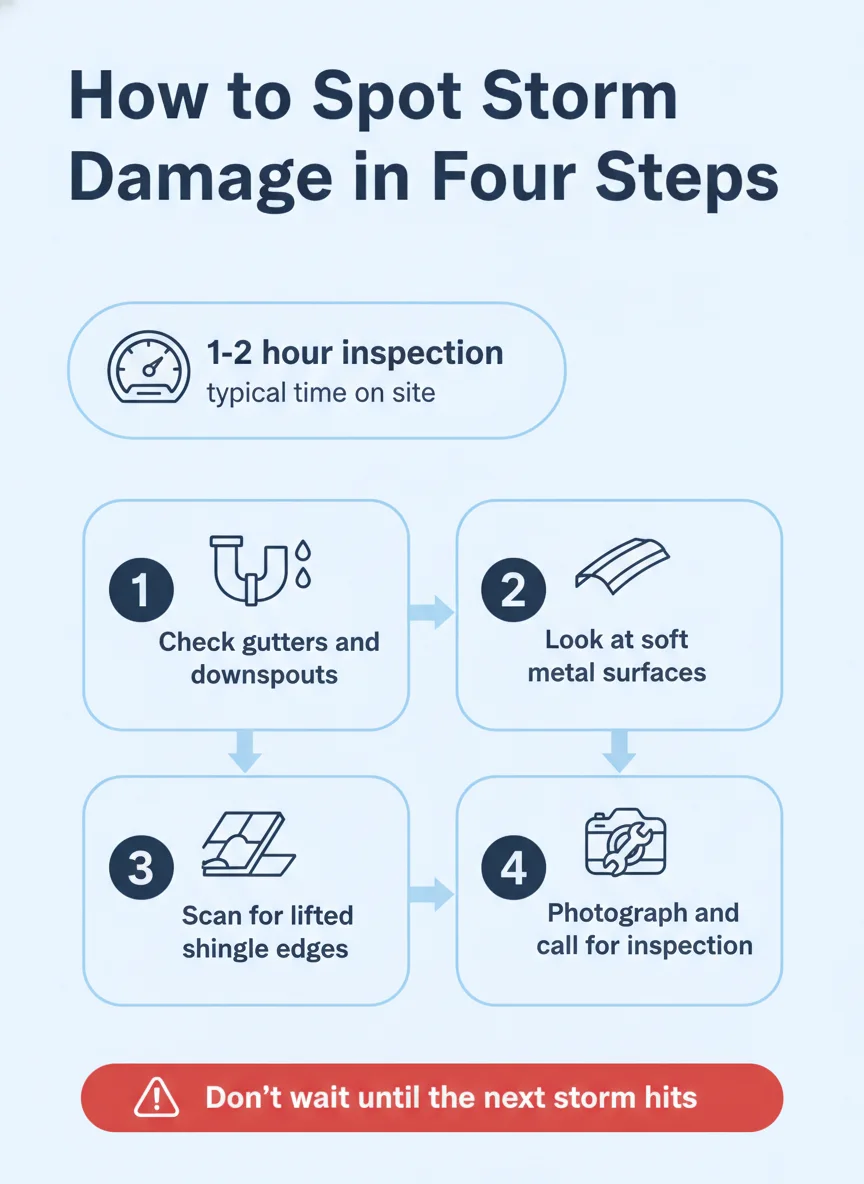
A good way to spot possible hail activity without getting on the roof is checking soft metal surfaces around the property, gutters, downspouts, vent caps, and AC units. Dents in those materials are a strong sign the hail was large enough to also affect the roof, even if the shingles themselves look intact from below.
Wind-Lifted, Creased, or Missing Shingles
Wind damage tends to be more visually obvious once you know what to look for. A creased shingle has a visible line where it folded under wind pressure, and a lifted shingle edge might not be flush against the roof surface anymore. In stronger events, whole shingles or sections can tear away, leaving a bare patch that's an obvious entry point for water.
Even shingles that aren't missing but got lifted and reset by the wind can lose their seal, which means they're no longer bonded down the way they were originally installed. That's a leak risk that isn't visible without a close inspection, since the shingle can look fine while sitting loose underneath.
| Damage Type | What It Looks Like | Why It Matters |
|---|---|---|
| Hail bruising | Dark, soft spots with granule loss | Exposes the material to faster wear and leaks |
| Wind crease | A visible fold line across a shingle | Weakens the seal and invites water underneath |
| Lifted shingle | Edge no longer flush with the roof | Can reseal loosely or blow off in the next storm |
| Missing shingle | Bare patch of exposed decking | Immediate leak risk until repaired |
What's Actually at Risk on the Roof
The roofing material is the first line of defense, but it's not the only layer. Underneath the visible surface sits decking and underlayment that are meant to stay dry and protected. Once granules are knocked off or a shingle is compromised, that protection weakens, and repeated storms compound the problem faster than a single event usually would on its own.
This is also why documentation matters so much for storm damage specifically. Unlike a leak that shows up obviously on a ceiling, hail bruising and wind creasing can sit quietly for a season before turning into a visible problem, which is exactly the gap an insurance adjuster and a homeowner both need clear photos and notes to bridge.
Step-by-step: What a Storm Damage Inspection Looks Like
A documented inspection after a storm is built around creating a clear record, not just a quick look.
- You reach out: Tell us the approximate date of the storm and anything you've noticed, like dented gutters or interior stains.
- We schedule the visit: Most inspections take about one to two hours on site depending on roof size and access.
- We walk the roof: We check for bruising, creasing, lifted edges, and any exposed decking across every slope.
- We document everything: Photos and notes cover each area of damage so there's a clear record tied to the storm.
- We review findings with you: You get a plain explanation of what we found and whether it looks claim-worthy.
- We assist with your claim: If it's insurance-related, we can work directly with your adjuster through the storm damage and insurance process.
What You'll Typically Find After the Inspection
Damage That's Isolated and Repairable
Sometimes the storm hit one section harder than the rest, a few creased shingles on the windward side or scattered bruising that doesn't cover the whole roof. In those cases, a targeted repair addresses the affected area without requiring a full replacement, and it's a straightforward fix once the damage is documented.
This outcome is more common with newer roofs or roofs that caught a glancing edge of a storm rather than a direct hit. It's good news, and it's worth knowing that not every storm event means a full roof is on the table.
Damage That's Widespread Enough to Warrant Replacement
Other times, the bruising and creasing are spread across most or all of the roof, which is common when a storm hits a whole neighborhood evenly. When damage is that widespread, a full roof replacement is often the more sensible outcome, both structurally and from an insurance standpoint, since patching dozens of individual spots rarely holds up as well as a fresh install.
This is where insurance assistance matters most. A well-documented, widespread damage report gives an adjuster the clearest picture of why replacement, not repair, is the right call.
DIY vs Calling a Pro
A homeowner can reasonably check ground-level clues after a storm: dented gutters, damaged AC fins, debris in the yard, or obvious shingle pieces on the ground. These are useful data points and worth photographing right away while the storm date is fresh.
What's not reasonable is climbing onto the roof to inspect individual shingles for bruising or creasing. Storm-damaged roofs can be slick or weakened in ways that aren't obvious, and identifying hail bruising takes a trained eye that knows the difference between normal wear and impact damage.
The practical split is: check what you can see from the ground, then bring in a professional for the roof-level inspection and any insurance documentation. That combination gets you the clearest picture with the least risk.
Getting a Fair Shake From Your Insurance Company
Storm damage claims move faster and go smoother when the documentation is thorough from the start. A clear photo record tied to the actual storm date, paired with a straightforward explanation of what the damage means, gives your adjuster what they need to process the claim without unnecessary back and forth. For a broader look at the repair-versus-replace decision, see our roof repair or replacement guide.
Homes across Fort Collins, Boulder, and every other corner of Northern Colorado deal with this same pattern after every hail and wind event. Virtuous Roofing and Exteriors inspects, documents, and works the claim from start to finish so you're not left guessing what the storm actually cost your roof.
Frequently asked questions
How do I know if my roof has hail damage?
Hail damage often shows as small dark bruises where granules have been knocked loose, along with dents on soft metal like vents and gutters. It's not always visible from the ground, which is why a documented inspection matters even when the roof looks fine at a glance.
Does wind damage always mean missing shingles?
Not always. Wind can lift, crease, or loosen shingles without pulling them off completely, and those loosened shingles are still vulnerable to leaking or blowing off in the next storm. A creased shingle is a common sign wind got underneath it.
Should I call my insurance company or a roofer first?
It usually makes sense to have a roofer document the damage first, since that documentation is what your insurance claim relies on. We can inspect, document everything, and work directly with your adjuster so nothing gets missed.
How long after a storm should I get an inspection?
Sooner is better, both because damage can worsen with the next weather event and because most policies have a window for filing a claim. A prompt inspection also creates a clear record close to the date of the storm.
Can I inspect my own roof for storm damage?
You can look at gutters, downspouts, and any visible metal from the ground for dents, which are decent early indicators. Walking the roof itself to check individual shingles is best left to a professional who can do it safely and knows what to look for.