
Why Storm Season Prep Matters in Colorado
The Denver Metro and Northern Colorado see a predictable stretch of severe weather every year, with hail and high wind events showing up more often through the warmer months. It's one of the reasons the region sees so much roofing and storm-related work, and it's also why a little prep before the season starts pays off.
A roof that's already showing small signs of wear, a lifted shingle here, a soft spot in the flashing there, is far more vulnerable when hail or high wind actually hits. Catching those small issues before the season starts, rather than after a storm makes them worse, is the difference between a minor repair and a much bigger one.
What Actually Happens to a Roof During a Storm
Hail and wind stress a roof in different ways, and understanding the difference helps explain why certain parts of the checklist matter more than others.
How Hail Affects Roofing Materials
Hail impacts can bruise or crack shingles, knock granules loose, and dent softer materials like vent covers and gutters. The damage isn't always dramatic looking right away, which is part of why a professional inspection after any significant hail event matters, since granule loss and cracked mats aren't always obvious from the ground.
Repeated hail exposure over the years also shortens a roof's overall lifespan, even when no single storm causes an obvious problem. That's part of why documenting your roof's condition before and after storm season helps track wear over time, not just after one bad storm.
How Wind Affects Roofing Materials
High wind works differently, testing the roof's weakest attachment points rather than its surface. Shingles that are already lifting or edges where the sealant has worn thin are the first to go, sometimes tearing off entirely in a strong gust.
This is why edge and ridge condition matters so much heading into windy months. A roof that's solid across the field but loose at the edges is still at real risk, which is exactly the kind of thing an inspection catches before it becomes a mid-storm emergency.
| Area | What to Check | Why It Matters |
|---|---|---|
| Shingles or roofing surface | Curling, lifting, missing granules | Weak points where hail and wind do the most damage |
| Gutters and downspouts | Clogs, granule buildup, loose sections | Backed up water can push under roof edges |
| Attic | Daylight, staining, damp insulation | Early sign of an existing leak before storm season adds to it |
| Flashing and vents | Cracked seals, rust, loose fasteners | Common entry points for water during heavy rain |
The Parts of the Roof Worth Knowing
You don't need to be a roofer to run through this checklist, but knowing what each part does helps you understand what you're looking at. The roofing surface, whether asphalt shingles, metal, or another material, is the main barrier against water. Flashing seals the transitions around chimneys, vents, and valleys where two roof planes meet, and it's one of the most common places a leak starts.
Gutters and downspouts manage where water goes once it leaves the roof, and when they're clogged, water backs up under the roof edge instead of draining away. The attic is your best early warning system, since a leak often shows up there, as a stain or damp insulation, before it ever reaches a ceiling you can see from inside the living space.
Step-by-Step: Running Your Pre-Storm-Season Check
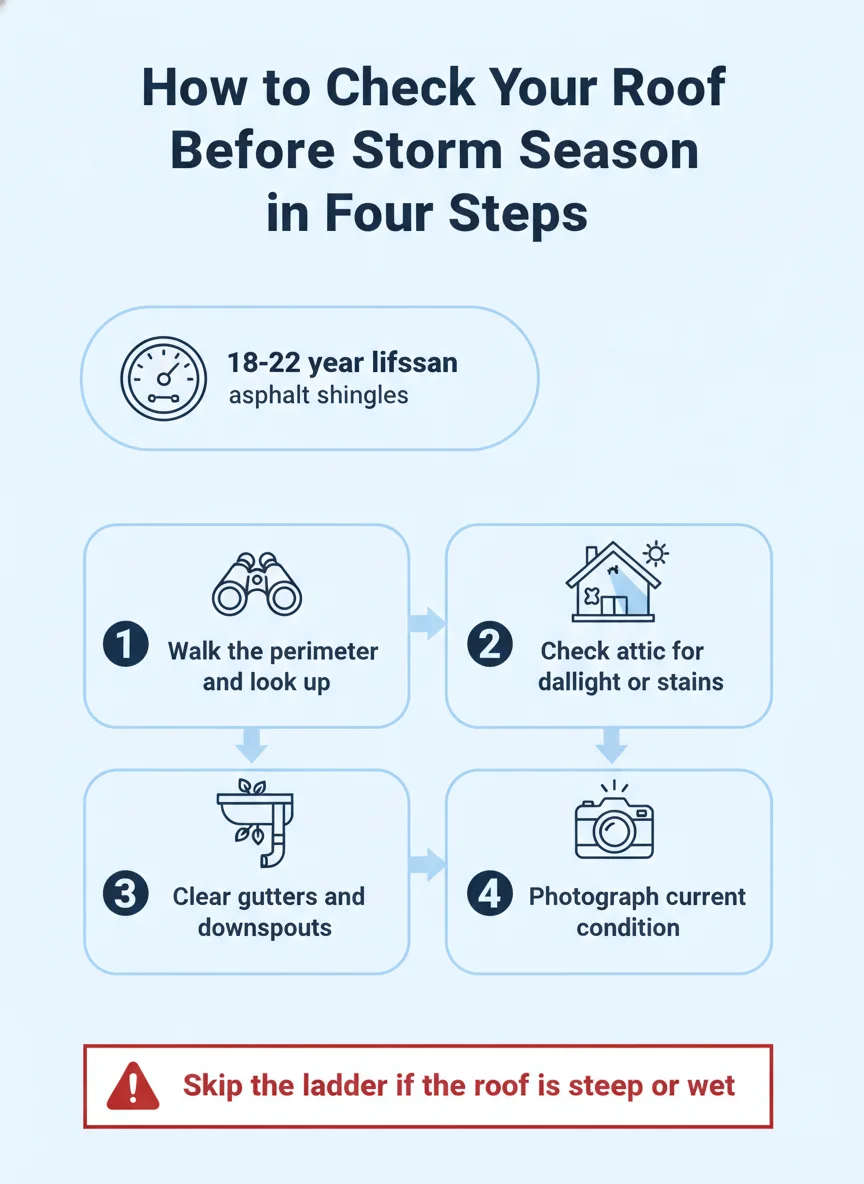
This is the same basic walkthrough we'd run during a professional roof inspection, scaled down to what a homeowner can safely do from the ground and inside the home.
- Walk the perimeter: Look up at the roofline from several angles, checking for obviously lifted, missing, or discolored sections you can see without climbing anything.
- Check the attic: Look for daylight coming through the roof deck, damp or discolored insulation, and any musty smell that suggests existing moisture.
- Clear the gutters: Remove leaves, debris, and granule buildup so water can move freely off the roof instead of backing up under the edge.
- Inspect vent covers and flashing: Look for rust, cracked sealant, or loose fasteners around chimneys, plumbing vents, and skylights from the ground or a stable ladder position.
- Photograph current condition: Take wide shots of the whole roof and close-ups of any areas of concern, dated and saved somewhere you can find them later.
- Schedule a professional look: If anything seems off, or it's just been a while, book an inspection before storm season rather than after the first bad hit.
What You'll Likely Find
Most homeowners running this checklist for the first time find at least one small item worth addressing, and that's normal. What matters is catching it now instead of after a storm makes it worse.
Common Small Issues
Loose gutter sections, a few curling shingles near a roof edge, or slightly worn sealant around a vent are all common and usually straightforward to address on their own before storm season starts. None of these require panic, but they're worth putting on the schedule.
Catching these early is exactly the point of the checklist. A curling shingle today is a much smaller fix than a torn-off section after 60 mile-an-hour gusts test that same weak spot.
Signs That Need Faster Attention
Daylight visible in the attic, active staining that's growing, or soft spots you can feel underfoot on the roof deck are signs that something's already wrong, not just aging. These should move to the front of the line rather than waiting for the general storm-season pass.
If you find any of these, it's worth reading through what a growing ceiling stain usually means and getting a professional look before the season's first serious storm arrives.
DIY vs. Calling a Pro
A lot of this checklist is safe and reasonable for a homeowner to run through directly. Looking up from the ground, checking the attic, clearing debris from gutters you can reach safely, and photographing what you see all fall well within what most people can handle on their own.
Getting on the roof itself is a different story. Steep pitches, loose granules, and the general instability of walking a roof surface make it a job best left to someone who does it regularly with the right footing and safety gear, especially heading into a season known for unpredictable weather.
If your checklist turns up anything questionable, or it's simply been a while since anyone's taken a close look, a professional inspection fills in what you can't safely check yourself. It's a small investment against the cost of storm damage going unnoticed until it's much worse.
Getting Ahead of the Season
Storm season in Colorado isn't a surprise, it comes around every year, which means the roof prep that matters most is the kind you do ahead of time rather than in reaction to the first bad storm. A quick walkthrough, a cleared gutter system, and a few dated photos put you in a much better position no matter what the season brings.
If your walkthrough turns anything up, or you'd rather have a professional set of eyes on it before the season gets going, Virtuous Roofing and Exteriors is available across the region for a straightforward assessment.
Frequently asked questions
When does storm season typically start in Colorado?
Colorado's hail and severe wind activity tends to pick up heading into late spring and runs through the summer months. Checking your roof before that stretch begins gives you time to fix small issues before they become storm-driven emergencies.
What should I photograph before storm season?
Take clear photos of your roof's overall condition, close-ups of the shingles or roofing material, and the gutters, ideally from a few different angles. These photos establish a baseline that makes it much easier to prove new damage if you ever file a claim afterward.
Do I need to get on my roof to check it?
Not necessarily. A lot of visible issues, lifted shingles, sagging sections, damaged flashing, can be spotted from the ground with binoculars or from an upstairs window, and a professional [roof inspection](/services/roof-inspection) covers what you can't see safely from below.
What are the most common signs of storm-ready roof problems?
Curling or lifted shingle edges, granules collecting in gutters, and small dents in soft metal like vent covers are common early warning signs. None of these guarantee failure, but they're worth having a professional look at before the next storm tests them.
Does clearing gutters actually help protect the roof?
Yes, clogged gutters back water up under the roof edge, which can lead to rot and interior leaks during heavy rain. Clearing them before storm season is one of the simplest, most effective things a homeowner can do.