
Why a Ceiling Stain in Colorado Homes Deserves a Fast Look
A ceiling stain rarely shows up out of nowhere. Across the Denver Metro area and Northern Colorado, homes take a beating from hail, heavy wind, and big temperature swings between summer and winter, and a roof that's been through a few of those seasons is more likely to develop a weak point. That weak point doesn't always announce itself with a dramatic drip. Sometimes it's a faint yellow ring on the drywall that grows a little bigger every time it rains.
The reason it deserves attention fast is that water damage rarely stays contained. Left alone, a small leak can soak insulation, warp framing, and eventually show up as a much bigger repair than the original problem. Catching it early, whether that means a same-week roof inspection or an emergency call, is almost always cheaper and less disruptive than waiting to see if it gets worse.
What Actually Causes a Leak or Stain on Your Ceiling?
Most ceiling stains trace back to one of a few common problems. An active leak usually comes from a penetration point, like a vent or a chimney, or a section of roofing that's been physically damaged. A slower leak often develops at flashing details, a pipe boot that's cracked with age, or a valley where two roof planes meet and water concentrates. There's also the possibility it's not the roof surface at all, but a ventilation issue letting warm air condense in the attic.
Active Leaks at Penetrations or Damaged Sections
An active leak tends to show up fast and get worse with each rain event. It's usually tied to a specific point, a vent boot, a skylight edge, or a spot where wind or debris damaged the roofing material directly. These leaks are the ones most likely to need a same-day tarp, because they're actively letting water through right now, not just showing evidence of a past problem.
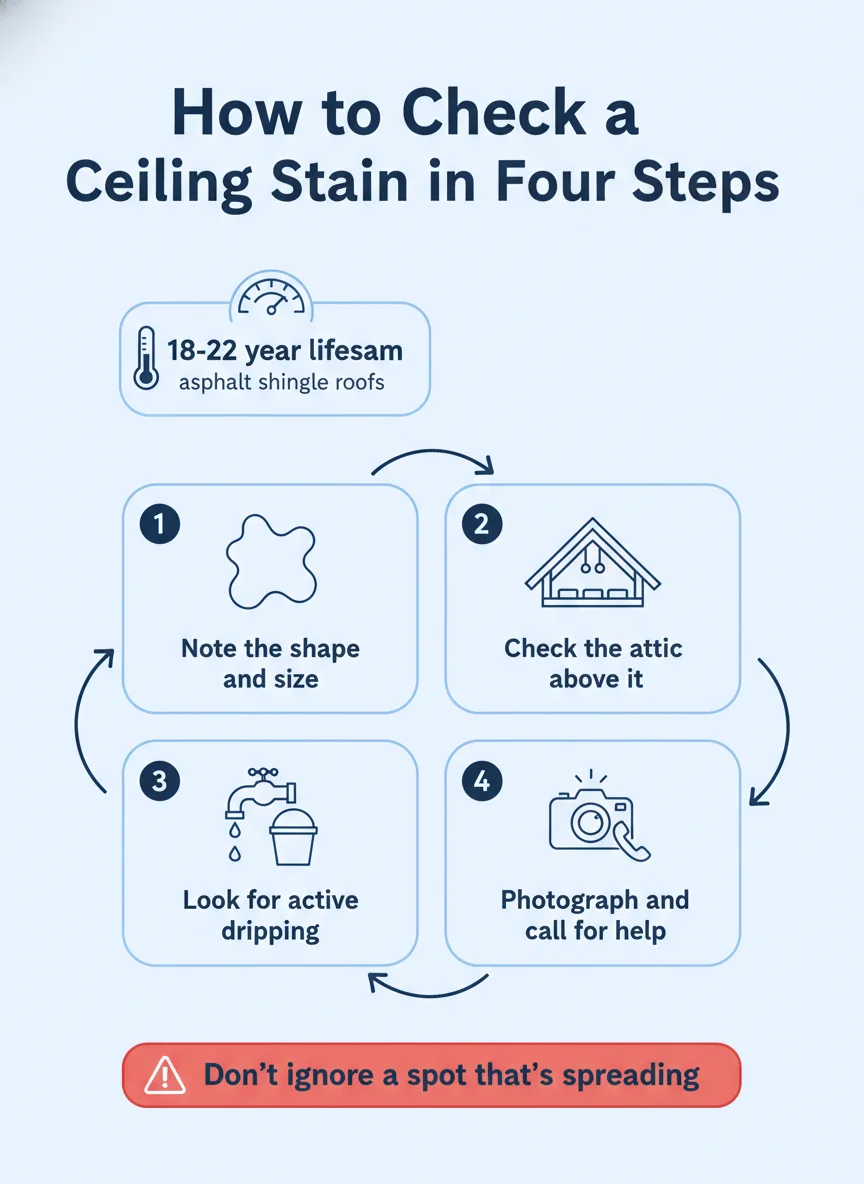
If you can get into the attic safely, look directly above where the ceiling stain sits. Active leaks usually show wet insulation, dark streaking on the rafters, or actual standing moisture nearby. That's useful information to share when you call, since it helps narrow down where the problem likely is before anyone's even on the roof.
Slow Leaks at Flashing, Pipe Boots, or Worn Valleys
A slow leak is sneakier. It might only show up during wind-driven rain or when snow melts and refreezes near a valley. Flashing around chimneys and walls, and rubber pipe boots that dry out and crack over the years, are common culprits. These leaks can go unnoticed for a while because the water finds a path along framing before it ever reaches the ceiling surface.
The tell here is usually a stain that seems to move or change shape between rains, rather than one tied to a single obvious wet spot. It's worth checking the attic during or right after a storm if you suspect this kind of leak, since catching it wet in the act tells you a lot more than a dry inspection days later.
| Signal | Active Leak | Slow Leak |
|---|---|---|
| Onset | Shows up fast, often during or right after a storm | Builds gradually over weeks or seasons |
| Location pattern | Usually directly below the entry point | Can appear offset from the actual source |
| Attic evidence | Wet insulation or visible dripping | Dark staining without active moisture |
| Urgency | Same-day tarp and inspection | Still worth scheduling soon, before it spreads |
What's Actually Letting Water In
Roofs are built as a system, not a single surface. Underneath the visible shingles or panels sits an underlayment layer meant to shed any water that gets past the top surface, and flashing pieces seal the transitions where the roof meets a wall, chimney, or vent. When any one of those pieces fails, whether from age, storm impact, or a poor install years ago, water finds the path of least resistance downward.
That's why a stain in one spot on the ceiling doesn't always mean the problem is directly above it. Water can travel along a rafter or sheathing seam before dripping down somewhere else entirely, which is part of why a proper inspection from the roof side matters more than guessing from inside the attic alone.
Step-by-step: What Happens When You Call for an Active Leak
For an active leak, the priority is stopping water intrusion first and diagnosing the full picture second. Here's roughly how that visit tends to go.
- You call and describe it: We ask a few quick questions about location, how long it's been happening, and whether it's actively dripping right now.
- We schedule the visit: Active leaks get prioritized so the exposure doesn't sit longer than it has to.
- We tarp the active area: A tarp stops new water from getting in while we sort out the permanent fix.
- We inspect the full roof: Not just the leak point, since one visible leak often means it's worth checking nearby areas too.
- We explain what we found: You get a plain-language rundown of the cause and what repairing it involves.
- We schedule the repair: Most repairs happen within a short window once the tarp is holding and materials are lined up.
What You'll Typically Find Once We're on the Roof
Signs Pointing to a Simple Repair
Sometimes the cause turns out to be contained, a cracked pipe boot, a lifted shingle tab, or a section of flashing that pulled loose in the wind. In those cases the fix is usually a targeted repair rather than anything involving the whole roof, and it's often resolved in a single visit once the tarp comes off.
These smaller fixes are common on roofs that are otherwise in decent shape, where one weak spot gave out rather than the whole system aging out at once. It's a good outcome, and it's worth knowing that a single leak doesn't automatically mean a full replacement is next.
Signs Pointing to a Bigger Problem
Other times, the leak is a symptom of a roof that's further along in its life, with granule loss, brittle underlayment, or multiple weak points that happened to fail around the same time. In those cases, we'll walk you through why a repair might just be a short-term fix and what roof replacement looks like as the longer-term answer.
This is also where storm history matters. If the roof took hail or wind damage that hasn't been addressed, a leak can be the first visible sign of a claim-worthy problem, which is a separate conversation from a simple wear-and-tear repair.
DIY vs Calling a Pro
There's real value in what a homeowner can do before anyone shows up. Checking the attic for wet insulation, noting when the stain appears relative to weather, and keeping buckets or towels in place to limit interior damage are all reasonable first steps. Photographing the stain over a few days also gives whoever inspects it useful context.
What doesn't belong on a DIY list is getting on the roof itself, especially with steep pitches or wet conditions common in Colorado weather. Finding and sealing the actual entry point requires walking the roof safely and knowing what a failing flashing detail or worn valley looks like up close, which is not a guess-and-check job.
The honest answer is that interior checks are fine to do yourself, but the roof-side diagnosis and any repair work is a job for a licensed professional. Missing the real cause means paying for the same problem twice.
Getting Ahead of the Next Leak
A ceiling stain is inconvenient, but it's also useful information. It tells you something changed on the roof, and catching it early usually means a smaller, cheaper fix than waiting until the next storm makes it worse. If you're unsure whether what you're seeing is urgent, a quick call and a few photos usually settles it. For related reading, our guide on roof repair or replacement walks through how to weigh those two paths once an inspection is done.
Homes across Aurora, Westminster, and the rest of the Denver Metro area see this exact scenario play out every storm season. Virtuous Roofing and Exteriors handles it the same way each time: stop the water first, diagnose the real cause, and give you a straight answer about what it'll take to fix it right.
Frequently asked questions
Does a ceiling stain always mean the roof is leaking?
Not always. It usually points to water getting in somewhere above, whether that's the roof, a flashing detail, or condensation building up in the attic. Either way, a stain that's new or growing is worth a look before it spreads.
Can I fix a small roof leak myself?
You can do a temporary stopgap, like moving items out of the way or setting a bucket, but finding and sealing the actual entry point on the roof usually calls for a professional who can walk the roof safely. A quick fix that misses the real source often leaks again during the next storm.
How fast should I call someone once I see a stain?
Call as soon as you notice it, especially if it's spreading or you can hear dripping. Water damage compounds fast in framing and drywall, so the sooner it's tarped and inspected, the less it costs you in secondary repairs.
Will a leak show up right away after a storm?
Sometimes yes, sometimes it takes days or weeks to show as a stain, especially with slow leaks at flashing or valleys. That's part of why a post-storm inspection matters even if nothing looks wrong yet from the ground.
What's the difference between a leak and attic condensation?
A leak comes from an opening somewhere in the roofing system, while condensation forms when warm moist air meets a cold surface in a poorly ventilated attic. Both can stain a ceiling, but they call for different fixes, which is why an inspection matters before any repair.