Why Winter Prep Is Its Own Category
Winter in the Denver Metro and Northern Colorado brings a different set of stresses to a roof than hail season does. Instead of sudden impact damage, cold weather works slowly, through freeze-thaw cycles, ice buildup, and the strain that comes from a roof deck that's warmer on the inside than the outside air.
That slow, cumulative nature is exactly why winter prep gets overlooked. There's rarely one dramatic event that forces the issue, just a roof that quietly gets more vulnerable over a few cold months if nothing's checked beforehand. A short walkthrough before the first hard freeze is enough to catch most of what matters.
What Cold Weather Actually Does to a Roof
Two mechanisms drive most winter roof problems: material contraction from cold, and heat escaping unevenly from inside the home. Both are worth understanding before you run through a checklist.
Freeze-Thaw Stress on Materials
Roofing materials expand slightly in heat and contract in cold, and that constant cycling, especially in a climate that swings between sunny afternoons and freezing nights, puts steady stress on shingles, sealant, and flashing. Materials that are already aging handle this stress worse than newer ones, which is part of why older roofs tend to develop new small leaks specifically through the colder months.
Flashing around chimneys, vents, and skylights is often the first place this shows up, since the sealant there is more exposed than the shingles themselves. A flashing seal that looked fine in summer can crack after a few hard freezes, opening a path for water once snow starts to melt.
Ventilation and Ice Dams
Attic ventilation plays a bigger role in winter roof health than most homeowners expect. When warm air escapes into the attic instead of staying inside the living space, it heats the underside of the roof deck unevenly, melting snow near the ridge while the eaves stay cold.
That melted water refreezes at the colder eave, building up an ice dam that can back water up under the shingles above it. Good attic insulation and ventilation keep the roof deck temperature more even, which is one of the most effective ways to prevent ice dams before they start.
| Season | Main Stress on Roof | What to Check |
|---|---|---|
| Summer / storm season | Hail impact, high wind | Shingle surface, granule loss, edge attachment |
| Winter | Freeze-thaw cycling, ice dams | Flashing seals, attic ventilation, gutter clearance |
| Year-round | General aging, UV exposure | Overall shingle condition, visible wear |
The Systems Doing the Work
A few key systems handle most of the winter workload on a roof. Flashing seals the joints where water is most likely to find a way in, particularly around chimneys and vents where two materials meet. Attic ventilation, working alongside insulation, regulates the temperature of the roof deck from underneath, which directly affects how evenly snow melts on top.
Gutters and downspouts matter just as much in winter as they do during storm season, since a clogged gutter holds water right at the roof edge where it's most likely to freeze and contribute to an ice dam. Keeping all three of these systems in good shape before winter is most of what winter prep actually is.
Step-by-Step: Winterizing Your Roof
This is the basic sequence worth running through before temperatures drop for good, ideally with enough time left to schedule any repairs it turns up.
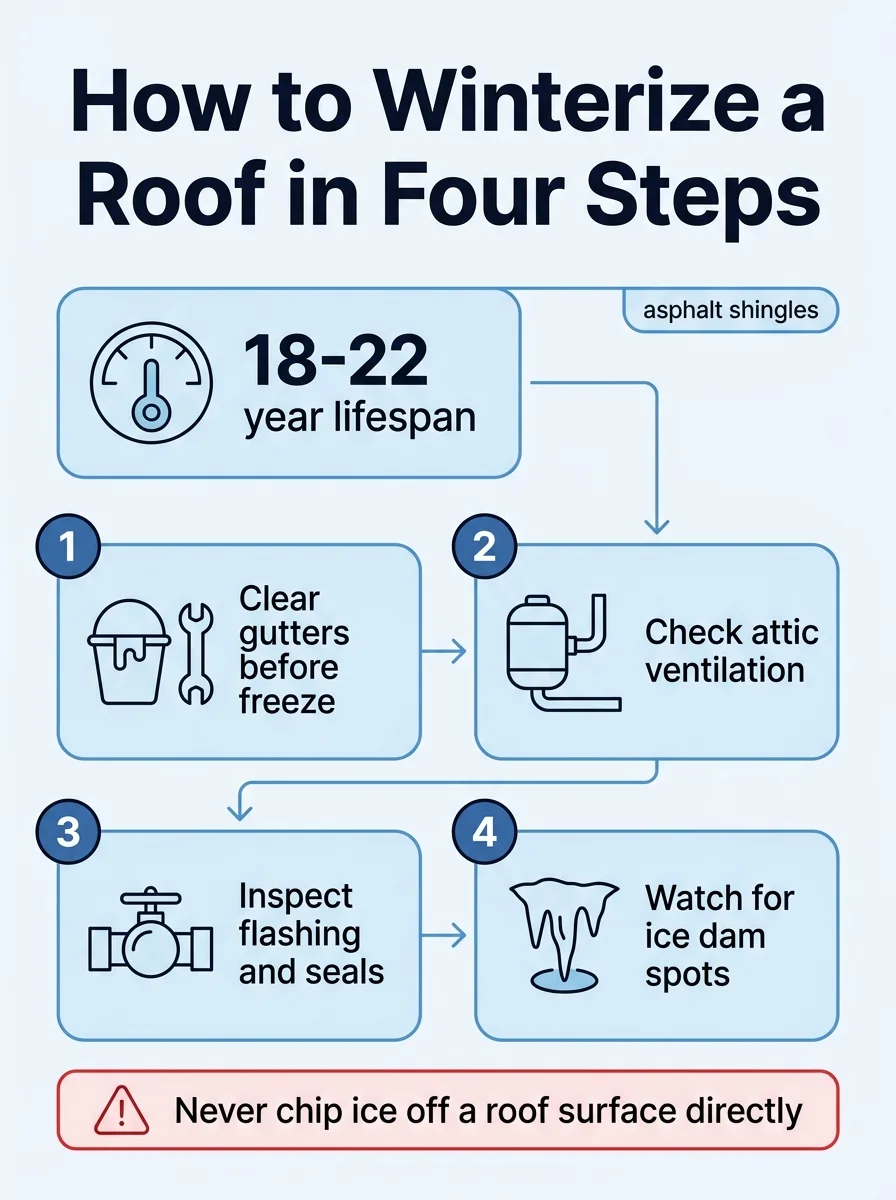
- Clear the gutters: Remove leaves and debris so gutters and downspouts can drain freely once snow starts to melt off the roof.
- Check attic insulation: Look for thin or uneven insulation coverage, which allows heat to escape unevenly and contributes to ice dam formation.
- Confirm attic ventilation: Make sure vents aren't blocked by insulation or debris, since good airflow keeps the roof deck temperature more consistent.
- Inspect flashing: Look for cracked or worn sealant around chimneys, vents, and skylights, since these are the most common winter leak points.
- Look for existing ice dam spots: Note any areas along the eave where ice built up last winter, since those spots are likely to repeat without a ventilation fix.
- Schedule repairs early: Get any flashing or ventilation issues addressed before the first hard freeze, since cold weather makes roofing work slower and less comfortable.
What You'll Likely Notice
Running through this checklist usually turns up a mix of minor and more pressing items, and knowing which is which helps you prioritize before the coldest months hit.
Minor Items Worth Scheduling
Slightly worn flashing sealant, a gutter section that's a little loose, or attic insulation that's thinner in one corner than another are common and usually don't need emergency attention. They're worth putting on the schedule before winter, but they're not a reason to panic.
Addressing these now, while the weather still allows comfortable outdoor work, is far easier than trying to fix the same issues mid-January when a crew is working around snow and ice.
Signs That Need Faster Attention
Visible cracks in flashing, a history of ice dams in the same spot every year, or attic areas with no ventilation at all are worth addressing before the checklist's general schedule allows for. These are the issues most likely to turn into an active leak the first time snow sits on the roof for more than a day or two.
If you're finding stains or dampness alongside these signs, it's worth reading about what causes a ceiling stain to understand whether it's already an active problem rather than a preventive one.
DIY vs. Calling a Pro
Clearing gutters from a stable ladder position, checking attic insulation and ventilation from inside the attic, and doing a visual check for obvious flashing cracks from the ground are all reasonable for most homeowners to handle. None of these require getting onto the roof surface itself.
Anything involving climbing onto the roof, especially once temperatures drop and surfaces get slick, is safer left to a professional crew with the right footing and equipment for winter conditions. This goes double for anything involving existing ice buildup, which is much harder to work around safely than dry conditions.
If your winter checklist turns up flashing issues, ventilation gaps, or a recurring ice dam spot, it's worth getting a professional inspection before the season really sets in rather than waiting to see how the roof holds up on its own.
Getting Ready Before the First Freeze
Winter prep for a Colorado roof comes down to a few consistent priorities: clear gutters, solid flashing, and attic ventilation that keeps the roof deck temperature even. None of it is complicated, but it does need to happen before the cold sets in rather than after the first ice dam forms.
If your walkthrough turns up anything questionable, or it's just been a while since a professional took a look, Virtuous Roofing and Exteriors is available across the region to check flashing, ventilation, and overall roof condition before winter arrives.
Frequently asked questions
Does cold weather actually damage a roof?
Yes, repeated freeze-thaw cycles cause roofing materials to contract and expand, which can crack aging shingles and loosen sealant around flashing over time. Roofs that are already older or showing wear are more vulnerable to this kind of cold-weather stress.
What is an ice dam and why does it matter?
An ice dam forms when heat escaping from the attic melts snow on the upper roof, which then refreezes at the colder eave, building up a ridge of ice that traps water behind it. That trapped water can back up under shingles and into the home, so poor attic ventilation makes ice dams more likely.
How does attic ventilation affect winter roof performance?
Good attic ventilation keeps the underside of the roof deck closer to outdoor temperature, which reduces uneven snowmelt and lowers the risk of ice dams. Poor ventilation traps heat, which both encourages ice dams and can shorten the life of the roofing material above it.
Should I clear snow off my roof myself?
Most homeowners shouldn't be climbing a snow or ice-covered roof themselves, since the fall risk goes up significantly in those conditions. If snow load or ice buildup looks serious, it's safer to call a professional than to risk it.
When is the best time to schedule winter roof prep?
Before the first hard freeze is ideal, since it gives time to fix flashing, clear gutters, and address ventilation issues while the weather still allows for comfortable, safe work. Waiting until after the first snow makes every part of the job harder and slower.