Can You Really Roof Over Old Shingles in Colorado?
Roofing over existing shingles means installing a fresh layer of new shingles directly on top of the old ones instead of tearing the old roof off first. It's a question that comes up a lot in Denver Metro and Northern Colorado, especially on homes where the current roof still looks mostly intact but is nearing the end of its life. The short answer is that it's sometimes allowed and sometimes a reasonable option, but it comes with real conditions attached.
Colorado's mix of intense UV, freeze-thaw cycles, and occasional heavy hail puts more stress on a roof system than milder climates do. That stress doesn't just wear down the shingles on top, it can also affect the wood deck underneath over the years. Before anyone decides to layer new shingles over old ones, it's worth understanding what that extra layer does and doesn't solve.
Why Layering Shingles Works (and Where It Fails)
A roof-over works on the simple idea that a second layer of shingles adds another barrier against water, nailed down over the first. It can be a legitimate option on a roof with a single existing layer, a flat and sound deck, and no major structural concerns. Where it tends to fail is everywhere those conditions aren't met, which is more often than homeowners expect.
What a Roof-Over Actually Involves
The crew doesn't remove the old shingles. Instead, they nail down any loose or lifted shingles, replace ridge caps and flashing where needed, and lay the new shingles directly over the existing surface. It's faster than a full tear-off because there's no demo day and less debris to haul away, which is the main appeal.
The tradeoff is that nobody actually sees the deck during this process. Any soft wood, trapped moisture, or old flashing problems stay buried under two layers of shingles instead of one. That's a real gamble on a roof old enough to be a roof-over candidate in the first place.
Where the Extra Weight Goes
Every layer of shingles adds dead weight to the roof framing, on top of whatever snow load the structure already has to handle through a Colorado winter. Most codes cap shingle roofs at two layers for exactly this reason, since framing is designed with a weight budget in mind, not an open-ended one.
Older homes, additions, or roofs with marginal framing to begin with are the ones most likely to run into trouble here. A structural concern that was fine under one layer of shingles can turn into a real problem once a second layer gets added, especially during a heavy, wet spring snow.
| Factor | Roof-Over | Tear-Off |
|---|---|---|
| Deck visibility | Hidden under old layer | Fully exposed and inspected |
| Added weight | Adds a full second layer | No added layer weight |
| Typical timeline | Faster, less demo | Takes longer, more labor |
| Warranty fit | Depends on manufacturer terms | Usually matches standard terms |
The Roof Deck and Flashing Underneath
The deck is the plywood or OSB layer the shingles are nailed into, and it's the part of the roof system that actually holds everything together structurally. On a roof-over job, the deck stays covered the entire time, which means any rot, delamination, or nail pops from the original install are simply built over rather than fixed.
Flashing around chimneys, vents, and valleys is another weak point. A roof-over can reuse or patch old flashing, but flashing that's already failing underneath the first layer doesn't get any better by having a second layer nailed on top of it. It's one of the more common places a roof-over job runs into trouble a few years down the line.
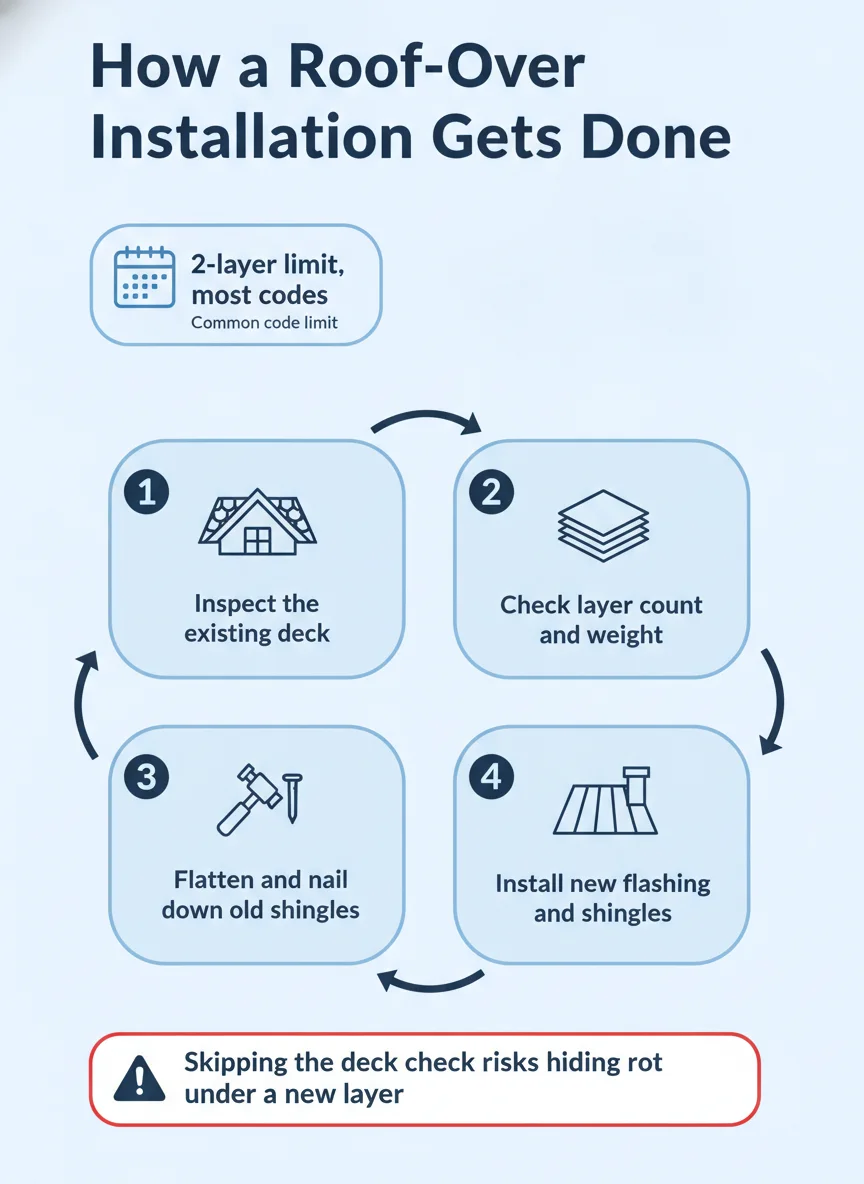
Step-by-step: What a Roof-Over Installation Looks Like
When a roof-over is actually a reasonable fit for a home, the process generally follows a consistent sequence from inspection through final cleanup.
- Walk the roof: A contractor walks the existing roof to check for soft spots, excess layers, and obvious sagging before recommending a roof-over at all.
- Confirm layer count: They confirm how many layers are already on the roof, since most codes only permit a roof-over when a single layer exists.
- Flatten old shingles: Lifted or curled shingles get nailed back down so the new layer has as flat a surface as possible to sit on.
- Flashing at valleys, chimneys, and vent pipes is removed and replaced rather than built over, since this is where leaks start first.
- Install new shingles: New shingles go down over the existing layer, following the same nailing pattern and exposure as a standard install.
- Final walkthrough: The crew checks ridge lines, valleys, and penetrations one more time before calling the job done.
What You'll Find Once the New Layer Goes Down
Signs It Went Well
A roof-over that was a good fit from the start tends to look clean and lie flat, with straight shingle lines and no visible ridges or bumps where the old layer telegraphs through. Valleys and flashing look crisp rather than patched, and there's no soft give when you walk the roof.
Attic conditions matter here too. No new moisture smell, no fresh staining on the rafters, and ventilation that still moves air the way it did before the second layer went on are all good signs the job is holding up the way it should.
Signs of Trouble Ahead
A roof-over that was a poor fit tends to show it within a few years. Shingles that telegraph the ridges of the old layer underneath, valleys that pool water, or granule loss happening faster than it should are all warning signs that something underneath isn't behaving the way it needs to.
New leaks after a roof-over are a particularly bad sign, since it usually means the hidden deck or flashing problem that was there before the install is still there, just buried deeper now. At that point, the fix almost always means removing both layers rather than one.
DIY vs Calling a Pro
This isn't a project for a confident DIYer. Walking a steep roof safely, nailing shingles to the right exposure, and tying new flashing into old penetrations all take experience most homeowners don't have, and a mistake here shows up as a leak, not a cosmetic flaw.
What a homeowner can reasonably do on their own is the early homework: check the attic for staining, note how many layers are visible from a ladder, and keep an eye out for sagging ridgelines or valleys from the ground. That groundwork helps frame a smarter conversation with whoever comes out to look at the roof.
Anything involving flashing, deck repair, or layer counting toward a code limit needs a licensed roofing contractor, both for the quality of the work and for liability if something's done wrong. A roof inspection before any roof-over decision is the cheapest insurance in the whole process.
Is a Roof-Over Right for Your Home?
A roof-over can make sense on a younger roof with a single layer, a sound deck, and no structural red flags, but it's the exception rather than the rule for most of the roofs we see across Denver, Westminster, and the surrounding towns. More often than not, a full roof replacement ends up being the more honest answer once the deck gets a real look.
If you're weighing a roof-over against starting fresh, it's worth reading through our breakdown on roof-over versus tear-off decisions before you commit either way. Virtuous Roofing and Exteriors walks homeowners through that tradeoff honestly, deck condition and all, before any shingle goes down.
Frequently asked questions
Can you put new shingles over old shingles?
In many cases, yes, as long as the existing roof has only one layer already, the deck underneath is sound, and local code allows it. Most building codes cap shingle roofs at two layers total, so a roof that's already been layered once usually needs a full tear-off instead.
Is roofing over old shingles a good idea?
It can save time and reduce landfill waste when the existing layer is flat and the deck is in good shape, but it's rarely the long-term best choice. A tear-off lets a crew actually see the deck, fix any soft spots, and start the new warranty clock on a clean surface.
How do you know if your roof deck is bad under the shingles?
Soft spots when you walk the roof, sagging between rafters, or water stains in the attic are the usual tells that the deck underneath has a problem. A roof-over installation can't fix or even detect most of this, since the old shingles stay in place and hide the deck from view.
Does a roof-over void the shingle warranty?
It depends on the shingle manufacturer and the specific warranty terms, so it's worth reading the fine print before deciding. Many manufacturer warranties are written with a single-layer, properly ventilated install in mind, and a roof-over can change how that warranty applies.
How much heavier does a second layer of shingles make a roof?
A second layer adds real weight on top of what the framing already carries from the first layer, snow load, and any rooftop equipment. That's the main reason codes cap the number of layers allowed, and why older homes with marginal framing are usually better candidates for a tear-off.