
Why Roof Replacement Budgeting Looks Different in Colorado
Colorado's mix of intense UV exposure, hail, heavy snow load, and wide temperature swings puts more wear on a roof than milder climates do. That means replacement is less of an occasional home improvement decision and more of a predictable part of owning a house here. Most homeowners start shopping for an estimate after a storm, an inspection flagged aging materials, or a lender required it as part of a sale.
The challenge is that two estimates for the same house can land far apart, and it's rarely obvious why just by looking at the total. Understanding what goes into a roof replacement estimate, and what questions to ask when comparing bids, puts you in a much stronger position before you sign a contract.
Why Roof Replacement Costs Vary So Much
A roof replacement estimate reflects dozens of small decisions bundled into one number: the material tier, the amount of tear-off involved, how much decking needs repair, ventilation upgrades, and the warranty backing the work. Two roofers can look at the exact same house and land on different totals because they're scoping the job differently, not because one is overcharging.
Material and System Choices
Material is usually the single biggest line item in any roof replacement. Asphalt shingles remain the most common and most budget-friendly choice across Colorado, while metal panels, tile, and designer shingle lines cost more but often come with longer expected lifespans and different warranty structures.
Within asphalt alone, there's a real range: three-tab shingles sit at the economy end, architectural shingles are the current standard for most replacements, and impact-resistant or designer lines sit at the top. The material tier you pick shapes not just the upfront number but how the roof performs against Colorado hail and wind over its life.
Labor, Access, and Timing
Pitch, height, and how easy it is to stage material and equipment all affect labor time. A steep, cut-up roof with multiple valleys and dormers takes a crew longer than a simple ranch-style roof of the same square footage, and that labor difference shows up in the estimate.
Timing matters too. Contractors tend to be busiest in late spring and summer after storm season, and scheduling during a slower stretch of the year can sometimes open up more flexibility on crew availability. It's worth asking a contractor directly how their current schedule looks when you're comparing timelines alongside cost.
| Project Type | Typical Drivers | What to Expect |
|---|---|---|
| Standard asphalt replacement | Simple pitch, single layer tear-off, architectural shingles | A more straightforward scope with fewer line items to compare |
| Complex or steep roof | Multiple valleys, steep pitch, difficult access | More labor hours and staging time built into the bid |
| Premium material system | Metal, tile, or designer shingles, upgraded ventilation | Higher material cost offset by longer expected lifespan |
| Storm-related replacement | Decking repair, insurance documentation, code upgrades | Added line items for repair work discovered during tear-off |
What's Actually Included in a Roof Replacement Estimate
A thorough estimate should spell out tear-off and disposal, new underlayment, flashing around chimneys and vents, the material itself, ridge and soffit ventilation, and the workmanship warranty term. If a bid is missing most of these details, it's hard to know what you're actually comparing it against.
Permitting is another item worth confirming up front. Most municipalities in Colorado require a permit for a full roof replacement, and a reputable contractor builds that into the process rather than leaving it for the homeowner to sort out. Our Roof Replacement estimates walk through each of these line items before any work starts.
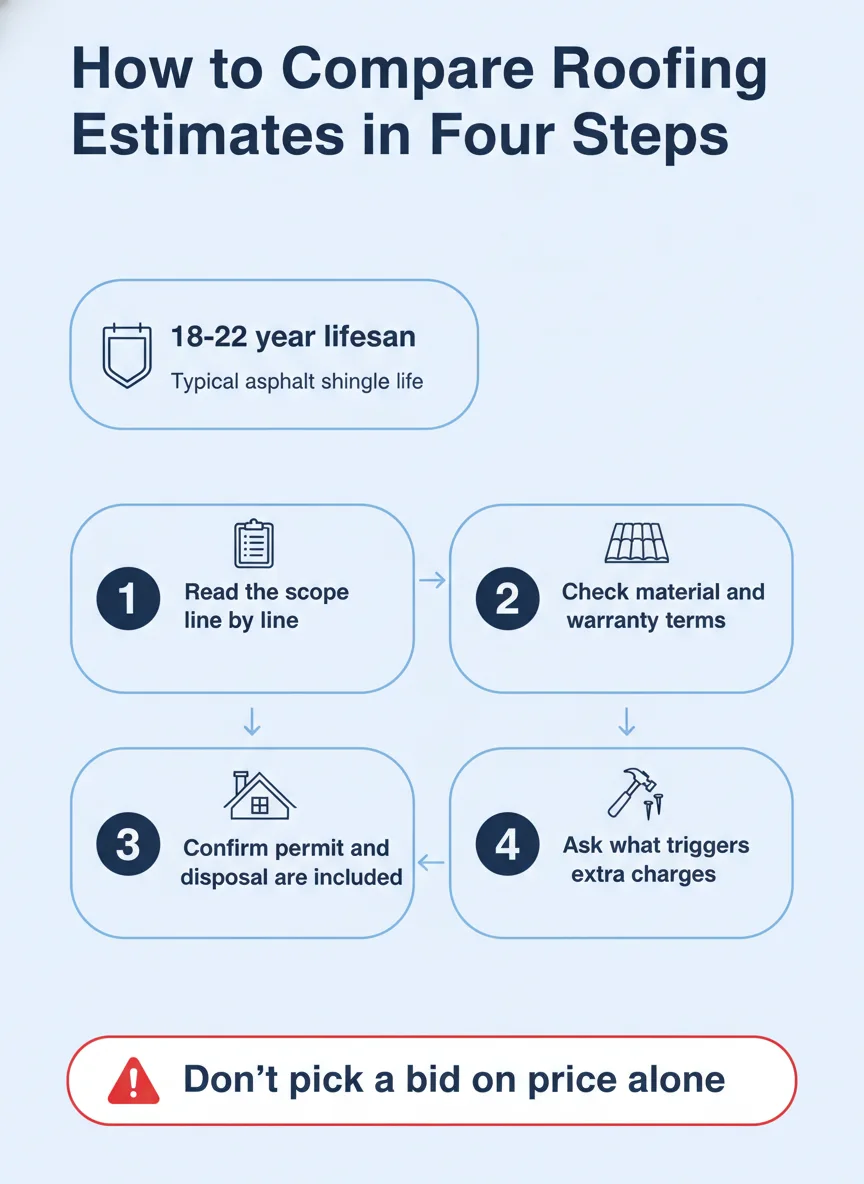
Step-by-step: How to Compare Roofing Estimates
Comparing bids gets a lot easier once you break each one down into the same categories instead of just looking at the bottom-line total.
- Line up the scopes: Put each estimate's scope of work side by side and note what's included in one bid but missing from another.
- Compare material tiers: Confirm each contractor is quoting the same shingle or material class, not a budget option against a premium one.
- Check warranty terms: Ask how long the workmanship warranty runs and what it actually covers versus the manufacturer's material warranty.
- Confirm permit handling: Find out whether the contractor pulls the permit and handles inspections, or if that falls on you.
- Ask about disposal: Verify tear-off debris removal and dumpster or haul-away costs are built into the number, not billed separately later.
- Review payment structure: Understand the deposit, progress payments, and final payment timing before you sign anything.
- Ask about financing: If a monthly payment works better for your budget, ask what financing options the contractor offers.
What a Low Bid or High Bid Usually Means
Once you've broken a few estimates down line by line, the gaps between a cheap bid and a pricier one usually start to make sense.
Red Flags in a Low Estimate
A number that comes in noticeably lower than every other bid is worth a second look. It can mean thinner underlayment, no ventilation upgrades, a shorter warranty, or a plan to skip tear-off and install over the old layer, which most roofers recommend against for long-term performance.
It can also signal a crew that's new, under-insured, or planning to sub out the labor to whoever's available that week. Ask directly how the low number was reached before assuming it's simply a better deal.
What Drives a Premium Estimate
A higher bid is often justified by better materials, more thorough flashing and decking repair, upgraded ventilation, or a longer and more comprehensive workmanship warranty. None of that shows up unless you ask what's behind the number.
It can also reflect a company that carries more overhead because it handles licensing, insurance, and crew training in-house rather than subcontracting the work out. That's worth factoring in if you're weighing bids that look close on paper but come from very different kinds of operations.
DIY vs. Calling a Pro
There's very little of a roof replacement a homeowner should attempt solo. Tear-off, decking repair, and material installation all require working at height on a sloped surface, and mistakes in flashing or underlayment show up as leaks months or years later, often after they've caused interior damage.
Where a homeowner can reasonably contribute is in the research and comparison phase: getting multiple estimates, reading warranty language closely, and asking pointed questions about scope before a crew ever shows up. That groundwork doesn't require a ladder, just time and a willingness to ask the same questions of every bidder.
A licensed, insured roofing contractor should handle everything from the inspection through final cleanup and permit sign-off. If a contractor hesitates to walk you through their estimate line by line, that's a sign to keep shopping before you commit to anything.
Getting a Clear Estimate for Your Roof
A roof replacement is one of the bigger investments a homeowner makes, and the estimate is where that investment gets defined. Understanding the line items, asking about warranty terms, and comparing scope rather than just the total gives you a much clearer picture of what you're actually buying, whether the project came up on its own or as part of a storm damage insurance claim.
If you want a second opinion on an estimate you've already received, or you're just starting to plan a replacement for a home in Thornton or anywhere else across the region, it helps to read through what happens on replacement day too, so there are no surprises once the crew arrives. Virtuous Roofing and Exteriors walks through every line item on an estimate before any work begins.
Frequently asked questions
What factors affect how much a roof replacement costs?
The biggest factors are roof size, pitch, the number of layers being removed, the material you choose, and how much structural repair is needed underneath. Access issues, like a steep roof or a home with limited staging room, can also add labor time.
Why do roofing estimates vary so much between contractors?
Estimates vary because contractors differ in what they include, like permit fees, disposal, underlayment quality, and warranty length. A lower number sometimes means a thinner scope of work, not a better deal.
Is a more expensive roof replacement always better quality?
Not necessarily, but a higher bid often reflects better materials, more thorough flashing and ventilation work, or a longer workmanship warranty. The best way to tell is to compare scope of work line by line, not just the bottom number.
Does the type of roofing material change the overall cost?
Yes, material choice is one of the largest cost variables in a replacement. Asphalt shingles are generally the most budget-friendly option, while metal, tile, and specialty systems cost more upfront but can last longer.
Can financing help spread out the cost of a roof replacement?
Many homeowners use financing to turn a large project into a monthly payment instead of paying all at once. Ask any contractor you're considering what financing options they offer and what the terms look like before you commit.