Why roofing material lifespan matters in Colorado
Front Range and Northern Colorado homeowners deal with a tougher mix of weather than most of the country. Intense UV at altitude bakes roofing surfaces, big daily temperature swings stress materials as they expand and contract, and hail shows up most years somewhere in the region. All of that wears a roof down faster than the manufacturer's lab rating might suggest, which is why the material you choose matters more here than in a milder climate.
When you're comparing materials, lifespan is really a mix of three things: how the material resists UV and weather over decades, how it holds up to impact, and how well it was installed in the first place. A premium material installed poorly won't outlast a mid-range material installed right. That's worth keeping in mind as you weigh the options below, whether you're planning a roof replacement now or just doing research for later.
Why some materials age slower than others
The core difference between a 20-year roof and a 70-year roof comes down to what the material is made of and how it reacts to sun, moisture, and impact over time. Organic and asphalt-based products break down as UV cooks the oils out of them, which is why granule loss and brittleness show up eventually on every asphalt roof. Metal, stone, and fired clay don't have that same chemistry working against them, so they simply age slower.
Asphalt shingles
Asphalt shingles are the most common roofing material in Colorado and across the country, and for good reason: they're affordable, come in a wide range of styles, and install relatively quickly. Industry lifespan figures for asphalt in a UV-heavy, hail-prone climate typically run shorter than the same product in a milder region, since both the sun and the hail take a toll.
Within asphalt, there's a real spread. Basic three-tab shingles sit at the lower end of the range, while architectural and impact-rated shingles are built thicker and tend to hold up longer under hail and UV. If asphalt is the direction you're leaning, asking about impact-rated options is worth the conversation.
Metal, tile, and slate
Metal roofing systems, whether standing seam or screw-down panel, are built to shed decades of sun and moisture without breaking down chemically the way asphalt does. Many metal systems carry manufacturer coverage that reflects that longer expected service life, and metal handles hail impact differently than asphalt, denting rather than cracking or losing granules in most cases.
Clay and concrete tile, and natural slate, sit at the top of the lifespan chart industry-wide, often rated for 50 to 100 years when properly maintained. The tradeoff is weight and cost. Not every roof structure is built to carry tile or slate without reinforcement, and that's a structural question a contractor needs to check before it's an option worth pricing out.
| Material | Typical lifespan range | How it handles Colorado weather |
|---|---|---|
| Asphalt shingles (standard) | 18-25 years | UV and hail wear it down faster than other materials |
| Asphalt shingles (impact-rated) | 25-30 years | Thicker mat resists hail dents and cracking better |
| Metal (standing seam or panel) | 40-70 years | Sheds UV well, dents under large hail but rarely fails |
| Clay tile, concrete tile, or slate | 50-100+ years | Extremely durable but heavy, needs structural check first |
What's actually under the surface you see
A roofing material's lifespan isn't just the top layer. Underneath whatever you see from the street sits underlayment, flashing, and ventilation, and all three affect how long the visible material actually lasts. Poor attic ventilation, for example, can bake the underside of any roofing material and shorten its life regardless of how good the material itself is rated for.
Flashing around chimneys, vents, and valleys is often where a roof fails first, long before the field material wears out. That's why a quality installation matters as much as the material choice itself. A roof rated for 50 years with cut-rate flashing can leak well before that number means anything.
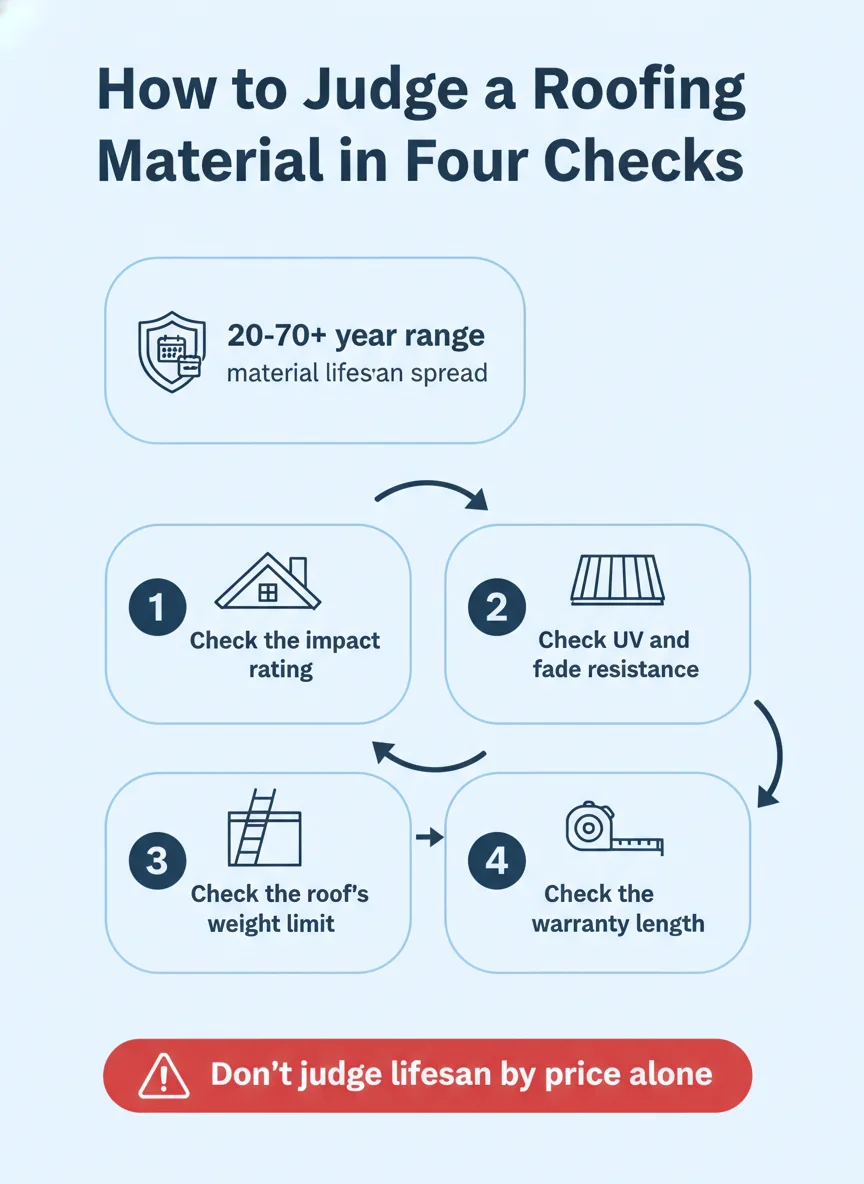
Step-by-step: how to evaluate material lifespan before you choose
If you're comparing options for an upcoming project, walking through these checks in order will give you a clearer picture than lifespan numbers alone.
- Check the impact rating: Look for a Class 3 or Class 4 impact rating on any asphalt product, since that rating reflects hail resistance directly relevant to Colorado.
- Check UV exposure history: Ask how the material performs under sustained high-altitude sun, not just a national average rating.
- Confirm structural weight limits: If you're considering tile or slate, have the roof structure checked before you commit, since added weight isn't always an option.
- Compare warranty terms: A longer manufacturer warranty often signals the manufacturer's own confidence in the material's real-world lifespan.
- Factor in installation quality: Ask how flashing, underlayment, and ventilation will be handled, since those details affect lifespan as much as the material itself.
- Weigh cost against ownership timeline: A 70-year material rarely makes sense if you plan to sell within a decade, so match the choice to your plans for the home.
What shows up first when a material is reaching the end of its life
Different materials show their age in different ways, and knowing what to look for helps you catch problems before they become leaks.
Signs on asphalt roofs
Granule loss in the gutters, curling or cupping shingle edges, and bald patches where the surface has worn thin are the classic signs asphalt is aging out. Cracked or missing shingles after a wind event are worth a closer look too, since that's often a sign the material has gotten brittle.
If you're noticing these signs, a roof inspection will tell you whether you're looking at a patch job or a full replacement, and whether storm damage played a role worth documenting for a claim.
Signs on metal, tile, and slate
Metal roofs tend to show wear through fastener loosening, seam separation, or coating fade rather than widespread failure. Tile and slate usually show age through individual cracked or slipped pieces rather than a system-wide problem, which is actually one of their advantages: a few damaged tiles can often be replaced without redoing the whole roof.
In all cases, catching the early signs early is cheaper than waiting for a leak to show up on the ceiling. Routine checks after major weather events are the easiest way to stay ahead of it.
DIY vs. calling a pro
Evaluating material options from the ground, researching ratings, and deciding what fits your budget and home style is something any homeowner can do on their own. Reading manufacturer specs and comparing warranty terms doesn't require a license, just time and a willingness to ask good questions.
What you shouldn't do yourself is assess whether your roof structure can handle a heavier material, or diagnose why an existing roof is failing early. Structural weight calculations and accurate wear diagnosis both require someone who's looked at hundreds of roofs and knows what normal aging looks like versus a real problem.
A licensed roofer can also walk you through how a given material will actually perform on your specific roof, accounting for pitch, sun exposure, and existing ventilation, which generic lifespan charts can't do. That's the difference between picking a material off a chart and picking the right one for your house.
Choosing the right material for your home
There's no single answer to what lasts longest, only what lasts longest for your situation. Slate and tile top the charts but demand a structure built to carry them. Metal splits the difference with strong longevity and manageable weight. Asphalt remains the practical choice for a lot of homes, especially when you choose an impact-rated product suited to Colorado hail.
If you're weighing options for a home in Westminster or anywhere across the Denver Metro and Northern Colorado, Virtuous Roofing and Exteriors can walk through what each material would mean for your specific roof before you decide.
Frequently asked questions
What roofing material lasts the longest?
Slate and natural clay tile generally outlast every other common material, often holding up 75 years or more when the structure underneath supports the weight. Metal roofing comes in a close second, with many systems rated for 40 to 70 years, while asphalt shingles typically run shorter.
Is metal roofing worth it over asphalt shingles in Colorado?
Metal tends to hold up better against hail denting and UV fading over the long run, which matters in a high-altitude climate with intense sun. Whether it's worth the higher upfront cost depends on how long you plan to stay in the home and your budget today versus later.
Do heavier roofing materials like tile or slate work on any house?
Not always. Tile and slate are heavy, and many homes need the roof structure checked or reinforced before that weight gets added, so a contractor needs to confirm the framing can handle it first.
How does Colorado weather affect roofing material lifespan?
Intense UV exposure at altitude, big daily temperature swings, and hail all accelerate wear compared to milder climates. Materials with better impact resistance and UV stability tend to close that gap and last closer to their rated lifespan here.
Does a longer-lasting material always mean a better roof?
Not necessarily. The best material is the one that matches your home's structure, your budget, and how long you plan to own the house, since paying for a 70-year roof on a home you'll sell in five years rarely pencils out.