Why Warranty Length Actually Matters Here
Colorado roofs go through a lot in a given year. Intense UV at altitude, hard freeze-thaw cycles, and wind and hail events all wear on a roof faster than milder climates, which is exactly why the warranty backing your roof matters more than it might in a place with gentler weather. A homeowner in Denver Metro or Northern Colorado who understands what their warranty actually covers, and for how long, is in a much better spot when something goes wrong five or ten years down the line.
The confusing part is that almost every roof has more than one warranty attached to it, and they rarely run the same length. A shingle brochure might advertise a term that sounds like lifetime coverage, but that number usually describes the material only, not the labor that put it on your roof. Knowing the difference before you need to file a claim saves a lot of frustration.
What Actually Determines How Long a Warranty Lasts
Warranty length isn't one fixed number across the industry. It depends on the product tier, who installed the roof, and whether the contractor offers any enhanced or extended coverage on top of the manufacturer's base terms.
Material Warranty Length
The material warranty comes from the manufacturer and covers defects in the shingles, metal panels, or other roofing material itself, things like premature granule loss or a manufacturing flaw. These terms are often written in decades, sometimes marketed as lifetime, which in the industry usually means the expected service life of the product rather than a literal forever guarantee.
Higher-tier products generally carry longer material terms than basic ones, and the length can also depend on whether the installing contractor is certified at a level that qualifies for the manufacturer's enhanced coverage tiers. That's part of why the same shingle can carry a different effective warranty length depending on who installs it.
Workmanship Warranty Length
The workmanship warranty is separate, and it comes from the contractor, not the manufacturer. It covers installation errors like a poorly sealed flashing or a fastening pattern that doesn't hold, the kind of problem that shows up as a leak even though the material itself is fine.
This is almost always the shorter of the two warranties, and the length varies a lot by contractor. Some offer just a year or two, others offer a longer workmanship term as a selling point. It's worth asking directly what term a contractor backs their own labor with, since that number tells you more about their confidence in the install than the material warranty ever will.
| Warranty Type | Who Backs It | Typical Length |
|---|---|---|
| Material warranty | Manufacturer | Often 20-30+ years, sometimes marketed as lifetime |
| Workmanship warranty | Installing contractor | Varies widely, often shorter unless extended |
| Extended/enhanced warranty | Manufacturer, through certified contractors | Can match or extend the material term |
The Parts of a Roof Warranty, Explained
A full roof warranty is really a stack of separate promises layered on top of each other. There's the material warranty from the manufacturer, the workmanship warranty from the contractor who installed it, and sometimes a system or enhanced warranty that only applies if the contractor is certified to install that specific product line at a qualifying level.
Each layer has its own length, its own exclusions, and its own claims process. A roof can be well within its material warranty term and still have a problem that falls entirely under the workmanship side, or vice versa. Reading the actual document, not just the sales sheet, is the only way to know which layer applies to a given issue.
Step-by-step: How to Find Out How Long Your Warranty Lasts
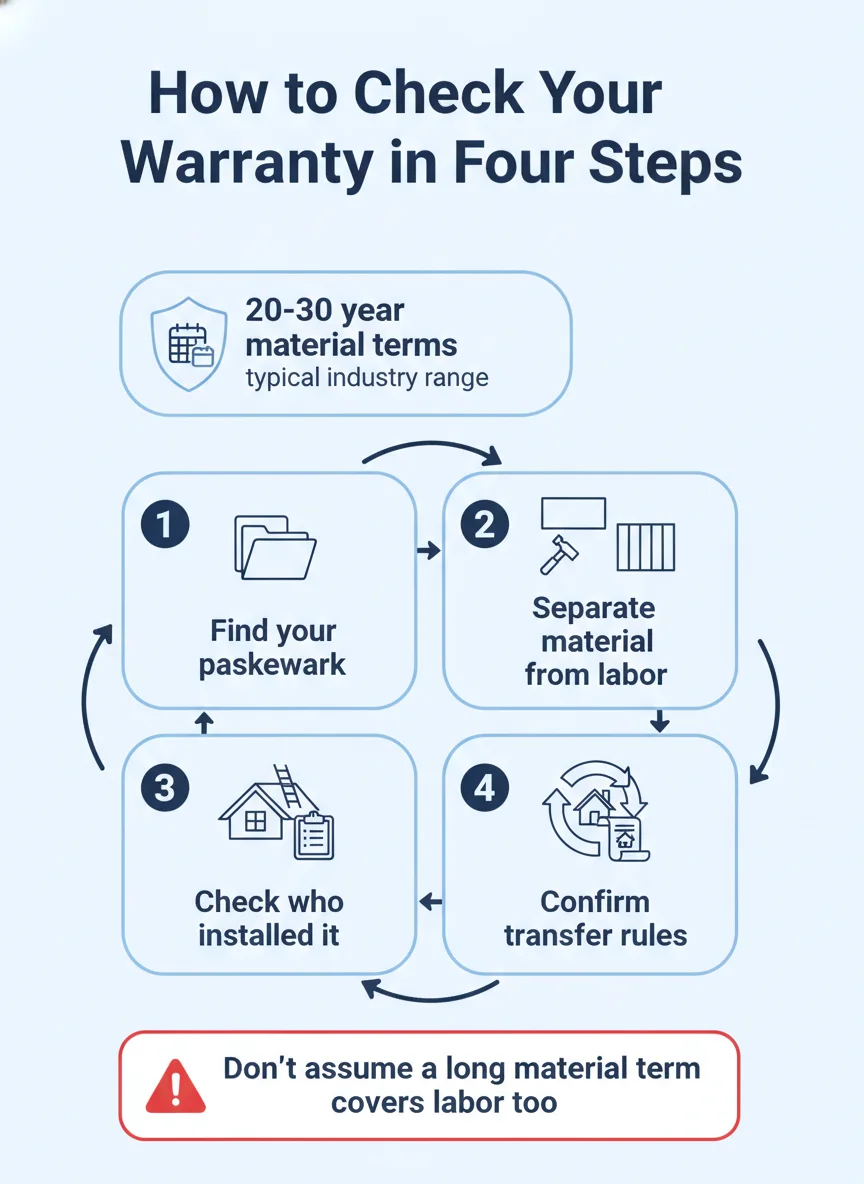
If you're not sure what's covering your current roof, it only takes a few steps to track down the answer.
- Locate your paperwork: Check closing documents, the invoice from your last roof replacement, or any welcome packet from the manufacturer or contractor.
- Separate the two warranties: Identify which section covers materials and which covers labor and installation, since they're rarely the same length.
- Note who installed the roof: Enhanced manufacturer coverage often only applies if a certified contractor did the install, so confirm that status.
- Check the registration: Some manufacturer warranties require registration within a set window after install to activate full coverage.
- Look for transfer language: If you bought the home with an existing roof, check whether the warranty transferred to you and under what conditions.
- Call if you can't find it: The manufacturer can often look up registered warranties by address, and your contractor should keep records on file.
What You'll Typically Find in the Fine Print
Exclusions That Surprise Homeowners
Most warranties exclude damage from weather events like hail and high wind, which catches people off guard since that's often the reason they're filing a claim in the first place. That kind of damage is usually a job for your homeowners insurance policy and a storm damage and insurance inspection, not a warranty claim.
Warranties also commonly exclude damage from improper attic ventilation, ice damming caused by inadequate insulation, or any repair work done by a contractor other than the original installer. These exclusions exist because the manufacturer can't guarantee a product installed or maintained outside their specifications.
Maintenance Requirements You Might Not Expect
Some warranties require periodic maintenance or inspection to stay active, with the burden on the homeowner to keep records. Skipping a required maintenance step, even a minor one, can give a manufacturer grounds to deny a future claim.
This is one more reason a periodic roof inspection is worth doing even when nothing seems wrong. It creates a documented record that your roof has been maintained, which matters if you ever need to lean on a warranty years down the line.
Checking Your Warranty Yourself vs. Calling a Pro
Reading your own paperwork and calling the manufacturer's customer service line to confirm registration status is something any homeowner can do, and it's worth doing before you ever need to file a claim. Most manufacturers have a lookup tool or a phone line specifically for this.
Where it gets harder is figuring out whether a specific issue is covered, since that often requires someone who can tell the difference between a material defect and an installation error just by looking at the roof. That distinction decides which warranty, if any, applies.
A licensed roofing contractor can pull your warranty paperwork, inspect the actual issue, and tell you plainly whether it's a manufacturer claim, a workmanship claim, or something that falls outside both and needs to go through insurance instead. That's a judgment call worth getting right before you file anything.
Getting a Straight Answer on Your Coverage
Warranty length only matters if you actually know what yours says, and a lot of homeowners find out the hard way that the coverage they assumed they had doesn't match what's in writing. Pulling the paperwork now, before anything goes wrong, puts you in a much stronger position later. If you're comparing warranty terms as part of planning a roof replacement, it's also worth reading through manufacturer warranty vs. workmanship warranty for a closer look at how those two terms differ.
Homeowners across Westminster and the rest of the Denver Metro area can call Virtuous Roofing and Exteriors to review existing warranty paperwork or talk through what coverage comes standard on a new install.
Frequently asked questions
How long does a roof warranty usually last?
It depends on which warranty you mean. Material warranties from manufacturers often run two to three decades, while the workmanship warranty from the installing contractor covering labor and installation errors tends to run a much shorter window, sometimes just a handful of years unless the contractor offers an extended version.
Does a roof warranty cover storm or wind damage?
Generally no. Most manufacturer and workmanship warranties exclude storm events like hail and wind, which is why Colorado homeowners typically handle that kind of damage through their homeowners insurance policy instead of a warranty claim.
Can a roof warranty be transferred to a new homeowner?
Many warranties allow a one-time transfer to a new owner if you notify the manufacturer or contractor within a set window after the sale, but the rules vary by warranty and some require a small transfer fee or inspection first.
What voids a roof warranty?
Common warranty-voiding issues include unapproved repairs by another contractor, improper attic ventilation, and skipping required maintenance, since most warranties are written around the assumption the roof was installed and maintained to the manufacturer's specifications.
How do I find out how long my current roof's warranty lasts?
Start with your closing or install paperwork, since it should list both the material warranty and the workmanship warranty with their terms spelled out. If you can't find it, the manufacturer can often look up the registration using your address, and the installing contractor should have a copy on file.