Choosing a Roofing Material in the Denver Metro and Northern Colorado
Homeowners across the Denver Metro and Northern Colorado region ask this question more than almost any other: which roofing material actually holds up out here? It's a fair question. Between intense UV at altitude, wild temperature swings, heavy snow loads, and hail that shows up most summers, Colorado roofs work harder than roofs in milder climates. The material you choose affects how often you're calling someone for repairs, how your insurance premium behaves, and how long you go before your next full replacement.
This guide walks through the materials homeowners in this region most commonly consider, what each one does well, and where each one falls short. None of this is meant to steer you toward one brand or product. It's meant to help you ask better questions when you're comparing options for your own roof, whether that's a straightforward roof replacement or a decision you're weighing after storm damage.
Why Material Choice Matters More in Colorado
Roofing material performance isn't uniform across the country, and Colorado sits in a tougher spot than a lot of people realize. The combination of high-altitude UV exposure, frequent hail, and sharp day-to-night temperature swings puts more stress on roofing materials here than in most other states, which is exactly why lifespan estimates for the same shingle can look different depending on where it's installed.
Climate and Weather Swings
Front Range weather can swing 40 degrees in a single day, and that constant expansion and contraction is hard on any roofing material. Asphalt shingles can become brittle faster under this kind of cycling, while metal roofing expands and contracts more uniformly, which is part of why it tends to hold up longer in this specific climate pattern.
Snow load is another factor that doesn't get talked about enough. A material's ability to shed snow cleanly, rather than holding moisture against the roof deck, matters for how long the underlying structure stays dry and sound. Steeper-pitched metal roofs shed snow especially well, while flatter asphalt roofs need good drainage and ventilation to avoid trapped moisture.
Code and Insurance Considerations
Many insurance carriers in hail-prone states offer incentives for impact-rated roofing materials, since they're built to resist the kind of bruising and cracking that leads to claims. It's worth asking your insurance company directly what discounts, if any, apply to the material you're considering before you commit.
Local building codes also play a role in what's allowed on your roof, particularly around fire rating, wind rating, and sometimes HOA aesthetic rules in planned communities. Checking with your HOA and local building department before falling in love with a specific material saves a lot of headaches later in the process.
| Material | Typical Lifespan Range | Best Fit For |
|---|---|---|
| Asphalt shingles (architectural) | 18-22 years under Colorado UV | Most homes balancing cost and style options |
| Standing seam metal | 40-plus years | Homeowners planning to stay long-term, steep pitches |
| Impact-rated (Class 4) shingles | Similar to standard asphalt, better hail resistance | Hail-heavy areas, possible insurance incentive |
| Wood shake or tile | Varies widely, higher maintenance | Specific architectural styles, less common regionally |
The Roofing System Behind the Material
The visible material is only part of the story. Underneath every shingle or metal panel sits an underlayment layer, flashing at the valleys and penetrations, and a deck that the whole system is fastened to. A premium material installed over a poor underlayment or with sloppy flashing work will underperform a mid-grade material installed correctly, which is why workmanship matters as much as the product label.
Ventilation is the other piece people overlook. A roof that can't breathe traps heat and moisture in the attic, which shortens the life of whatever material sits on top regardless of how good that material is on paper. If you're getting a roof inspection and the ventilation isn't being discussed, that's worth asking about directly.
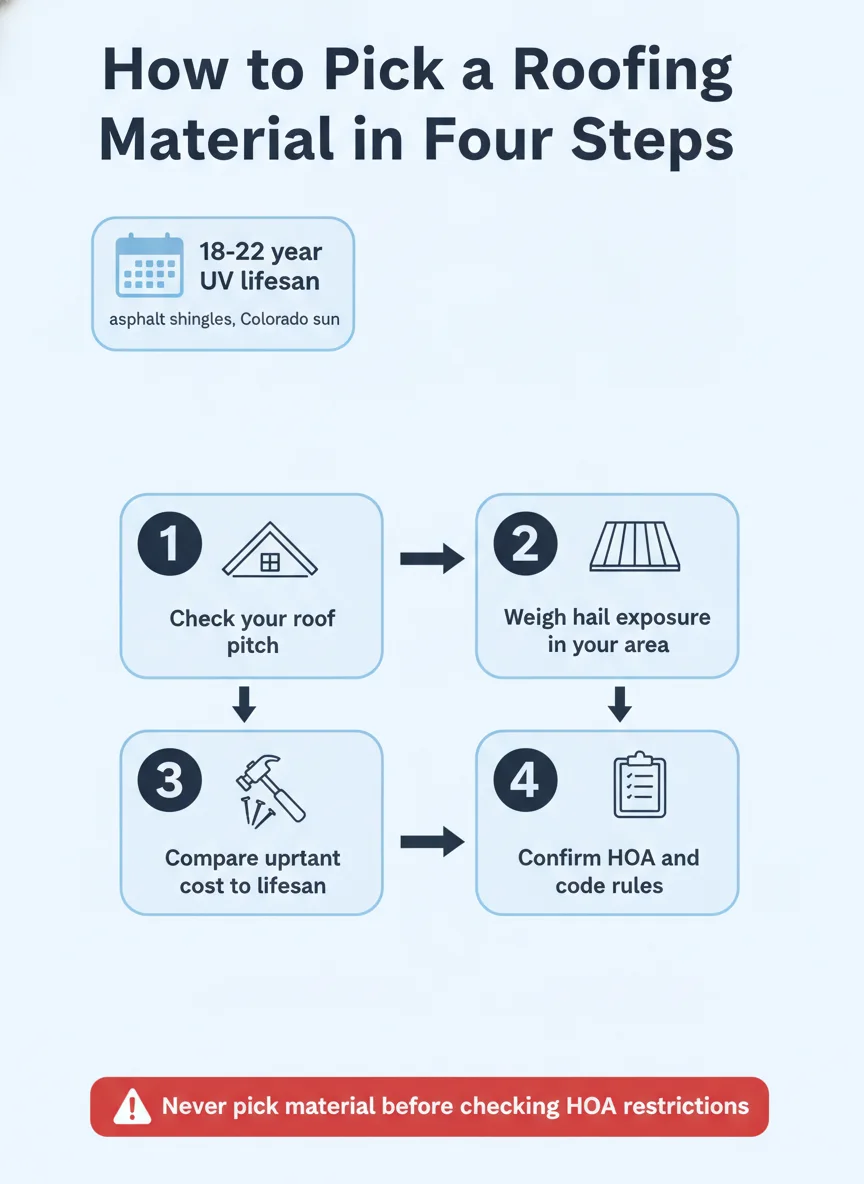
Step-by-step: How to Choose the Right Material for Your Home
There's no single best material for every house. Working through these steps in order helps narrow the decision down to what actually fits your roof, your budget, and how long you plan to stay in the home.
- Check your roof pitch: Steeper roofs shed snow and water more easily and open up options like standing seam metal that need a certain slope to perform well.
- Look at hail history: If your area sees hail most summers, an impact-rated material is worth pricing out alongside standard options.
- Decide your ownership timeline: A material with a higher upfront cost but longer lifespan makes more sense if you're staying put for decades.
- Ask about insurance incentives: Some carriers discount premiums for impact-rated materials, so a quick call to your agent can change the math.
- Confirm HOA and code rules: Some neighborhoods restrict material type or color, so check before you get attached to a specific option.
- Compare warranty terms: Manufacturer warranties and workmanship warranties cover different things, so read both before deciding.
- Get a written estimate: A detailed quote should break out material, labor, and any tear-off work so you're comparing apples to apples.
What You'll Notice With Each Material Over Time
Asphalt Shingles a Decade In
By year ten, a well-installed asphalt roof in this climate is usually still performing fine, though you may start to see some granule loss in the gutters and a little curling at the edges on south-facing slopes that take the most UV exposure. This is a normal part of the aging process and doesn't necessarily mean failure, but it's worth a closer look.
What you don't want to see at this stage is cracking across multiple shingles, bald spots where granules have worn through to the mat, or soft spots when you walk the roof. Those are signs the material is aging faster than expected, often due to poor attic ventilation or a hail event that went unaddressed.
Metal Roofing Two Decades In
Metal roofing at the twenty year mark often still looks close to new structurally, since the panels themselves don't crack, curl, or lose granules the way asphalt does. The more common issues at this stage are fastener loosening or sealant wear at penetration points, both of which are straightforward maintenance items rather than signs of material failure.
Coating fade is the other thing to watch for on painted metal systems. It's cosmetic rather than structural, but it's a reasonable reason some homeowners choose to recoat a metal roof decades in rather than replace it outright, which is part of what makes the material a good long-term value despite the higher install cost.
DIY vs Calling a Pro
Researching materials, comparing lifespan data, and reading manufacturer warranty language are all things a homeowner can absolutely do on their own, and doing that homework before a contractor shows up usually leads to a better conversation and a better outcome.
Actually installing any roofing material is a different story. Proper flashing details, nailing patterns, and ventilation calculations require training and experience that most homeowners don't have, and a mistake in any of those areas can shorten the life of even a premium material significantly. This is licensed contractor territory, not a weekend project.
If hail or wind has already damaged your roof and you're trying to decide whether a repair will hold or a full replacement makes more sense, that's also a conversation worth having with a professional rather than guessing. Our Storm Damage & Insurance team can walk the roof with you and lay out what the material's actual condition supports.
Finding the Right Fit for Your Home
There isn't one roofing material that wins for every house in the Denver Metro and Northern Colorado region. Homeowners in Boulder weighing a steep mountain-style roof have different priorities than someone in Thornton on a standard suburban ranch, and that's fine. If you want a deeper side-by-side on the two most common choices, our post on metal roofing versus shingles breaks down the specifics further, and if lifespan is your main concern, what roofing material lasts the longest digs into that question directly.
The best next step is usually a straightforward one: get a roof on-site, get your specific pitch, exposure, and budget into the conversation, and let the material decision follow from there rather than driving it. Virtuous Roofing and Exteriors is glad to walk through those options with you whenever you're ready to compare them against your own home.
Frequently asked questions
What roofing material lasts longest in Colorado weather?
Metal roofing generally outlasts asphalt shingles in Colorado's freeze-thaw and UV conditions, often by a couple decades, though asphalt remains the most common choice because of its lower upfront cost and wide style range. The right answer depends on how long you plan to own the home and what you're willing to spend up front.
Is metal roofing worth it in Colorado?
Metal roofing is worth it for homeowners who want a long-term, low-maintenance roof and plan to stay in the home for many years. It costs more to install than asphalt, but it sheds hail and snow well and typically needs less attention over its life.
What roofing material handles hail best?
Impact-rated products, whether asphalt or metal, are built specifically to resist hail bruising and cracking better than standard materials. Metal panels in heavier gauges also tend to dent rather than crack, which matters a lot given how often hail shows up across the Front Range.
Do all roofing materials need the same maintenance?
No, maintenance needs vary quite a bit by material. Asphalt shingles need periodic checks for granule loss and lifted edges, while metal roofing needs less frequent attention but benefits from fastener checks over time.
Can I mix roofing materials on one house?
You can in some cases, such as metal on a porch or dormer with asphalt on the main field, but it depends on your home's design and local code requirements. A roofer can walk the property with you and tell you what will look right and perform well together.