Why Roof Pitch Math Matters in Colorado
If you've been told your roof sits at 33 degrees, or you're comparing a quote that lists a pitch instead of degrees, it helps to know the two numbers describe the same slope in different languages. Roofers in the Denver Metro area and Northern Colorado talk in pitch, a ratio of rise to run, while an engineer or an app on your phone often reports degrees. Knowing how to move between the two lets you understand your own estimate and ask better questions.
Pitch matters here more than in a lot of states because Colorado homes deal with heavy, wet spring snow and sudden hailstorms in the same calendar year. A steeper roof sheds both faster, but it also changes what a crew can safely walk and what fastening pattern a material needs. A 33 degree roof is on the steep side of average, so this conversion comes up a lot on older mountain-style homes and newer builds with a dramatic roofline.
How Degrees Become a Pitch Ratio
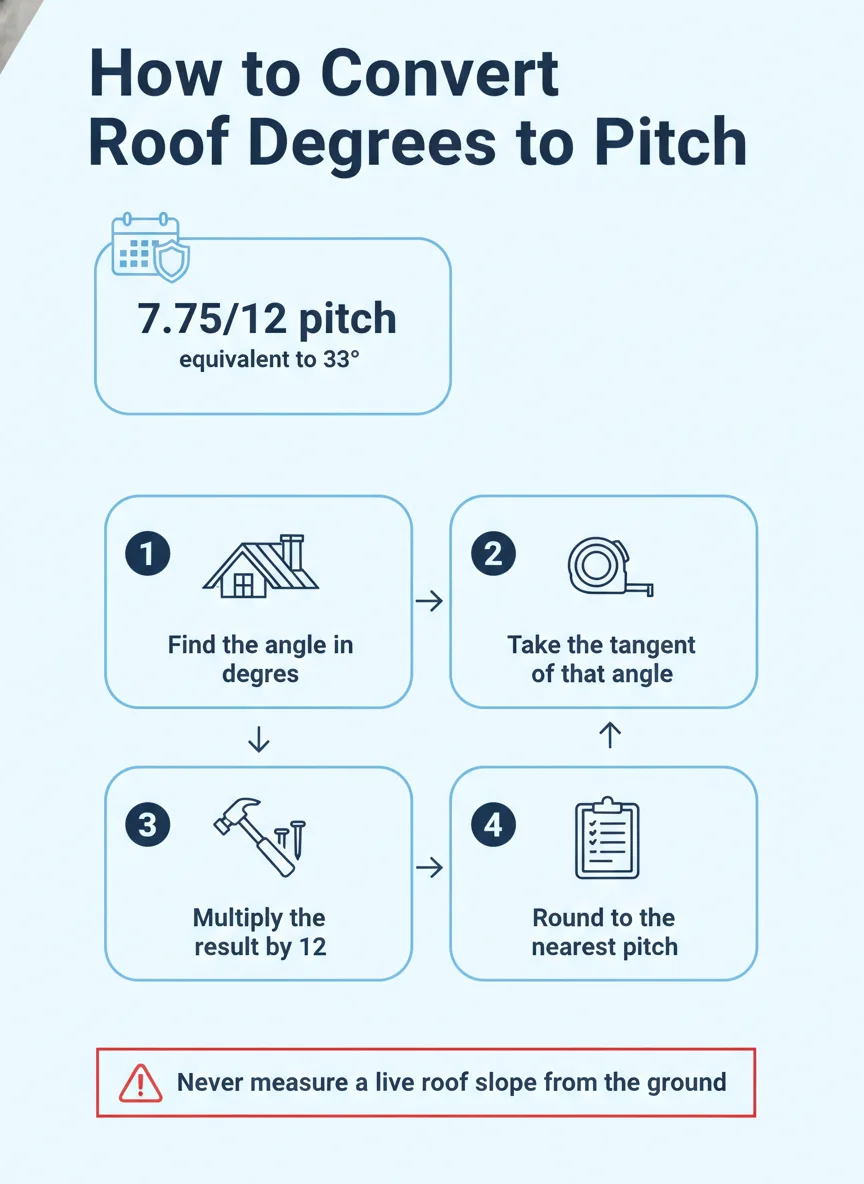
Pitch is expressed as inches of rise per 12 inches of horizontal run, written like 6/12 or 9/12. Degrees measure the same slope as an angle from flat. The two describe the identical surface, just with different math behind them, and converting one to the other only takes a basic trig function.
The Formula
To convert degrees to pitch, take the tangent of the angle and multiply by 12. For a 33 degree roof, the tangent of 33 degrees is about 0.6494. Multiply that by 12 and you get approximately 7.79, which rounds to a 7.75/12 or 8/12 pitch depending on how precise the builder wants to be.
Going the other direction works too. If you know the pitch, divide the rise by the run to get a decimal, then take the arctangent of that number to find the degree. A 6/12 pitch, for example, works out to about 26.57 degrees, noticeably flatter than the 33 degree roof we're talking about here.
Why the Rounding Matters
Lumber and truss calculations use whole or quarter-inch pitch numbers, not decimal degrees, so a 7.79 reading almost always gets rounded to 7.75/12 or treated as a near-8/12 roof in the field. That small rounding difference rarely changes the homeowner's experience, but it can shift which fastening schedule or underlayment a manufacturer specifies for warranty coverage.
If your paperwork lists one number and a second contractor quotes a slightly different one, it's usually this rounding at work rather than a disagreement about your actual roof. Ask whichever roofer you're talking to show you the measurement, not just the number, if you want to compare apples to apples.
| Angle (degrees) | Pitch (rise/12) | Common description |
|---|---|---|
| 18.4° | 4/12 | Low slope, walkable |
| 26.6° | 6/12 | Standard residential slope |
| 33° | 7.75/12 | Steep slope |
| 45° | 12/12 | Very steep, equal rise and run |
What a 33 Degree Pitch Means for Your Roof System
At 33 degrees, water and snow move off the roof quickly, which is good for keeping moisture out of the decking but means gutters and valleys take a harder hit during a fast melt or downpour. The steep angle also reduces the roof's exposed surface area to direct sun compared to a flatter roof, which can help extend material life in a high-UV state like Colorado.
On the install side, a 7.75/12 roof is past the point where most crews can walk it without harness lines or roof jacks, which is part of why steep-slope labor is priced differently than a walkable low-slope job. The material itself, whether asphalt, metal, or another composition product, doesn't change dramatically at this pitch, but the fastening pattern and the safety setup absolutely does.
Step-by-Step: Finding Your Own Roof's Pitch
You don't need to get on the roof to get a usable estimate of its pitch. A few basic tools and a little patience from the ground or the attic will get you close enough to understand your estimate.
- Grab a level and tape: You'll need a torpedo level or a standard 24 inch level and a tape measure, both things most homeowners already have in a garage.
- Find an exposed rafter: Go into the attic and find a spot where you can hold the level flush against the underside of a rafter or roof deck.
- Mark 12 inches on the level: Hold the level horizontal against the rafter and mark the point exactly 12 inches out from where it touches the wood.
- Measure the drop: Measure straight down from that 12 inch mark to the underside of the rafter; that number in inches is your rise over a 12 inch run.
- Convert if needed: If you want the angle in degrees instead, divide the rise by 12 and take the arctangent on a calculator or phone app.
- Double check from outside: A quick second look from the ground, lining up a level against the roof plane in a photo, helps confirm the attic reading is accurate.
What Shows Up When a Roof Runs This Steep
Homeowners with a 33 degree roof usually notice two things once they start paying attention: snow slides off fast and loud, and ladder work around the house takes more planning. Neither is a defect, it's just the nature of a steep roofline, but both affect how maintenance and repairs get handled.
Snow and Ice Behavior
Steep roofs shed snow in sheets rather than letting it sit and melt gradually, which cuts down on the standing moisture that causes ice dams on flatter roofs. The tradeoff is that snow sliding off a steep pitch can land hard near entryways, decks, or parked vehicles, so homeowners in snowy parts of Colorado often add snow guards near doors and walkways.
If you're dealing with repeated ice buildup at the eaves despite the steep pitch, the cause is more often attic ventilation or insulation than the slope itself. That's a separate issue worth a look from Roof Inspection rather than something the pitch alone will fix.
Access and Repair Considerations
A roof at this angle changes how a repair crew approaches even small jobs, since standard foot traction isn't reliable past roughly 7/12. Expect any legitimate quote for work on a 33 degree roof to include harness anchors, roof jacks, or similar fall protection as part of the job, not as an upcharge surprise.
This is also where storm damage gets trickier to self-diagnose. A missing shingle or a bent metal panel near the ridge of a steep roof is hard to spot safely from a ladder, which is one reason a documented Storm Damage & Insurance assessment matters more on steep roofs than flat ones.
DIY vs. Calling a Pro
Measuring your roof's pitch from the attic or with a level and a photo from the ground is a reasonable DIY task, and it's the kind of thing worth doing before you call anyone, just so you understand the number on your estimate. Comparing degrees to pitch with the formula above is also something anyone can do with a calculator.
Where DIY stops is anything that involves getting on the roof surface itself. At 33 degrees, the margin for error on footing is slim, and a fall from even a single-story steep roof causes serious injury. Gutter cleaning, shingle repair, snow removal near the ridge, all of that belongs to a licensed roofer with the right harness setup and roof jacks, not a homeowner with a ladder and good intentions.
A licensed pro also brings the context to know when a steep pitch is masking a different problem, like ventilation or flashing that's failing at a valley. If you've already read up on valley work, this breakdown covers why valleys on steep roofs need extra attention during both install and repair.
Getting an Accurate Read Before You Plan Work
Whether you're planning a full Roof Replacement, patching a leak, or just curious what your home's angle means for maintenance, knowing your actual pitch takes the guesswork out of the conversation with any contractor. A 33 degree roof, close to 7.75/12, sits firmly in steep-slope territory, which affects labor, safety setup, and how fast the roof clears snow and water, more than it affects which material you can choose.
If you want a second opinion on your roof's pitch, its condition, or what a steep angle means for your specific home in Westminster or anywhere across the region, Virtuous Roofing and Exteriors can walk the measurement with you and explain exactly what it means for your roof.
Frequently asked questions
Is 33 degrees a steep roof?
Yes, 33 degrees is considered a steep slope in residential roofing, equal to roughly 7.75/12 or nearly 8/12. Most building codes and manufacturer warranties treat anything above 7/12 as steep slope, which changes the fall protection and walking surface requirements for the crew.
How do I convert roof degrees to a pitch ratio?
Take the tangent of the angle in degrees and multiply it by 12 to get the rise over a 12 inch run. For 33 degrees, the tangent is about 0.649, so 0.649 times 12 comes out to roughly 7.75, meaning the roof rises about 7.75 inches for every 12 inches it runs.
What roofing material works best on a 33 degree roof?
Asphalt shingles, metal panels, and most composition products all perform well on a 33 degree slope since steep pitches shed water and snow faster than they can soak in. The bigger question on a roof this steep is usually fastening pattern and walk safety rather than material choice.
Does a steeper roof pitch cost more to replace?
Steeper pitches generally add labor time and safety equipment to a job, which can affect price more than the material itself. Access, roof size, and the number of layers being removed also factor in, so it's worth getting a written estimate that spells out what's driving the number.
Can I measure my own roof pitch safely?
You can get a rough estimate from the ground or attic without climbing onto the roof itself. A level and a tape measure held against a rafter or against the roof surface from a ladder gives you a safe reading; walking a steep roof to measure it is where people get hurt.