How Long Should a Roof Last in Denver and Northern Colorado?
Colorado homeowners ask this question more than almost any other, and for good reason. Between intense high-altitude UV exposure, regular hailstorms, and wide temperature swings between day and night, roofs in the Denver Metro area and Northern Colorado work harder than roofs in milder climates. A material rated for 20 years on a manufacturer's label in a mild coastal state might not stretch that far here, and in some cases a well-maintained roof outlasts its rating.
The honest answer is that lifespan depends on three things: the material installed, how it was installed, and what the roof has been through since. A roof that's taken a few bad hailstorms ages faster than one that hasn't, even if both went up the same year. That's why age alone isn't the full picture, and why a physical look at the shingles, flashing, and attic tells you more than a calendar does.
What Actually Wears a Roof Out in This Climate?
Every roofing material breaks down the same general way: exposure to sun, moisture, and temperature change slowly degrades the materials that keep water out. In Colorado, two factors do most of that work, and they act on the roof in different ways.
UV and Temperature Swings
Colorado's elevation means more direct UV exposure than most of the country gets, and that UV dries out the oils in asphalt shingles over time, making them brittle. Add in the state's wide daily temperature swings, sometimes 40 degrees or more between a sunny afternoon and a clear, cold night, and the roofing material is constantly expanding and contracting. That repeated movement stresses the seals and granule bond on shingles faster than a stable climate would.
This kind of wear shows up gradually. You won't see a dramatic failure from UV and temperature cycling the way you might from a single storm. Instead, granule loss creeps up, shingle edges start to curl, and the roof slowly loses its ability to shed water as cleanly as it did when new. It's the quiet, steady aging process that eventually catches up with every roof in this region.
Hail and Wind
Hail is the dramatic counterpart to UV wear. A single storm can bruise shingles, crack tile, or dent metal panels in a way that compromises the material's ability to protect the deck underneath, even when the damage isn't visible from the ground. Wind adds to this by lifting shingle edges and working them loose over repeated gusts, which is often how a small storm issue turns into a bigger leak months later.
Because hail damage doesn't always show up as an obvious hole or missing shingle, it's one of the harder things for a homeowner to self-diagnose. An inspection after a significant storm is usually the only reliable way to know whether the roof took a hit that will shorten its remaining life.
| Material | Typical Lifespan | Best Suited For |
|---|---|---|
| Asphalt (composition) shingles | 18-22 years | Most residential homes, wide style and color range |
| Metal roofing | 40-70 years | Homes wanting long-term durability and snow shedding |
| Tile or slate | 50+ years | Homes built to carry the extra weight, distinct architectural look |
| Wood shake | 20-30 years | Homes prioritizing a traditional look, requires more upkeep |
What's Actually Under Your Shingles
The visible shingles, metal panels, or tile are only the top layer of a roofing system. Underneath sits the underlayment, a water-resistant barrier that catches anything that gets past the top layer, and below that is the roof deck itself, usually plywood or OSB sheathing nailed to the rafters. Flashing, the metal strips around chimneys, vents, and valleys, seals the spots where the roof plane changes direction or meets another surface.
A roof's real lifespan depends on all of these layers staying sound together, not just the shingles on top. Flashing that rusts or pulls loose can let water in well before the shingles themselves are worn out, and a deck that's taken on moisture from a slow leak can rot years ahead of schedule. That's part of why a full roof replacement addresses the whole system rather than just swapping the top layer.
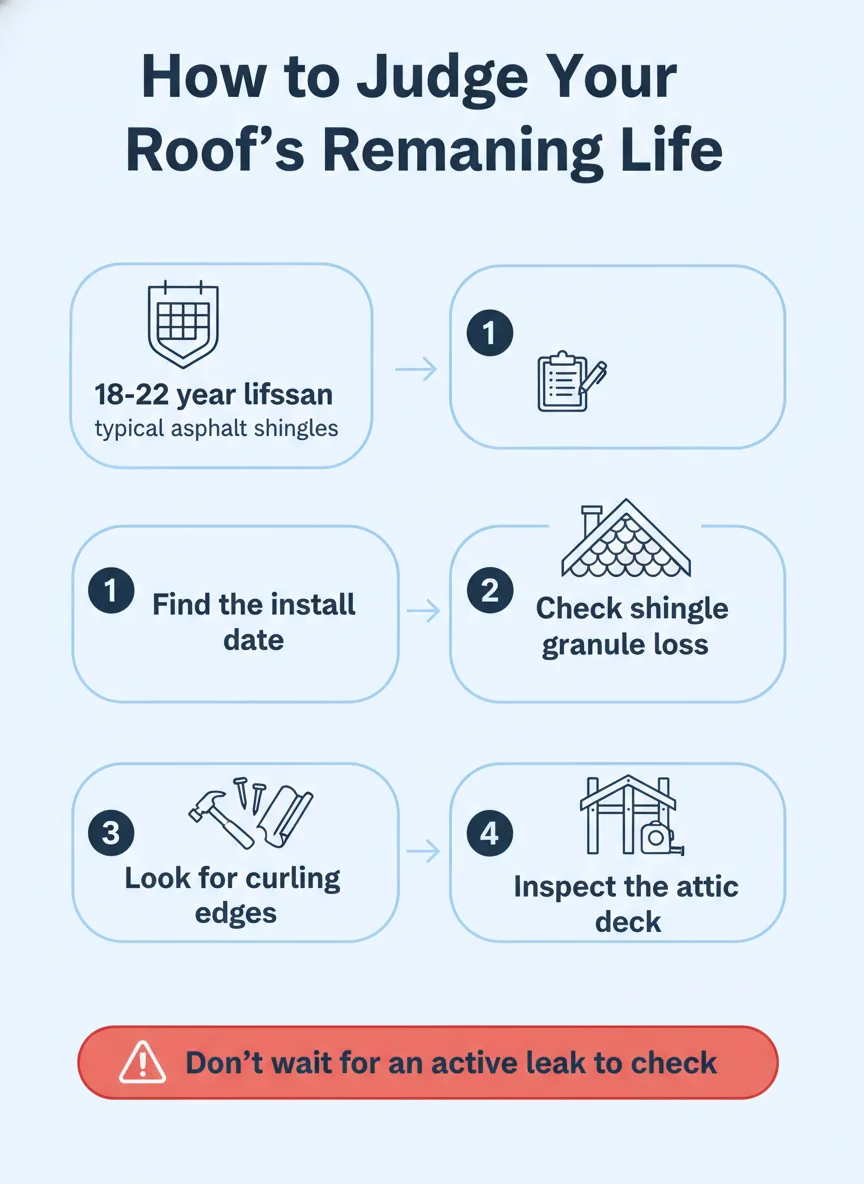
Step-by-step: How to Estimate the Age and Remaining Life of Your Roof
You don't need to climb onto the roof to get a rough sense of where it stands. These steps use what's visible from the ground, the attic, and your home's paperwork.
- Find the install date: Check closing paperwork, a permit record, or a prior invoice to find when the roof went on. This gives you a baseline against the material's typical lifespan.
- Walk the perimeter: Look at the shingles from the ground with binoculars for curling edges, bald spots, or color that looks noticeably faded compared to a newer section.
- Check the gutters: Granules that have washed into the gutters or downspouts are a sign the shingle surface is wearing down and losing its protective layer.
- Look at flashing points: Check around chimneys, vent pipes, and skylights for rust streaks, gaps, or lifted metal, since these spots fail before the field of the roof usually does.
- Go into the attic: Look for daylight coming through the deck, dark staining on the underside of the sheathing, or a musty smell, all signs of moisture getting past the roof above.
- Note recent storms: If a significant hailstorm has hit the area since the roof was installed, factor that in even if nothing looks obviously damaged from the ground.
- Get a professional look: If the roof is past 15 years old or you've found any of the signs above, a physical inspection gives you a clearer answer than guesswork.
What the Signs of an Aging Roof Actually Look Like
Recognizing the signs early is what separates a planned replacement from an emergency one.
From the Ground
Shingles that curl up at the corners, crack across the surface, or show bare patches where granules have worn away are the clearest visual signs of an aging roof. You might also notice streaks or dark patches, which can be algae growth that tends to show up more on older shingle surfaces as their protective coating thins.
Sagging anywhere along the roofline is a more serious sign and usually points to deck or structural issues rather than simple shingle wear. If you see sagging, especially near a valley or around a chimney, that's worth a prompt look rather than something to monitor over a season.
In the Attic
An attic tells you things the exterior can't. Daylight visible through the roof deck, damp insulation, or a musty smell all point to moisture getting through somewhere above, even if there's no obvious stain on your ceiling yet. These attic signs often show up before a leak becomes visible from inside the living space.
Rust on nail tips poking through the deck is another attic clue, and it usually means condensation is building up from poor ventilation rather than an active leak. Either way, it's a sign the roof system isn't managing moisture the way it should, which shortens the lifespan of the materials above it.
DIY vs Calling a Pro
Some parts of keeping an eye on your roof's age are entirely reasonable for a homeowner to handle. Checking gutters for granule buildup, walking the yard with binoculars after a storm, and peeking into the attic for staining or daylight are all tasks that don't require any special equipment or training.
Actually getting on the roof is a different story. Steep pitches, loose or brittle older shingles, and the risk of causing damage by walking in the wrong spot make rooftop inspection a job better left to someone who does it regularly. That's especially true after hail or wind events, when damage can be subtle enough to miss from the ground but obvious up close to a trained eye.
Deciding whether to repair or replace a roof that's showing age is also worth a professional opinion rather than a guess. A trained eye can tell the difference between cosmetic wear that still has years of service life left and structural issues that mean a full replacement makes more financial sense than ongoing patch jobs.
Planning Ahead for Your Next Roof
Knowing roughly where your roof stands in its lifespan gives you room to plan rather than react. Homeowners who get ahead of an aging roof can budget for the work, choose materials that fit their home and climate, and avoid scrambling after a leak shows up during a storm. It also gives you time to research options like metal or upgraded shingle grades if you're looking for something that will outlast the industry average.
If you're in Westminster or anywhere across the Denver Metro and Northern Colorado region and you're not sure where your roof stands, a physical look is the fastest way to find out. Virtuous Roofing and Exteriors offers free roof health assessments that give you a clear, honest read on your roof's remaining life, no pressure attached.
Frequently asked questions
How long do asphalt shingle roofs typically last in Colorado?
Most asphalt shingle roofs in Colorado's UV and hail conditions last somewhere in the 18 to 22 year range, though that varies with the shingle grade and how much sun and hail exposure the roof has taken. A roof with good attic ventilation and no storm damage tends to land on the higher end of that range.
Does hail shorten the life of a roof even if there's no visible leak?
Yes, hail can bruise shingles and knock granules loose without causing an immediate leak, and that damage still shortens the roof's useful life. The granules that protect shingles from UV breakdown get thinner over time in the bruised spots, so the roof ages faster in those areas even if nothing is dripping yet.
How can I tell how old my roof is if I don't have the paperwork?
You can often find a rough install date from a county permit record, a prior inspection report, or by looking at the shingle style and granule wear in the attic and on the slopes. We walk through more ways to pin down a roof's age in [this guide](/blog/how-to-find-out-how-old-your-roof-is).
What shortens a roof's lifespan faster than normal wear?
Poor attic ventilation, repeated hail strikes, and skipped maintenance are the biggest factors that shorten a roof's life beyond its expected range. Heat trapped in a poorly vented attic bakes the underside of shingles year-round, which speeds up the same brittleness that sun exposure causes from above.
Is it worth repairing an old roof instead of replacing it?
It depends on the roof's age, how widespread the damage is, and whether the underlying deck and flashing are still sound. A roof nearing the end of its expected lifespan with scattered issues usually isn't worth patching repeatedly, while a younger roof with one isolated problem area is often a good repair candidate.