
Why Colorado Homeowners End Up Filing Roof Claims So Often
Front Range and Northern Colorado weather throws hail and straight-line wind at roofs on a regular basis, and that's just part of living here from Fort Collins down through Colorado Springs. Most homeowners don't go through a roof insurance claim more than once or twice in the time they own a house, so the process feels unfamiliar every time it happens.
Knowing the order of events ahead of time changes how the whole thing feels. Instead of waiting to be told what happens next, you know what's coming, you know which steps are yours to handle and which ones belong to the adjuster or the contractor, and you're a lot less likely to get stuck waiting on a call that should have already happened.
What Actually Triggers a Claim, and Why the First 48 Hours Matter
A claim starts the moment you notice damage, whether that's missing shingles after a wind event or dented metal and bruised shingles after hail. What you do in the first day or two sets the tone for the whole claim, because documentation fades and roofs can keep deteriorating if nobody tarps an active leak.
Documenting the damage yourself
Before anyone from the insurance company shows up, walk the property and take photos of anything that looks off: dented vents, bruised or missing shingles, dings in gutters or siding, debris in the yard. Date-stamped photos from your own phone become useful backup if the adjuster's estimate ever gets disputed later.
This is also the point to get a professional set of eyes on the roof. A roof inspection from a licensed crew gives you a written, independent record of the damage before any negotiation starts, which matters more than most homeowners expect going in.
Calling your carrier
Once you have your own documentation, call your insurance company to open the claim. They'll assign a claim number and typically schedule an adjuster visit from there. Ask what your policy's deductible looks like for wind and hail specifically, since some policies carry a separate percentage-based deductible for those events rather than a flat dollar figure.
Keep a simple log from this point forward: who you spoke with, what date, and what was said. Claims that drag on tend to be the ones where nobody wrote any of this down and both sides are left guessing what was agreed to three weeks earlier.
| Stage | Who leads it | What you provide |
|---|---|---|
| Documentation | Homeowner and inspector | Photos, inspection report, damage log |
| Adjuster visit | Insurance adjuster | Access to the property, your own photos |
| Estimate review | Homeowner and contractor | Contractor estimate to compare against |
| Build and invoice | Roofing contractor | Signed scope of work, final sign-off |
The Adjuster Visit and the Estimate That Follows
The adjuster's job is to walk the roof, measure the damage, and write an estimate based on what they find and the materials currently on the house. This estimate usually arrives as Actual Cash Value, meaning it reflects the roof's age and condition, with a separate recoverable depreciation amount held back.
It's worth having your own contractor's estimate in hand by the time the adjuster's paperwork comes back. If the two don't match, especially on scope, like missed flashing damage or underestimated material quantities, a supplement request can get the gap corrected before any work begins.
Step-by-step: From Storm to New Roof
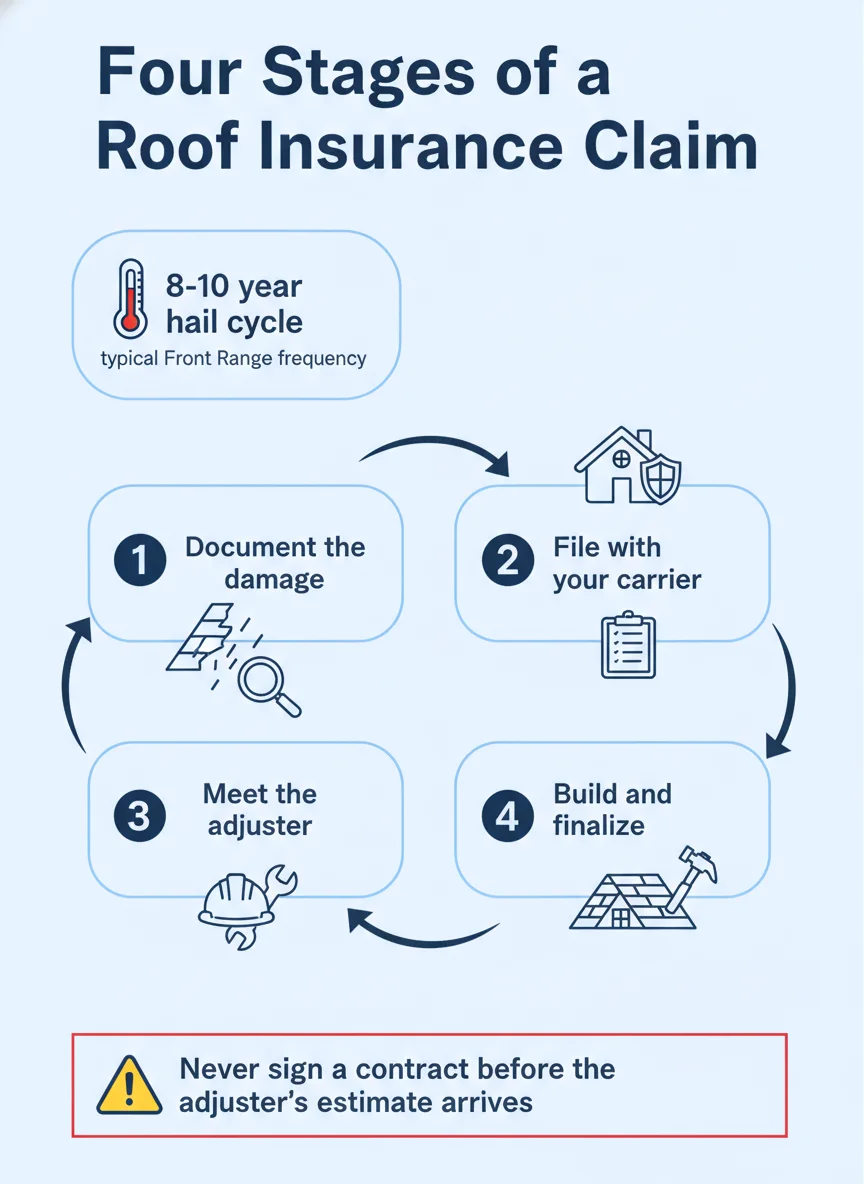
Here's the realistic order of events most Colorado roof claims follow, start to finish.
- Document the damage: Photograph the roof, gutters, and yard debris the same day you notice damage, before weather or cleanup erases the evidence.
- Open the claim: Call your carrier to get a claim number and schedule the adjuster visit, and ask about your wind or hail deductible up front.
- Get an independent inspection: Have a roofing contractor document the damage separately so you have a second, professional opinion to compare.
- Meet the adjuster: Walk the roof with the adjuster if you can, and point out anything your own inspection found that might otherwise be missed.
- Compare estimates: Line up the adjuster's estimate against your contractor's and request a supplement if there's a real gap in scope or materials.
- Schedule and complete the build: Once the estimate is approved, your contractor pulls permits, orders materials, and schedules the replacement.
- Submit the final invoice: After the work is done, send the final invoice to your carrier to request the recoverable depreciation that was held back.
What Does the Final Payout Actually Look Like?
Most policies split the payment into two pieces. The first check, the Actual Cash Value payment, arrives once the estimate is approved and covers the depreciated value of the roof minus your deductible. That's usually enough to get the project started.
Collecting recoverable depreciation
The second piece, recoverable depreciation, is released after the work is finished and you submit the final invoice showing the job was completed as scoped. This is the part homeowners most often forget to chase down, since it doesn't arrive automatically the way the first check does.
A straightforward final invoice from your contractor, matching the approved scope of work, is usually all a carrier needs to release that remaining balance. Keep a copy of everything you submit in case the carrier asks for it again.
Where the deductible fits in
Your deductible gets subtracted from the total claim value, not charged separately on top of it. If your policy has a percentage-based wind or hail deductible rather than a flat amount, it's calculated off your dwelling coverage limit, so it's worth knowing that number before the first check arrives.
This is also where storm damage and insurance support from your contractor earns its keep, since a crew that's handled this process before can walk you through exactly how the math works out on your specific estimate.
Which Parts of This Can You Handle Yourself, and Where Do You Need a Pro?
Documenting damage and calling your carrier are things any homeowner can do without help, and doing them quickly actually speeds up the whole claim. The photo log, the claim number, the initial phone call, none of that requires special expertise, just attention and a phone camera.
Where it gets harder is reading the adjuster's estimate line by line and knowing whether it actually reflects the damage on the roof. A contractor who writes these estimates for a living can spot an underestimated material quantity or a missed section of flashing in a way most homeowners can't, simply from doing it repeatedly.
The actual construction, from tear-off through final nail, is not a DIY step under any circumstance a carrier will recognize. A licensed, insured crew needs to perform and document that work for the final invoice to hold up when it's time to collect the recoverable depreciation.
Getting Through a Claim Without Losing Momentum
The claims that drag on for months are almost always the ones where nobody kept notes, nobody compared estimates side by side, or the build got scheduled before the paperwork was settled. None of those mistakes are hard to avoid once you know the order of events ahead of time.
If you're staring at hail dents or missing shingles right now and don't know where to start, read through missing shingles after a wind storm for a sense of what's repairable versus what points toward a full claim, and reach out to Virtuous Roofing and Exteriors when you're ready to get a second set of eyes on the damage.
Frequently asked questions
How long does a roof insurance claim take in Colorado?
It depends on how busy the carrier is after a storm and how quickly you and the adjuster can coordinate a visit. A claim that moves without delays can go from filing to an approved estimate in a few weeks, but widespread storm damage across a region can push that out further.
Do I have to use the roofer the insurance company recommends?
No, you get to choose your own contractor for the work. The insurance company's job is to estimate and pay for the damage, not to pick who repairs your home.
What is recoverable depreciation and do I automatically get it?
Recoverable depreciation is the portion of your payout held back until the work is actually completed and invoiced. Most policies release it after you submit the final invoice, but you usually have to request it, it doesn't show up automatically.
Will my insurance rates go up if I file a roof claim?
That depends on your carrier, your claims history, and how your policy is structured, so it's worth asking your agent directly rather than assuming. A single storm-related claim is often treated differently than an at-fault claim, but every policy reads a little differently.
What if the adjuster's estimate misses damage I can see?
You can push back and ask for a re-inspection or a supplement to the estimate. This is common, especially with damage like hidden flashing issues or granule loss that isn't obvious from the ground.