Post-storm roof inspection, documented right.
After hail or wind rolls through Denver Metro or Northern Colorado, we inspect every slope, document what we find, and tell you straight whether there's a claim worth filing.
Virtuous Roofing and Exteriors inspects roofs across Denver Metro and Northern Colorado after every hail and wind event that rolls through the region. This is a slope-by-slope, documented inspection built specifically for storm damage, not a general once-over. We check every roof plane, the soft metals, and the gutters, then tell you plainly whether there's damage worth filing a claim over. Colorado sees more hail than almost anywhere in the country, so this inspection is one of the most requested services we run.
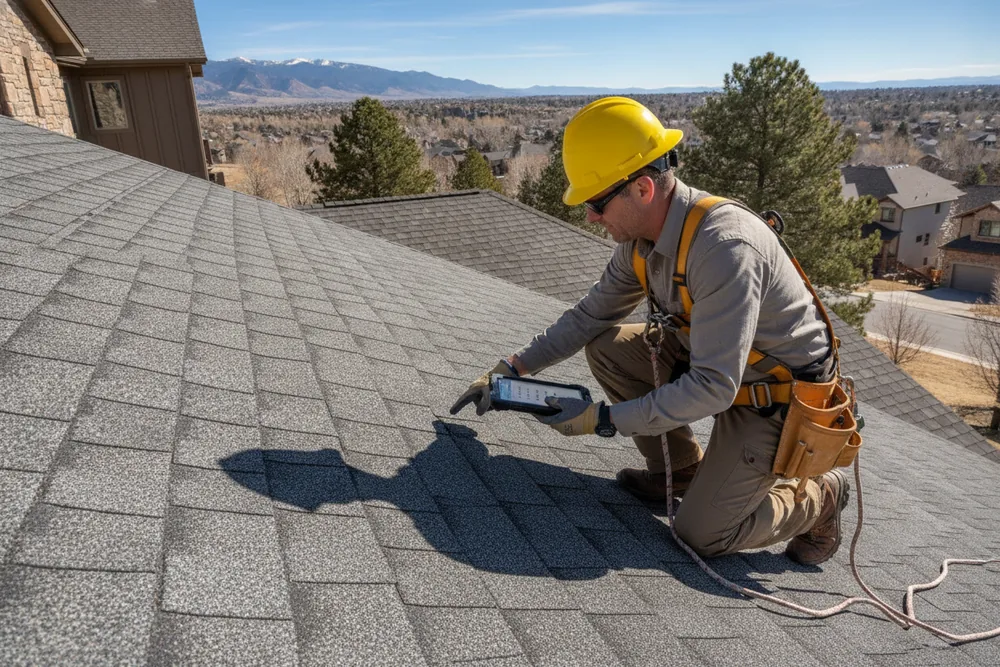
Did a recent hailstorm leave damage you can't spot from the driveway?
Hail damage is judged up close, not from the ground. A roof that looks fine from the yard can have bruised shingles, dented vents, and granules piling up in the gutters, all signs the shingle mat has been weakened even though nothing is visibly torn or missing. Wind works the same way: it lifts and creases shingles at the edges and ridge before you'd ever notice a gap. We walk every slope, check the soft metals and gutters, and document what we find with photos, the same way an adjuster will look at it. That documentation is what turns a maybe into an answer, and it matters because most insurance policies put a limit on how long after a storm you have to file.
What we look for on the roof
Bruised or soft shingles
Hail bruises the shingle mat and knocks granules loose, which can leave soft spots you can feel but not see. Left alone, those spots break down fast once the sun gets at the exposed asphalt underneath.
Granules collecting at the downspouts
A pile of granules where the downspout empties usually means the shingles above are shedding their sun protection faster than normal. It's one of the clearest signs of hail impact from the ground.
Creased or lifted shingle edges
Wind gets under the leading edge of a shingle and either creases it or tears the seal loose. A creased shingle will not reseal on its own and tends to leak in the next hard rain.
Dented vents, flashing, and gutters
Soft metal takes a hail hit the same way shingles do, and it's often easier to spot. Dents on vents and gutters are a strong clue the roof above them took the same beating.
What drives the inspection findings
Hail size and roof age
Larger hail and older, more brittle shingles bruise deeper and show damage over a wider area. We factor age into what we're seeing on the roof.
Wind direction and roof exposure
The slopes facing the storm usually take the worst of it, so we pay extra attention to whichever side the wind came from.
How the roof is holding up structurally
If we find punctures or soft decking under the shingles, that changes the recommendation from a repair to a fuller fix.
Active leaks from the storm
If the storm already opened a path for water, that gets handled first before anything else.
What to expect during the visit
We walk every slope of the roof and photograph what we find, checking test squares the way an insurance adjuster does so the documentation holds up. We also look at the gutters, vents, and any soft metal for hail dents, and check for collateral damage on siding or screens while we're up there. Once we're down, we walk you through what we saw in plain terms, whether that's repairable damage, a case for full replacement, or nothing worth filing a claim over. If you want to move forward with insurance, we explain what the adjuster meeting looks like and what to expect from that conversation. You can reach us at (303) 808-6888 to get on the schedule.
Related services you may need
If the inspection turns up a claim-worthy amount of damage, our Storm Damage & Insurance team can take over the documentation and adjuster meeting from here. If there's an active leak, Roof Repair & Emergency Tarping stops the water first. And if the roof has taken enough hits over the years that a patch won't cut it, Roof Replacement is the next conversation.
The cost of waiting
Hail and wind damage does not heal itself, and it does not always announce itself either. A bruised shingle that goes unnoticed keeps breaking down every time the sun hits it, and a creased shingle that goes unrepaired lets water in the next time it rains hard. Beyond the physical damage, most insurance policies set a window for filing a storm claim, and once that window closes, damage that would have been covered becomes an out-of-pocket repair. Waiting to get a free look costs you options, not just roof life.
How do I know if my roof has hail damage?
The honest answer is you usually can't tell from the ground. Hail bruises and creases shingles in ways that are only visible up close, which is why a documented inspection is the first step, not a guess.
How much does a post-storm roof inspection cost?
We offer a free health assessment after a storm, so cost isn't the barrier. What determines the scope of any follow-up work is how much of the roof was affected and whether the damage is cosmetic or affects the shingle's ability to keep water out.
Will you work with my insurance company on storm damage?
Yes. We document everything we find on the inspection and can work directly with your adjuster if the damage is significant enough to file a claim.
If a storm has come through Denver Metro or Northern Colorado and you're not sure what it left behind, give us a call at (303) 808-6888. We'll get a documented inspection on the calendar and tell you straight what we find.
- Buying, selling, or just want to know where you stand? You get an honest, documented inspection and the certification lenders and buyers ask for.