
Roof replacement in Lakewood and the west Denver metro
Lakewood sits close enough to the foothills that homes here catch weather patterns a little different from the flatter parts of the Denver metro. Wind can funnel down off the mountains with more force, and the same hail and heavy snow that hits the rest of the region shows up here too.
That combination means roofs in Lakewood often show wear in specific spots, edges and ridge lines especially, before the rest of the roof looks affected. Knowing what to watch for helps you catch a replacement need before it turns into an active leak.
What actually ages a roof this fast
A roof's rated lifespan assumes fairly moderate conditions. Lakewood's combination of altitude, sun exposure, and wind means roofs here tend to reach the end of their practical service life sooner than that number suggests, even when the roof was installed correctly.
Wind and altitude stress
Wind gusts near the foothills can loosen shingle tabs and lift flashing edges without tearing anything off outright. Over years, that repeated flexing weakens the seal that keeps water out, which is why older roofs in this area sometimes develop small leaks near ridges and valleys first.
High altitude sun exposure adds to the problem by breaking down the asphalt and granules in standard shingles faster than at lower elevations, leading to brittleness and cracking well before the manufacturer's rated lifespan is reached.
Hail and freeze-thaw cycling
Hail is common across the whole Denver metro, and Lakewood is no exception. Even hail that doesn't crack a shingle can bruise it and knock granules loose, weakening its ability to shed water over the following years.
Freeze-thaw cycling through the winter compounds that damage, as water that gets into small cracks expands and contracts repeatedly. This is a big part of why an older roof can look fine from the street but fail an inspection underneath.
| Sign | Repair usually fits | Replacement usually fits |
|---|---|---|
| Damage location | Isolated to one section or slope | Spread across most of the roof |
| Roof age | Roof is well within its rated lifespan | Roof is near or past its expected life |
| Underlying deck | Deck is sound and dry | Deck shows rot or repeated moisture damage |
What's underneath the shingles matters most
The shingles get all the attention, but the roof deck, underlayment, and flashing underneath do the real work of keeping water out. A replacement done right addresses all of it, not just the top layer, since covering a compromised deck with new shingles just hides the problem.
Proper attic ventilation is part of this too. Poor airflow traps heat and moisture under the roof, which shortens the life of new shingles just as much as it did the old ones, so a replacement is a good time to check and correct it.
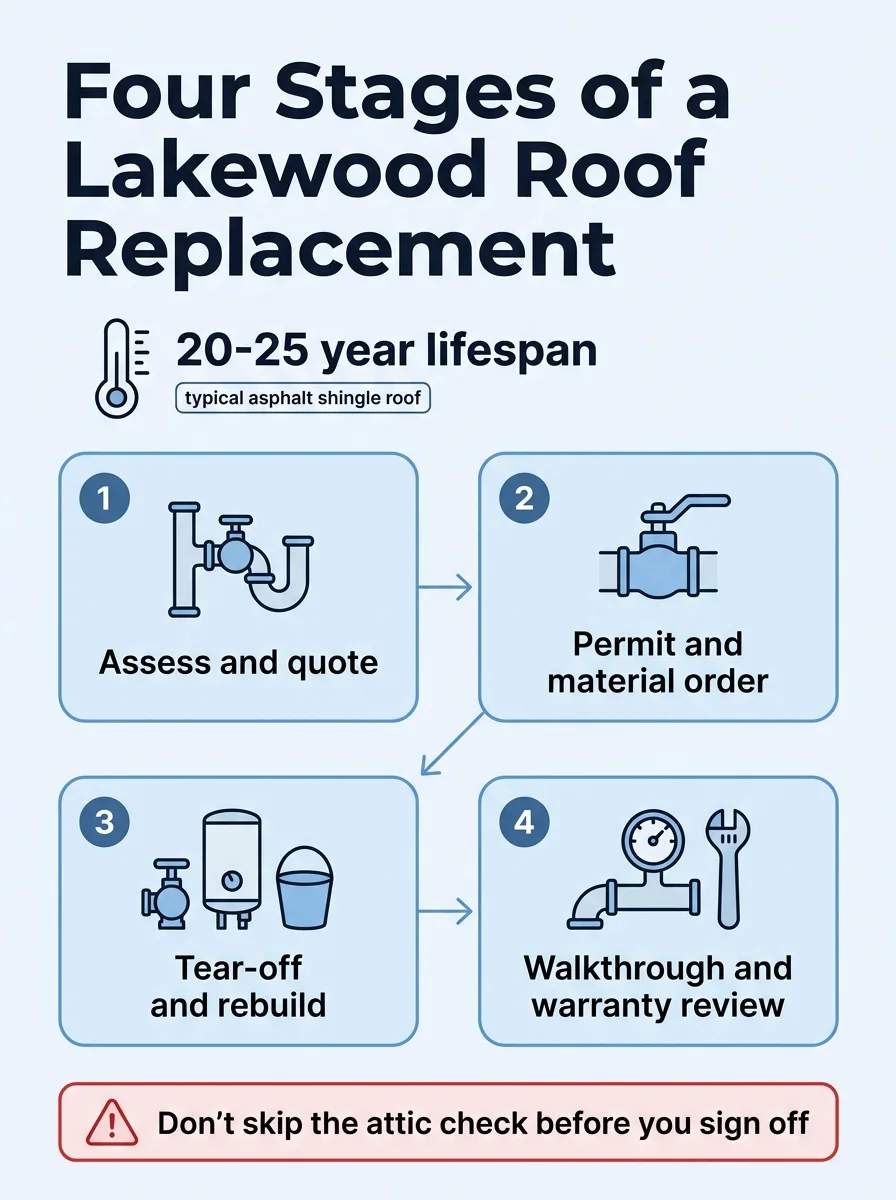
Step-by-step: what a roof replacement in Lakewood involves
A roof replacement follows a similar sequence no matter the home, though the details get adjusted for pitch, size, and access.
- Roof and attic inspection: A contractor checks the shingles, flashing, deck, and attic ventilation before writing an estimate.
- Written estimate and options: You get material options and a clear scope in writing so you know what you're paying for.
- Permit pulled: The permit gets filed with the city so the work is properly inspected.
- Tear-off to the deck: Old materials come off completely so the crew can check the condition of the wood underneath.
- Deck and flashing repair: Any soft decking or worn flashing gets replaced before anything new goes down.
- New roof system installed: New underlayment, flashing, and shingles or metal go on to manufacturer spec.
- Final review: The crew walks the finished roof with you and reviews the workmanship warranty before leaving.
What to look for before and after a storm
Signs from the ground
Look for shingle edges that curl upward, bald patches where granules have washed off, and cracked or missing shingles near ridges. These are easiest to spot with binoculars from the yard rather than climbing up yourself.
Inside, check the attic for daylight coming through roof boards, damp insulation, or a musty smell, all of which point to an active leak even without a visible ceiling stain yet.
Signs after a hail or wind event
Dented gutters, downspouts, or window screens, and granules pooling near downspouts, all suggest the roof took an impact too even if it looks fine from below. Photograph anything you find and get it inspected soon after the storm.
This kind of documentation is exactly what supports a storm damage and insurance claim, since insurers want clear evidence tied to a specific weather event.
What homeowners can handle and what needs a pro
Homeowners can safely check the attic for moisture, keep gutters clear, and scan the yard for granules or debris after storms. None of that requires getting on the roof itself.
Actual roof work is a job for a licensed contractor. Getting on a roof without proper safety gear is genuinely risky, and incorrect shingle or flashing work can void a manufacturer warranty or create leaks that are much harder to trace back to their source.
A licensed roofer also carries insurance to protect your property during the job and handles the permit that keeps the work documented, which matters later if you sell the home or need to reference it for insurance purposes.
Deciding what's next for your Lakewood roof
If your roof is showing wear near ridges and edges, or you know it's getting close to the end of its expected life, an honest inspection is the right next step rather than guessing from the ground.
For more on weighing repair against replacement, see the decision guide on repair versus replacement. Virtuous Roofing and Exteriors serves Lakewood and the surrounding Denver metro with clear inspections and straight answers before any work begins.
Frequently asked questions
How do I know if my Lakewood roof needs replacing?
The clearest signal is roof age combined with visible wear such as curling shingles, granule loss, or cracked flashing. A roof nearing or past the back half of its typical service life is worth a full inspection even without an obvious leak.
How long does a roof replacement take in Lakewood?
Most homes take one to two days once the crew is on site, depending on roof size, pitch, and weather. You should get a clear timeline in writing before the work starts.
Does Lakewood's location near the foothills affect roof wear?
Yes, wind funneling off the foothills can be stronger and more frequent than in flatter parts of the metro, which adds stress to shingle edges and flashing over time. That's on top of the hail and UV exposure common across the whole Denver metro.
Will insurance cover a roof replacement in Lakewood after a storm?
It depends on whether the damage came from a specific event like hail or wind rather than normal aging. Documenting the damage right after a storm and working with an adjuster is a separate process from replacing a roof that's simply worn out.
Do I need a permit for a roof replacement in Lakewood?
Yes, roof replacements generally require a permit in Lakewood and across the metro. A licensed contractor handles pulling that permit as part of the job.