Roof replacement in Aurora and the surrounding metro
Aurora has a wide mix of housing stock, from established neighborhoods with roofs original to the home to newer subdivisions still under their first warranty. That range matters because roof age, not just visible damage, drives a lot of replacement decisions. A roof that looks fine from the street can still be past its practical service life underneath.
Front Range weather adds another layer. Aurora sees hail, high wind events, heavy snow load in winter, and big daily temperature swings that stress roofing materials over years of freeze and thaw. Understanding what your roof has been through, not just what it looks like today, is the starting point for any honest replacement conversation.
Why roofs wear out faster in this climate
Asphalt shingles are rated by manufacturers for a general service life, but that number assumes moderate climate conditions. Colorado's UV intensity at altitude, combined with hail impact and rapid temperature swings, tends to shorten that window compared to milder parts of the country.
UV exposure and altitude
Denver metro sits at a mile of elevation, which means more direct UV exposure than most of the country. That accelerates the breakdown of the asphalt and granules in a standard shingle roof, showing up as granule loss, brittleness, and curling edges well before a roof's rated lifespan is up.
This is one reason material choice matters as much as installation quality. Metal roofing and higher-grade shingle products tend to hold up better against UV over a long ownership period, which is worth weighing against upfront cost when you're planning a replacement.
Hail and wind cycles
Hail is a near-annual event somewhere in the Denver metro, and Aurora is squarely in that pattern. Even hail that doesn't puncture a roof can bruise shingles and knock granules loose, which weakens the roof's ability to shed water over time even when there's no visible leak yet.
Wind uplift is the other factor. Strong gusts can loosen shingle edges and seals without tearing anything off outright, which is why a post-storm inspection often finds damage a homeowner never noticed from the ground.
| Factor | Asphalt shingle roof | Metal roof |
|---|---|---|
| Typical lifespan | 20 to 25 years in this climate | Considerably longer service life |
| Hail resistance | Can bruise or dent under impact | Generally more impact resistant |
| Upfront cost | Lower initial investment | Higher initial investment |
What actually happens under an old roof
The shingles are the visible layer, but the roof deck and underlayment underneath do most of the actual water protection work. Years of freeze-thaw cycling and small leaks can quietly damage the wood decking or insulation before it ever shows up as a stain on your ceiling.
A full replacement is the chance to check that structure, not just the surface. Replacing worn flashing around chimneys and vents, confirming proper ventilation, and inspecting the deck for soft spots are all part of doing the job right instead of just layering new shingles over old problems.
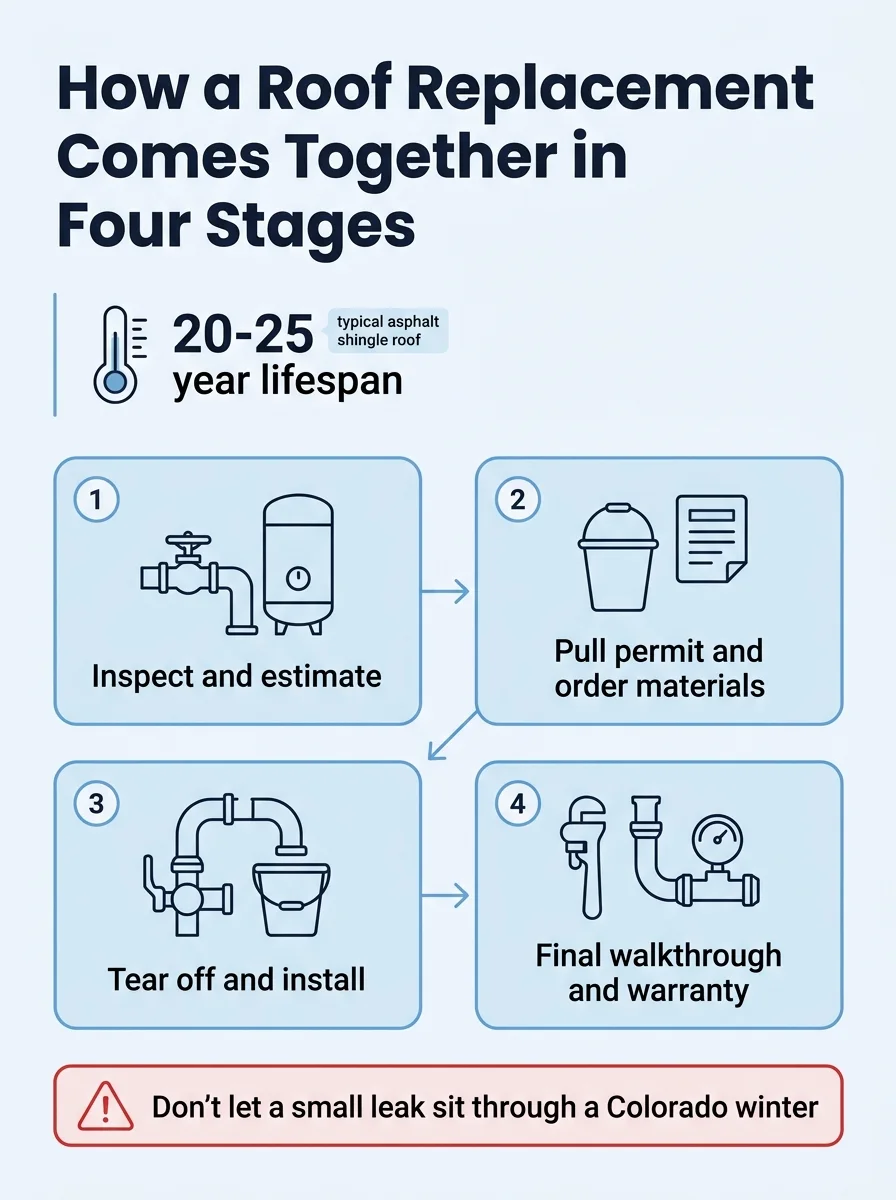
Step-by-step: what a roof replacement in Aurora involves
A well-run roof replacement follows a predictable sequence from first look to final walkthrough.
- Initial inspection: A contractor walks the roof and attic to assess age, damage, and any underlying deck or ventilation issues before quoting anything.
- Written estimate: You get a clear scope of work, material options, and timeline in writing before any work begins.
- Permit and materials: The permit gets pulled and materials ordered, which can take a few days depending on product availability.
- Tear-off: Old shingles, underlayment, and damaged flashing come off down to the deck so the crew can check for hidden problems.
- Deck repair if needed: Any soft or damaged decking gets replaced before new materials go down, not covered up.
- New roof installation: New underlayment, flashing, and shingles or metal panels go on according to manufacturer specs and local code.
- Final walkthrough: The crew cleans the site, walks the finished roof with you, and reviews your workmanship warranty.
What an Aurora homeowner will actually find during inspection
Visible warning signs
Curling or cupped shingle edges, bald spots where granules have washed away, and cracked shingles are all signs a roof is aging out. From the ground, these can be subtle, which is why binoculars or a professional inspection catch things a quick glance misses.
Inside the home, look for daylight through the attic roof boards, damp insulation, or a musty smell near the roofline. These point to a leak that's already been active for a while, even if there's no ceiling stain yet.
What shows up after storms
After a hail or wind event, dented gutters and downspouts, granules collecting in the yard or driveway, and dinged siding or AC units are all clues the roof took a hit too. These are worth photographing and getting inspected even if the roof itself looks intact from below.
This is also where storm damage and insurance support matters most, since documenting the damage properly right after a storm makes any insurance claim far more straightforward.
What to handle yourself and what needs a licensed contractor
Homeowners can reasonably keep an eye on their own roof between professional inspections. Walking the yard after a storm to look for granules, checking the attic for daylight or moisture twice a year, and keeping gutters clear are all tasks that don't require a ladder on the roof itself.
Actual roof work is a different story. Climbing on a roof without the right footwear, harness, or experience is genuinely dangerous, and improper shingle or flashing installation can void a manufacturer warranty or create leaks that are harder to trace than the original problem.
A licensed roofer also carries the liability insurance to protect you if something goes wrong on your property, and pulls the permits that keep the work inspected and documented. That paperwork matters later if you sell the home or file an insurance claim.
Getting a straight answer on your Aurora roof
The honest answer for most Aurora homeowners is that roof age, not just visible damage, should drive the replacement conversation. A roof nearing the back half of its expected lifespan is worth a real inspection even if nothing looks obviously wrong yet.
If you're weighing repair against full replacement, the roof replacement versus repair decision guide walks through how to think about that call. Virtuous Roofing and Exteriors serves Aurora and the rest of the Denver metro with straightforward inspections and clear answers before any work starts.
Frequently asked questions
How do I know if my Aurora home needs a full roof replacement or just a repair?
It comes down to how much of the roof is affected and how old it already is. A handful of damaged shingles on a roof with plenty of life left is usually a repair, while widespread wear, granule loss, or a roof already near the end of its expected lifespan points toward replacement.
How long does a roof replacement take in Aurora?
Most homes are a one to two day job once the crew is on site, depending on the size, pitch, and weather. A clear timeline gets set before work starts so you know what to expect.
What time of year is best for roof replacement in Colorado?
Roofs can be replaced most of the year in Colorado, though spring and fall tend to bring the most predictable weather windows. Summer afternoon storms and winter cold can both slow a job down, so a contractor should build weather buffer into your timeline regardless of season.
Will my homeowners insurance help pay for a new roof in Aurora?
It depends on the cause of the damage, not the roof's age alone. If hail or wind caused the damage, an inspection and documentation can support a claim, which is a separate process from a roof simply wearing out over time.
Do I need a permit to replace my roof in Aurora?
Yes, roof replacements typically require a permit in Aurora and across the Denver metro. A reputable contractor pulls the permit as part of the job so the work is inspected and documented properly.