Denver's Roofs Face a Specific Mix of Wear
Homes across Denver deal with a combination of intense sun, wide temperature swings between day and night, and seasonal hail that's harder on roofing materials than a lot of homeowners expect. It's a different set of stresses than milder or more consistently humid climates put on a roof, and it shows up in how Denver roofs age over time.
That combination is part of why roof replacement is such a regular part of homeownership in this area. A roof that looks fine from the street can be well into its material lifespan underneath, especially with a few hail seasons and a lot of UV exposure behind it. Understanding what local homes typically run into helps set expectations before you're standing in the driveway looking up at your own roof.
Why Denver Roofs Wear the Way They Do
Two forces do most of the work aging a Denver roof: sustained UV exposure and the area's seasonal hail activity. Both matter for different reasons when you're planning a replacement.
Sun and Temperature Swings
Denver's elevation and clear skies mean roofs take more direct UV exposure than a lot of other regions, which breaks down asphalt shingle materials faster over the years. Add in the daily swing between hot afternoons and cool nights, and you get more expansion and contraction stress on the roofing surface than a milder climate would produce.
That combination is a big part of why asphalt shingles across the industry are generally expected to last somewhere in the 18 to 22 year range, with the lower end of that range more common in climates that push materials as hard as Denver's does.
Seasonal Hail Activity
Hail is a regular part of the Denver Metro's weather pattern, and repeated exposure over the years compounds with UV wear rather than acting as a separate, isolated event. A roof that's taken several hail seasons is often further along toward replacement than its age alone would suggest, since granule loss and small cracks add up.
This is part of why a professional look after any significant storm damage matters, even when nothing looks obviously wrong from the ground. Cumulative hail wear is one of the more common reasons a Denver roof replacement gets moved up sooner than a homeowner expected.
| Factor | Effect on Denver Roofs | What It Means for Replacement |
|---|---|---|
| High UV exposure | Faster breakdown of shingle materials | May shorten expected lifespan |
| Daily temperature swings | More expansion and contraction stress | Can accelerate flashing and seal wear |
| Seasonal hail | Granule loss, cracking, dents | Cumulative damage can move up replacement timeline |
What Goes Into a Denver Roof Replacement
A full replacement starts with a tear-off of the old roofing material down to the deck, followed by inspection and repair of the deck itself if needed, then installation of new underlayment, flashing, and the roofing material of choice, whether asphalt, metal, or another option. Permits are pulled before work begins since a full tear-off requires them in most jurisdictions.
Material choice matters more in Denver than in milder climates given the UV and hail exposure discussed above. We walk through the tradeoffs between asphalt, metal, and other options so homeowners can weigh durability, appearance, and their own priorities before committing to a roof replacement.
Step-by-Step: How a Denver Roof Replacement Runs
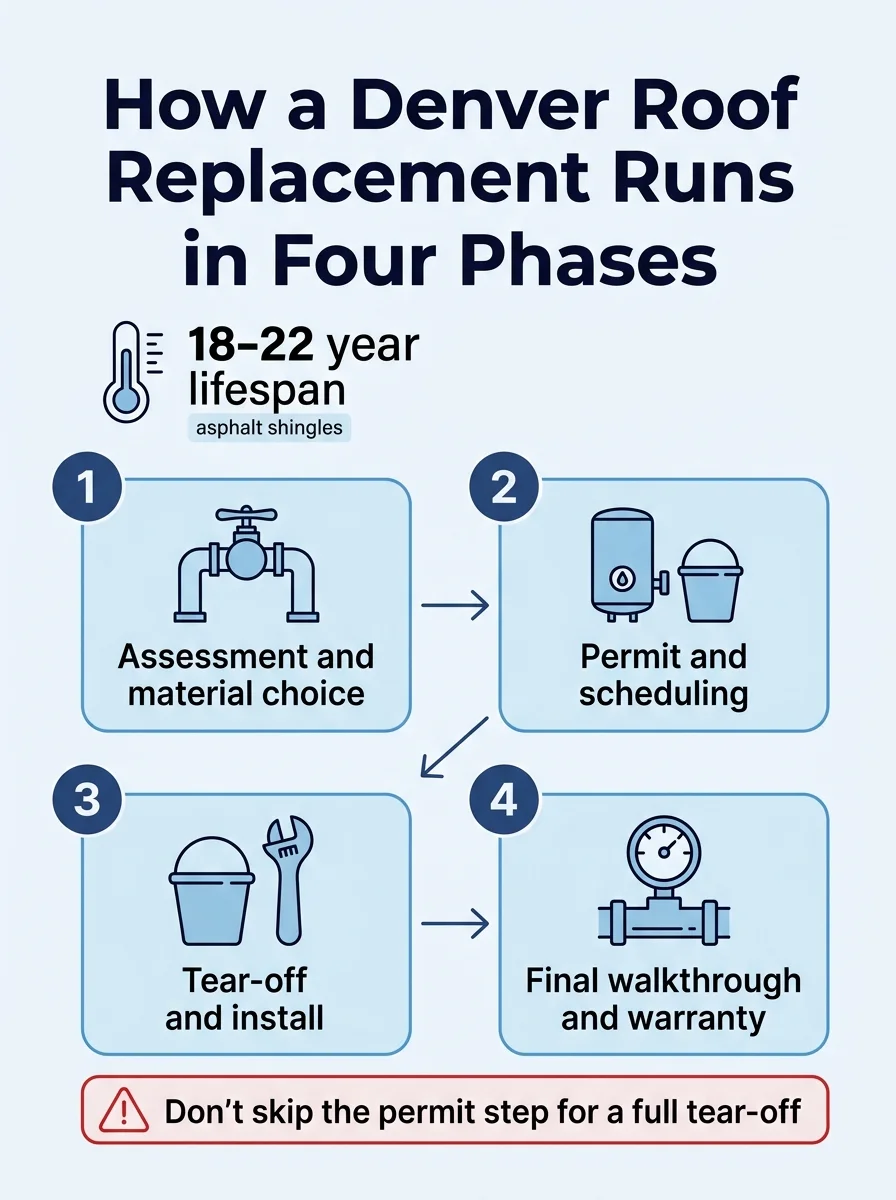
Here's the general sequence a Denver replacement follows from the first call to the final walkthrough.
- Assessment: We look at the current roof's condition, age, and any storm history to confirm replacement is the right call rather than a repair.
- Material selection: We walk through options like asphalt and metal, weighing durability against appearance and budget priorities specific to your home.
- Permits and scheduling: We handle the permit process for the tear-off and set a clear timeline before any crew shows up on-site.
- Tear-off: The old roofing material comes off down to the deck, with debris managed and landscaping protected throughout the day.
- Deck repair if needed: Any damaged decking found underneath gets addressed before new underlayment and materials go down.
- Installation: New underlayment, flashing, and roofing material go on according to manufacturer specifications and local code.
- Final walkthrough: We confirm the finished roof, review warranty details, and answer any remaining questions before considering the job complete.
What Denver Homeowners Typically Find
Once a tear-off starts, a few common findings come up across Denver homes specifically, and knowing what's normal versus what's a bigger deal helps set expectations before the crew even arrives.
Common, Manageable Findings
Granule loss across the shingle surface, minor flashing wear around chimneys and vents, and small deck areas that need patching are all common in Denver given the sun and hail exposure discussed earlier. None of these are surprising to a crew that works in this climate regularly, and they're all addressed as part of a standard replacement.
These findings don't usually change the overall timeline much, since minor deck repair and flashing replacement are built into a normal tear-off and install process rather than treated as separate surprises.
Findings That Affect Timeline or Scope
Widespread deck rot from long-term moisture, or storm damage extensive enough to affect the underlying structure, can add time to a replacement since more material needs repair or replacement before the new roof goes on. These situations are less common but worth knowing about upfront.
If your home has had a history of leaks or you're not sure how the deck underneath has held up, it's worth reading through our guide on when to repair versus replace before committing to either path.
DIY vs. Calling a Pro
A full roof replacement isn't a do-it-yourself project for the vast majority of homeowners, and that's true regardless of climate. Between the permit requirements, the safety demands of a full tear-off, and the precision needed for proper flashing and underlayment installation, this is squarely licensed contractor territory.
What a Denver homeowner can reasonably do on their own is the early decision-making: researching material options, comparing expected lifespans given local UV and hail exposure, and getting a sense of what condition their current roof is in from the ground or through a professional inspection.
Everything from the actual tear-off through final installation belongs with a licensed crew that understands both the permit process and the specific demands Denver's climate puts on roofing materials. That combination of code knowledge and climate experience is what keeps a replacement from becoming a repeat job in a few years.
Planning Your Denver Replacement
Denver's roofs deal with a specific combination of intense sun and seasonal hail that shapes both when replacement becomes necessary and which materials make the most sense for the home. Understanding that combination going in helps set realistic expectations for timeline, findings, and material choice.
If you're weighing a replacement for a Denver home, Virtuous Roofing and Exteriors walks through the assessment, material options, and permit process so you know what to expect before the first shingle comes off.
Frequently asked questions
How do I know if my Denver home needs a full roof replacement?
A roof usually needs full replacement when it's near or past its expected material lifespan, has widespread damage across multiple sections, or has had repeated repairs that aren't holding. A professional [inspection](/services/roof-inspection) can confirm which situation you're in before you commit to a full tear-off.
How long does a roof replacement take in Denver?
Most homes take one to two days once a crew is on-site, depending on the size, pitch, and weather conditions on the day. We give a clear timeline before starting and keep you posted if weather or anything else changes it.
Does Denver weather affect roof replacement material choices?
Yes, the combination of intense sun exposure, temperature swings, and seasonal hail means material durability matters more here than in milder climates. We walk through asphalt, metal, and other options so you can weigh durability against the rest of your priorities.
Will my Denver homeowners insurance help pay for a replacement?
It depends on why the roof needs replacing. Storm and hail damage is often covered under a standard policy, while a roof that's simply reached the end of its expected lifespan usually isn't, so it's worth having damage documented for a [storm damage and insurance](/services/storm-damage-insurance) claim if that applies.
What happens to my yard and landscaping during a tear-off?
A full tear-off does involve debris coming off the roof, so crews typically use tarps and protective barriers around landscaping and walkways during the work. Cleanup at the end of each day is part of a properly run job.