Wind damage roof repair, sealed for good.
High wind lifts and creases shingles before it tears them off, and a creased shingle never reseals on its own. We repair wind damage for homes across the Denver Metro and Northern Colorado.
Virtuous Roofing and Exteriors repairs wind-damaged roofs across the Denver Metro and Northern Colorado, from lifted shingles along a ridge to full sections torn loose in a gust. Wind gets under the leading edge of a shingle, breaks the seal, and either creases it or rips it off outright, and a creased shingle will not reseal on its own. We inspect every slope, document what we find, and either repair the affected area or recommend a broader fix when the seal failure runs across the whole roof.
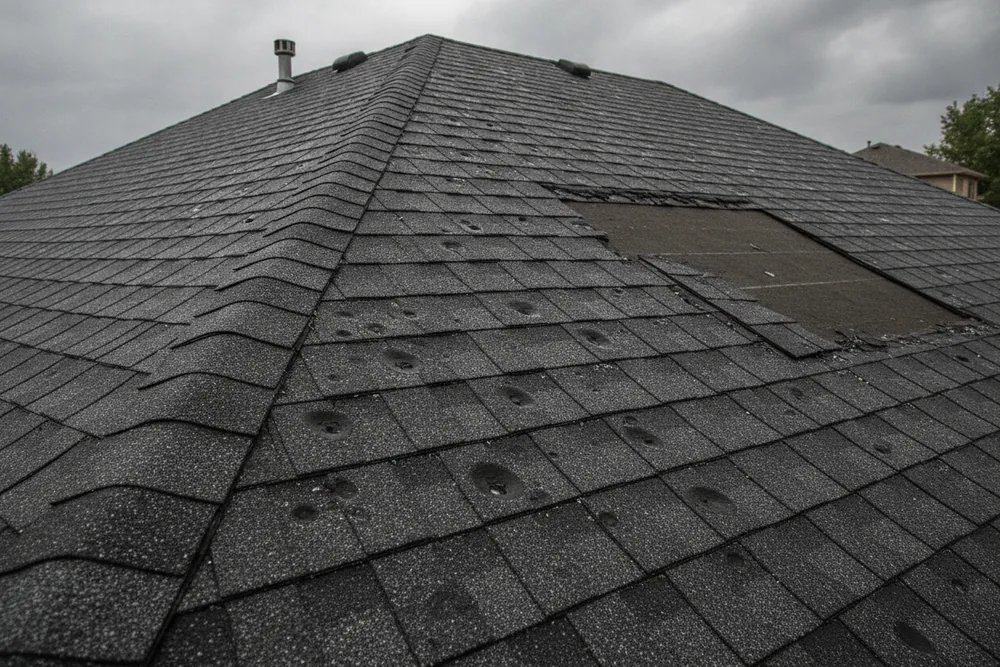
Did last night's wind take shingles off your roof?
If you found shingles in the yard or noticed a section that looks ruffled from the street, wind has gotten under the seal strip and lifted or torn the shingles loose. This starts small, usually along an edge, a ridge, or wherever the wind hits the roof hardest, and it spreads with every storm that follows because each gust finds the next weak seal. A roof that looks mostly fine from the ground can still have creased or torn shingles that will leak in the next rain. We walk every slope, lift-test the edges and ridge, and give you a straight answer on whether it is a repair or something bigger.
Signs your roof took wind damage
Missing or lifted shingles
You spot bare patches on the roof or shingles scattered in the yard after a windstorm. Wind gets under the leading edge, breaks the seal, and pulls the shingle loose or tears it off completely. Left alone, the exposed decking underneath is open to the next rain.
Creased shingles along the edges and ridge
A shingle that has folded or bent will not reseal itself once the wind lets go. It sits open at the crease and lets water track underneath in the next storm. These are easy to miss from the ground but show up clearly on a close inspection.
Ridge cap shingles pulled loose
The ridge takes the hardest hit in a straight-line wind because it sits at the peak, exposed on both sides. When ridge cap shingles crack or blow off, the seam at the top of the roof is left uncovered.
Exposed nail heads or soft spots at the edges
Wind that lifts a shingle without tearing it off can still break the seal and expose the nail heads underneath. Water finds these small openings before you ever see a stain inside.
What causes wind damage on a roof
Broken shingle seal strips
Every shingle relies on a seal strip that bonds to the one below it in the sun's heat. Once wind breaks that bond, the shingle stays vulnerable to the next gust.
Age and sun exposure
Shingles that are already curling or brittle from years of sun break loose in wind that a newer roof would shrug off.
Ridges and edges catching the wind first
Wind loads hit hardest at edges, ridges, and any place air can get underneath a shingle, which is why damage often starts at the same spots first.
Repeated storms weakening the same spots
Once a seal is broken, that same area takes the brunt of the next windstorm too, so damage tends to compound in the same locations over time.
What to expect during the visit
We walk each slope and lift-test shingles along the edges and ridge, count creased, torn, and missing shingles, and check the ridge cap. If the damage is widespread we document everything with photos so you have it for a claim. Depending on what we find, we repair the damaged shingles on the spot or recommend a broader fix when seals have failed across the roof. We work Monday through Saturday, 8am to 6pm, and we'll walk you through what we found before we leave.
Related services you may need
If the wind damage is part of a bigger storm event, our Storm Damage & Insurance team can help document the full claim. A Roof Inspection gives you a clear read on the rest of the roof, and if the shingles are past their life, Roof Replacement is worth discussing.
The cost of waiting
A torn or creased shingle that seems minor today is an open door for water tomorrow. Every rain that follows works its way further under the broken seal, and what starts as a small repair can turn into damaged decking or a stained ceiling if it sits through a few more storms. Wind damage also tends to be easiest to document and claim right after it happens; the longer it goes unreported, the harder it is to tell that damage apart from ordinary wear.
How do I know if my roof has wind damage?
The clearest signs are missing shingles, shingles that look creased or folded, and a ridge cap that looks disturbed after a windstorm. Some wind damage only shows up on a close inspection, since a broken seal or a lifted edge is hard to spot from the ground.
Will homeowner's insurance cover wind damage to my roof?
Most homeowner's policies cover sudden wind damage, but whether a claim makes sense depends on the extent of the damage and your deductible. We document what we find so you and your adjuster have a clear record to work from.
How much does wind damage roof repair cost?
The cost depends on how many shingles were affected and whether the ridge cap or decking underneath also needs work. A roof with a few lifted shingles is a much smaller job than one with torn sections across multiple slopes, which is why we give you a written estimate after we've actually looked at it.
Call Virtuous Roofing and Exteriors at (303) 808-6888 to get your wind damage looked at, or request service online and we'll get you on the schedule across the Denver Metro and Northern Colorado.
- Hail and wind are a fact of life in Colorado. We inspect, document everything for your claim, and work directly with your adjuster so you get the roof you're owed.