Flat and low-slope roof replacement, sealed right.
Additions, porch roofs, and commercial buildings across Denver Metro and Northern Colorado often have sections too flat for shingles to work. We install membrane roofing systems built for drainage and long-term durability on those low-slope sections.
Virtuous Roofing and Exteriors replaces flat and low-slope roofs on additions, porches, and commercial buildings across Denver Metro and Northern Colorado. Shingles are built to shed water down a slope, and once a roof section flattens out, water sits instead of running off, which is why low-slope sections need a membrane system instead. We install and replace those systems with drainage and seam durability as the priorities from day one.
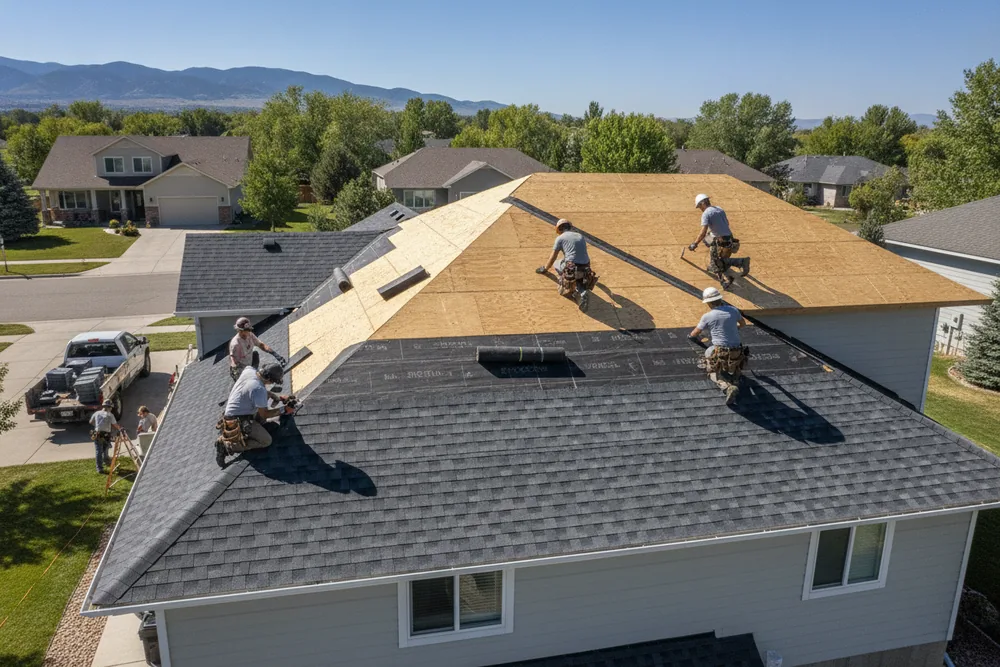
Is water pooling on a flat or low-slope section of your roof?
Standing water after every rain, even a light one, means the membrane or the drainage underneath it isn't doing its job anymore. A flat roof isn't actually flat, it's built with a slight slope and drains toward specific points, and once the membrane ages or the slope settles, water finds low spots and sits there instead of running off. Ponding water is the single biggest driver of membrane failure because it keeps the surface wet and stressed far longer than a sloped roof ever experiences. We inspect the membrane, the seams, and the drainage path before recommending a repair or a full replacement.
Signs it is time for replacement
Standing water after rain
Water that sits for more than a day or two after a storm means drainage has failed somewhere, and that ponding accelerates every other problem on the roof.
Cracking or blistering membrane
UV exposure and temperature swings dry out and crack membrane material over time, and blisters mean moisture has already worked its way underneath the surface.
Seams pulling apart
Membrane seams are the weakest point on any flat roof, and once they start separating, water gets underneath the whole system rather than staying on top of it.
Interior leaks with no clear source
Low-slope leaks often show up far from where the water actually enters, because it travels along the deck before dripping through, which is why they're harder to pin down without a hands-on look.
What drives the decision on a low-slope replacement
Membrane type and age
Different membrane materials age differently, and matching the right system to the building's use and budget is part of getting the replacement right the first time.
Drainage design
If the roof was never sloped correctly to its drains, a new membrane alone won't stop the ponding, so the drainage itself sometimes needs correcting during the replacement.
Foot traffic and rooftop equipment
Roofs with regular foot traffic or mounted equipment wear faster around those areas and need a membrane rated for that use.
Building type
Commercial buildings and HOA properties often need scheduled maintenance built into the plan rather than a one-time fix, which we can set up alongside the replacement.
What to expect during the replacement
We remove the failing membrane and inspect the decking underneath for moisture damage before anything new goes down. Drainage gets corrected if it's part of the problem, and the new membrane is installed with attention to the seams and flashing at every wall, curb, and penetration, since those are the spots that fail first on a low-slope roof. We walk you through the timeline before starting and clean up the site when the job is done, backed by our workmanship warranty.
Related services you may need
If the low-slope section is part of a larger commercial building, our commercial roofing team can also set up ongoing maintenance to catch problems early. For sloped sections of the same roof damaged by hail or wind, we handle that separately as part of the same project.
The cost of waiting
Ponding water and cracked seams don't heal on their own, they spread with every rain and every freeze-thaw cycle. What starts as a small blister or a slow drip can work its way into the decking, and once decking is wet on a low-slope roof it's harder to dry out than on a sloped roof, because the water has nowhere to run off to in the meantime.
Why can't shingles be used on a flat or low-slope roof?
Shingles rely on gravity to shed water down a slope, and once a roof flattens out, water sits on top of the shingles instead of running off, which leads to leaks almost immediately. Membrane systems are built specifically to handle standing water and are sealed at the seams rather than relying on overlap and slope.
How long does a low-slope roof replacement take?
Timeline depends on the size of the section and whether drainage corrections or decking repairs are needed. We give you a clear estimate of the schedule before work starts.
What causes a flat roof to leak even when the membrane looks intact?
Most low-slope leaks start at the seams, the flashing around a wall or curb, or a drain that isn't handling the water fast enough, not in the middle of an intact membrane field. That's why the inspection focuses on those transition points first.
If water is pooling on a flat or low-slope section of your roof, give us a call for a free assessment. We serve homeowners and property managers across Denver Metro and Northern Colorado.
- Full tear-offs and new roofs in asphalt, metal, and more. We pull the permits, install clean, and back it with a workmanship warranty.