Emergency roof tarping and repair, stopped fast.
A tree limb, hailstorm, or blown-off section can open your roof to the weather in minutes. We tarp active leaks the same day and follow up with a permanent repair across the Denver Metro and Northern Colorado.
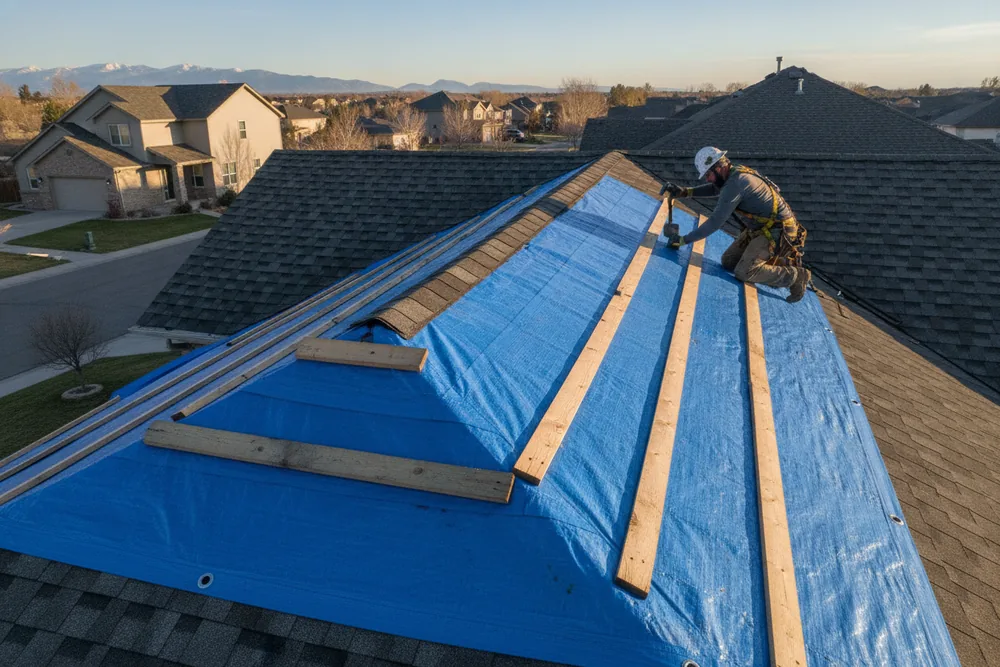
Virtuous Roofing and Exteriors tarps active roof leaks the same day and follows up with a permanent repair across the Denver Metro and Northern Colorado. Whether it's a limb through the roof, shingles torn off in a windstorm, or an opening that showed up overnight, the priority is stopping water from getting further into the house. We tarp the damaged area first, then come back once we can safely inspect and repair the roof itself. From there we can help document the damage if you're filing an insurance claim.
Is water actively coming into your home right now?
If water is coming in during or right after a storm, the roof has a direct opening, whether that's a hole from a fallen limb, a section of shingles that blew off, or a crack in the decking from an impact. The first move is to stop the water, not diagnose the whole roof, so we tarp the opening the same day to protect the inside of the house. Once the area is dry enough to work safely, we come back to inspect the decking and framing underneath and repair it properly. A tarp is a stopgap, not a fix, so it always gets followed by a permanent repair.
Warning signs to watch for
A visible hole or hanging debris in the roof
A limb or other debris that's punched through the shingles and decking is an obvious sign, and it usually means the framing underneath needs a look, not just the surface.
Active dripping inside during a storm
Water dripping through a ceiling or running down a wall during a storm means the roof has an active opening somewhere above. The drip point is rarely directly below the entry point, since water travels along the decking first.
A section of shingles missing after high wind
An exposed patch of bare decking or underlayment after a windstorm leaves that section of the roof unprotected from the next rain. It needs to be covered quickly, even if the rest of the roof is fine.
Sagging or wet insulation visible in the attic
Insulation that's soaked or a ceiling that's starting to bow means water has already been sitting for a while. That's usually a sign the damage goes beyond the surface and into the decking or framing.
What is causing the problem
Impact damage from a fallen limb or debris
A branch or piece of debris that comes down hard enough can punch through the shingles, underlayment, and decking all at once. Even if the shingles around it look fine, the decking and framing below the impact point need to be checked.
Wind that tore off a section of shingles
A strong gust can peel back an entire section of shingles at once, especially along an edge or ridge that was already starting to lift. The exposed decking underneath has no waterproofing of its own and needs to be covered immediately.
Hail impact severe enough to break through
Large hail can crack or puncture shingles and, in worse cases, the decking underneath. This kind of damage is worth documenting for a claim once the area is safe to inspect.
An aging roof that gave way under normal storm stress
A roof that was already near the end of its life sometimes fails in a storm that a newer roof would have handled fine. Once the emergency is handled, that's usually the point to talk through a full replacement instead of ongoing repairs.
What to expect during the visit
We get a tarp over the active opening the same day to stop water from getting further into the house, and if it's safe, we'll help you move anything valuable out from under the leak while we work. Once the area is dry enough, we come back to trace the damage from the opening down through the decking and framing, and give you a clear read on what it'll take to repair it properly. If the damage came from a storm, we document everything along the way so it's ready for an insurance claim. You can reach us at (303) 808-6888 to get someone out.
Related services you may need
If the tarp went up because of hail or wind, our Storm Damage & Insurance service picks up from there and works directly with your adjuster. Once the emergency is handled, a full Roof Inspection tells you whether the rest of the roof came through the storm fine or needs attention too.
The cost of waiting
An open roof doesn't wait for a convenient time to keep letting water in. Every hour it sits uncovered adds more water into the insulation, drywall, and decking, and what starts as a contained hole can turn into a soaked ceiling, mold, or a section of rotted framing that has to be rebuilt instead of just repaired. Tarping the opening the same day it happens is what keeps a bad storm from turning into a much bigger repair.
How fast can you tarp an active leak?
We tarp active leaks the same day we're called, since the priority is stopping water before it does more damage inside the house. The permanent repair follows once the area is safe and dry enough to work on properly.
Will a tarp damage my roof further?
No, a properly installed tarp protects the exposed area rather than adding to the damage. We secure it to hold through wind and rain without putting extra strain on the shingles or decking around the opening.
Does insurance cover emergency tarping?
Many policies cover emergency mitigation like tarping when it prevents further damage, though coverage depends on your specific policy. We document the tarp and the damage so you have what you need if you decide to file a claim.
If your roof is actively leaking, call us at (303) 808-6888 and we'll get a tarp on it the same day. We serve the Denver Metro and Northern Colorado and follow every tarp with a permanent repair.
- Leaks, missing shingles, and wind damage don't wait for a convenient time. We respond fast, tarp active leaks the same day, and fix the problem so it stays fixed.