
Roof leak inspection, traced to the source.
If water is showing up inside your Denver Metro or Northern Colorado home, we trace it back to where it's actually getting in, on the roof and in the attic, before recommending any repair.
Virtuous Roofing and Exteriors traces roof leaks across Denver Metro and Northern Colorado from the ceiling stain all the way back to where water is actually getting in. A leak inside the house is rarely directly below the entry point on the roof, because water runs down the decking before it drops, so tracing it takes an inspection of the roof surface and the attic, not just a look at the stain. We check every flashing line, penetration, and valley before giving you a repair recommendation. Founded in 2021, we handle everything from the first inspection through the fix.
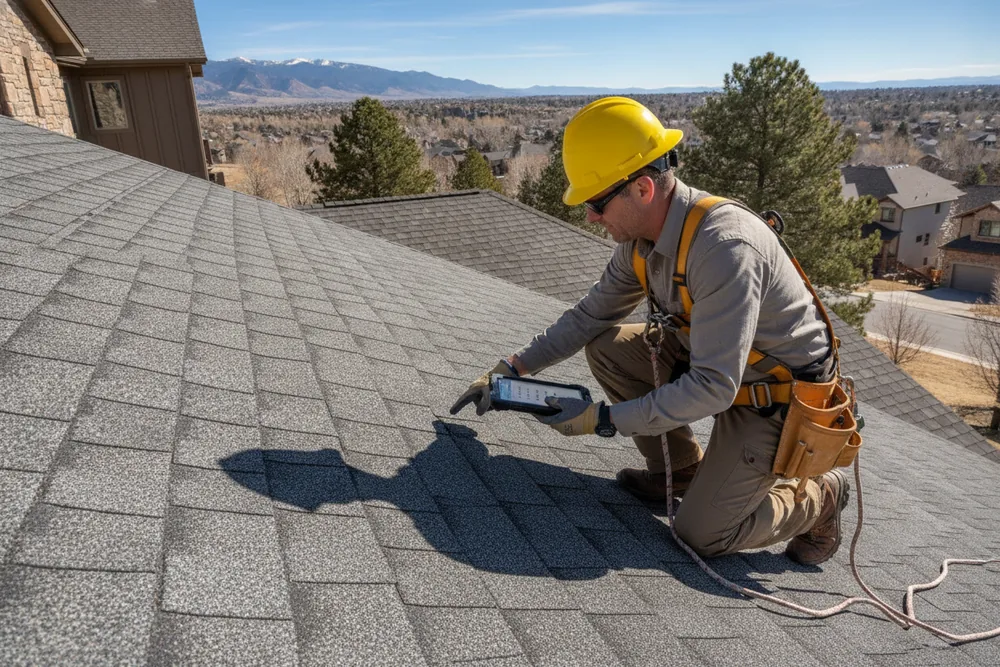
Is a ceiling stain or a drip telling you there's a problem overhead?
Yes, and the spot inside is a clue, not the answer. Water travels down the roof decking before it finds a way through the ceiling, so the actual entry point, whether it's a failed pipe boot, a worn valley, or flashing pulled away from a chimney, can be several feet from where you see the stain. We inspect the roof surface and the attic side together to find the real path, check every penetration and flashing line nearby, and water-test the area when the source isn't obvious. Once we've traced it, we tell you whether it's a simple flashing repair or something that points to a bigger issue underneath.
Signs pointing to a leak
Brown ring or stain on the ceiling
A ring like this means water has been getting in over time, not just once. It's usually flashing or a pipe boot that's worn down slowly rather than a sudden failure.
Damp or moldy insulation in the attic
Wet insulation can mean a roof leak, but it can also be condensation from poor ventilation or a bathroom fan venting into the attic instead of outside. Telling the two apart changes the whole fix.
Leaking only during hard, wind-driven rain
If the roof only leaks when rain comes in sideways, the seal on some shingles has likely let go, or a low-slope section is backing water up. It tends to get worse with every storm as more seals fail.
Active drip during or right after a storm
An active leak has found a direct path, usually at a penetration or a section of damaged roofing. The stain inside is rarely straight below the entry point.
What we check to find the source
Failed or worn flashing
Flashing around chimneys, skylights, and walls loosens over time and is one of the most common leak sources on any roof.
Cracked pipe boots and vent flashing
The rubber collar on a plumbing vent boot dries out and cracks years before the shingles around it wear out, and it's easy to miss from the ground.
Attic ventilation problems
Poor intake or exhaust ventilation can cause condensation that looks like a leak but isn't, so we check the vent path before blaming the roof.
Damaged or aging shingles
If the shingles themselves have curled, cracked, or lost their seal across a wide area, patching one spot won't solve the bigger picture.
What to expect during the visit
We start by checking the attic side for the wet path, staining, or any mold, then inspect every penetration and flashing line above the reported stain. If the source isn't obvious, we'll water-test the suspect area to confirm it before opening anything up. Once we've found the cause, we explain what's going on in plain language and give you a repair recommendation, or let you know if the rest of the roof needs a closer look. Most of these inspections take one to two hours on site. Call (303) 808-6888 and we'll get you on the schedule.
Related services you may need
Once we've traced the leak, most fixes are handled through Roof Repair & Emergency Tarping if there's active water coming in, or Roof Replacement if the shingles or decking are too far gone to patch. If the leak turned up during a home sale or purchase, our general Roof Inspection service covers the full roof condition for that process.
The cost of waiting
A slow leak rarely stays slow. Water that gets behind flashing or under a pipe boot keeps finding the same path every time it rains, and over months that means wet insulation, stained drywall, and eventually rot in the decking underneath. What starts as a one-spot flashing repair can turn into a section of decking replacement if it sits long enough. Tracing it early, while it's still a stain and not a soft spot in the ceiling, keeps the fix small.
Why is the leak inside my house not directly under the damage on my roof?
Because water runs down the roof decking before it drops through the ceiling, so the entry point is often several feet from the stain you see inside. That's why tracing a leak means inspecting the roof and the attic together, not just looking straight up from the stain.
How much does a roof leak inspection cost?
We offer free estimates, and what affects the scope of any follow-up repair is how many penetrations or flashing lines are involved and whether the decking underneath has been damaged. The inspection itself tells us that before any work starts.
Can a leak be condensation instead of an actual roof leak?
Yes, and it's a common mix-up. Damp attic insulation can come from poor ventilation or a bathroom fan venting into the attic rather than outside, so part of our inspection is telling condensation and an actual leak apart before recommending a fix.
If you've got a stain on the ceiling or a drip you can't explain, don't guess at it. Call Virtuous Roofing and Exteriors at (303) 808-6888 and we'll trace it back to the source.
- Buying, selling, or just want to know where you stand? You get an honest, documented inspection and the certification lenders and buyers ask for.