Two Different Problems, Two Different Answers
Homeowners across the Denver Metro and Northern Colorado run into roof trouble in two very different flavors. One is the slow kind: a shingle that's been lifting for months, a small stain on the ceiling that hasn't grown, a vent boot that's starting to crack. The other is the sudden kind: a branch through the roof deck during a windstorm, hail that punches through in an afternoon, or a leak that shows up mid-downpour and won't stop. Both need attention, but they don't need the same response.
Knowing which situation you're in changes everything about the timeline and the approach. A slow problem can usually wait for a scheduled appointment and a straightforward repair. A sudden problem needs someone on-site fast enough to stop water from getting further into the structure, which is where emergency tarping earns its name. Mixing the two up either wastes money on urgency you didn't need or lets real damage sit longer than it should.
Why the Timeline Matters So Much
Water doesn't wait for a convenient appointment. Once it's inside the roof assembly, it moves along rafters, into insulation, and down into drywall and framing, and the longer that path stays wet, the more it costs to dry out and repair later.
What Happens During Active Water Intrusion
When a roof is actively letting water through, the priority shifts from fixing the roof to stopping the bleeding. Insulation soaks up moisture and loses its effectiveness, drywall stains and eventually sags, and wood framing that stays damp for extended periods is at risk for rot. None of that requires the permanent fix to happen immediately, but it does require the water to stop moving.
This is exactly the gap emergency tarping fills. A properly secured tarp redirects water off the damaged section and away from the interior, giving the structure a chance to dry out before the real repair begins. It's not glamorous work, but it's often the difference between a straightforward repair bill and a much bigger one involving drywall, insulation, and framing replacement.
What Happens When Damage Sits Untreated
A missing shingle or a small crack in flashing doesn't always announce itself with a dramatic leak. Sometimes water finds a slow path, tracking along the underside of the deck before it ever shows up as a ceiling stain, which means the visible sign often lags behind the actual damage by weeks.
That lag is why we tell homeowners not to wait on small signs. A stain the size of a coin today can mean saturated insulation above it that's been building for a while. Scheduling a roof repair as soon as you notice an issue, rather than after it's visibly worse, tends to keep the fix smaller and the cost lower.
| Situation | Emergency Tarping | Scheduled Repair |
|---|---|---|
| Active leak during or after a storm | Right fit, stops water fast | Too slow for the moment |
| Small stain, no active dripping | Not needed | Right fit, addresses root cause |
| Visible hole or missing section | Right fit until repair happens | Follows once damage is stabilized |
| Aging shingles with no leak yet | Not needed | Right fit, preventive |
What a Tarp Actually Does and Doesn't Do
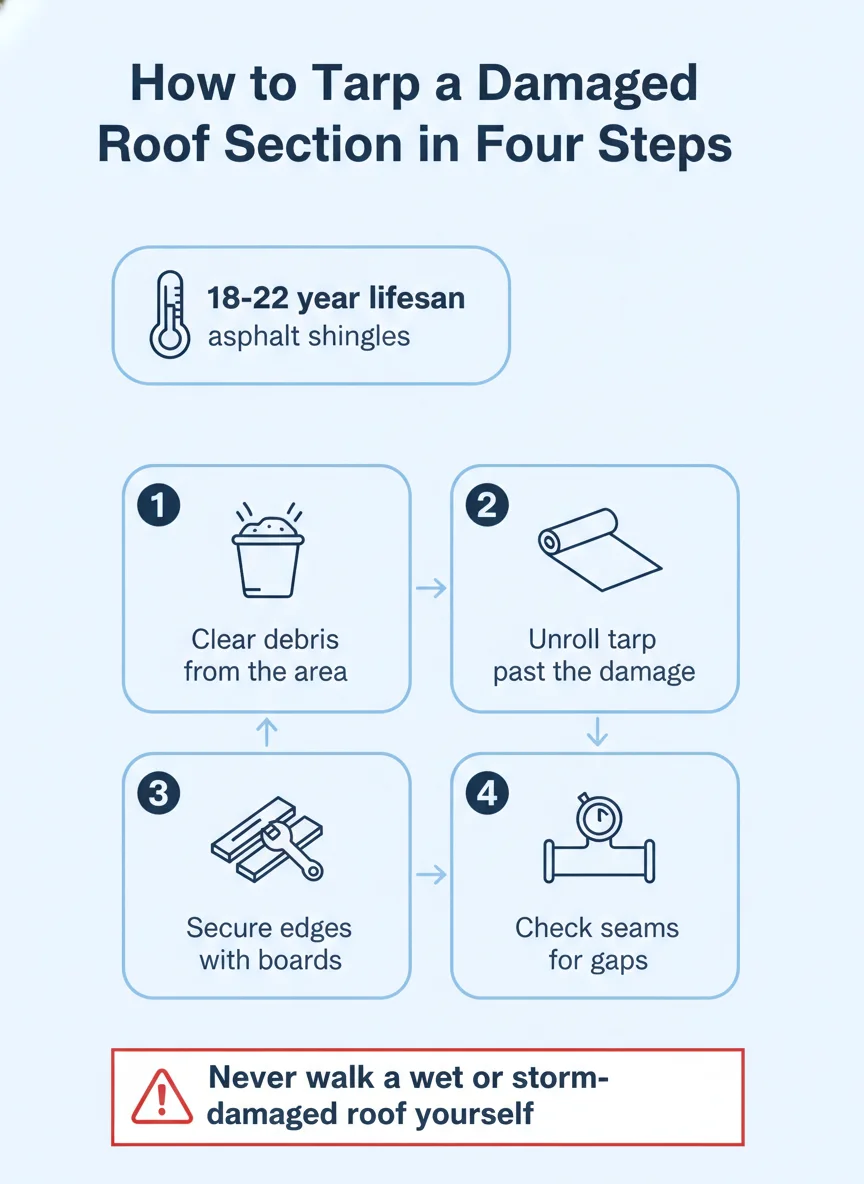
A tarp is a barrier, not a repair. It's stretched over the damaged section, weighted or nailed to boards along the edges, and sealed enough at the seams to shed water rather than let it pool. Done right, it holds through wind and rain for the days it takes to schedule the permanent fix.
What it doesn't do is restore the roof's structure or its warranty status. Underneath the tarp, the actual repair still needs to happen, whether that's replacing a section of shingles, resealing flashing, or in more serious cases moving toward a full roof replacement. Treating a tarp as a long-term solution just delays the real fix while the tarp itself degrades in Colorado's sun and wind.
Step-by-Step: How a Tarping and Repair Job Usually Goes
The sequence from the first call to a finished repair follows a pretty consistent pattern, whether the damage came from a storm or just wore in slowly over time.
- Initial call: You describe what's happening, active leak, missing shingles, or visible damage, and we figure out whether it's a same-day tarp situation or a scheduled repair.
- On-site assessment: We look at the damage up close, check for hidden water intrusion, and confirm what the roof actually needs before recommending a fix.
- Stop the water: If there's active intrusion, we tarp the section first so nothing gets worse while the permanent repair is scheduled.
- Document everything: Photos of the damage before any work starts, which matters a lot if you end up filing an insurance claim.
- Permanent repair: We replace the damaged materials, reseal flashing where needed, and make sure the fix matches the surrounding roof.
- Final walkthrough: We confirm the repair holds and answer any questions before considering the job done.
How to Tell What You're Actually Looking At
Not every roof issue looks the same from the ground, and a lot of homeowners aren't sure what they're seeing until it's pointed out. Learning the signs helps you make the right call before small damage turns into a bigger repair.
Signs You Need Tarping Today
Water actively coming through the ceiling, daylight visible through the roof deck from the attic, or a section of roofing that's clearly torn away are all signs that call for same-day protection. Waiting even a day or two in these cases usually means more interior damage by the time the repair happens.
If you're not sure whether what you're seeing counts, it's worth a call regardless. Describing what you see over the phone, whether it's dripping, staining, or visible gaps, helps us figure out how fast we need to move before anyone gets on-site.
Signs a Scheduled Repair Is Enough
A single lifted or missing shingle with no active leak, a small ceiling stain that hasn't grown in size, or flashing that looks worn but isn't visibly gapped are usually fine to schedule normally. These issues matter and shouldn't be ignored, but they don't require an emergency response.
The key is watching for change. A stain that stays the same size for weeks is different from one that grows after every storm, and that difference is what tells you whether it's time to move from watching to scheduling.
DIY vs. Calling a Pro
There's very little in either tarping or repair work that's a reasonable do-it-yourself project, and that's not a sales pitch, it's a safety reality. Roofs are steep, often slick after rain or snow, and a fall from that height is a serious injury regardless of how careful you are.
What a homeowner can safely do is the documentation piece. Photographing visible damage from the ground, noting when a leak started, and checking the attic for daylight or dampness (carefully, from a stable position) all help speed up the assessment once a crew arrives.
Everything involving getting on the roof itself, from securing a tarp to replacing shingles or resealing flashing, is worth leaving to a crew that does it regularly and carries the right insurance for the work. The cost of a professional visit is almost always less than the cost of a fall or a botched temporary fix that leaks anyway.
Getting the Right Response the First Time
The fastest way to keep a roof problem small is matching the response to what's actually happening rather than guessing. An active leak calls for a tarp today. A small, stable issue calls for a scheduled repair. Getting that distinction right the first time saves money and stress down the line.
If you're not sure which category your situation falls into, describing what you're seeing to a crew that handles both is the fastest way to find out. Virtuous Roofing and Exteriors handles both the emergency tarp and the permanent repair, so you're not coordinating between two different companies while water sits in your ceiling.
Frequently asked questions
How do I know if my roof needs a tarp or a repair?
If water is actively coming through the ceiling or you can see daylight through the roof deck, that's a tarp situation to stop damage right now. If the roof is holding but you've noticed a few lifted shingles or a small stain, a scheduled repair usually handles it without an emergency step.
Is a tarp a permanent fix?
No, a tarp is a temporary measure meant to stop water intrusion until a permanent repair or replacement can happen. It's meant to buy days, not seasons, since UV exposure and wind will wear a tarp down fast in Colorado's climate.
Can I tarp my own roof after a storm?
We don't recommend it. Roof surfaces after storm damage are often unstable or slick, and a fall risk isn't worth the money saved, so it's safer to call a crew that tarps roofs regularly.
How fast does a leak turn into a bigger problem?
It depends on how much water gets in and where it collects, but wood rot and insulation damage can start within days of sustained moisture. That's why a same-week response to an active leak matters more than waiting to see if it stops.
Does insurance cover emergency tarping?
Many homeowner policies do cover temporary protective measures after storm damage, but coverage details vary by policy and carrier. Documenting the damage with photos before and after tarping helps support a [storm damage and insurance](/services/storm-damage-insurance) claim.